






Care & how-to
Frostbite in Dogs: Signs, First Aid and Prevention
Frostbite in dogs is cold damage to the skin, most often on the paws, ear tips and tail. Affected skin looks pale, gray or bluish, feels cold and is painful, then turns red and swollen as it warms. If you suspect frostbite, get your dog somewhere warm and dry, warm them gently without rubbing, and call your vet right away. Wet dogs and dogs with poor circulation are most at risk.
By Matt GarnettUpdated November 14, 20264 min read2 sources
What frostbite is and which dogs are at risk
VCA explains that below freezing, the blood vessels near the skin narrow to protect the body's core temperature. In severe or prolonged cold, blood flow to the extremities can drop so far that the tissue freezes. The paws, ears and tail are most commonly affected because they are furthest from the core and often thinly furred.
Wet or damp dogs are far more vulnerable, since water pulls heat from the body. VCA also lists dogs with heart disease, diabetes or other conditions that reduce blood flow to the extremities as higher risk. Small, short-coated, very young, elderly and thin dogs lose heat faster, and dogs left outdoors for long periods are at greatest risk. Wind and sitting still in the snow make any of this worse.
Signs of frostbite
Early signs, according to VCA, include pale, gray or bluish skin, skin that feels cold or brittle, pain when the area is touched, swelling, and licking or chewing at the spot. As the tissue thaws it often becomes red and painful. Blisters or skin ulcers can follow, and in severe cases the skin turns dark blue to black.
Frostbite can be hard to judge at first, and VCA notes that signs may take several days to appear fully. Dead tissue may slough off over days to weeks and can become infected. Frostbite often comes with hypothermia, whose signs are shivering, weakness, slow movement and lethargy, and hypothermia must be treated first.
First aid: what to do right now
Move your dog to a warm, dry place and call your vet. Wrap your dog loosely in warm, dry towels or blankets to raise body temperature slowly. If the frostbitten area can be kept warm afterward, VCA says you can rewarm it in water at 98.6°F to 113°F, a temperature that feels comfortable on your hand, then pat it dry very gently. Keep your dog warm on the way to the clinic.
What not to do matters just as much. Do not rub or massage the area, which damages the tissue further. Do not use dry heat such as a heating pad, hair dryer or space heater. Do not rewarm a paw if it may freeze again before you reach the vet, since refreezing causes more damage. Never give pain medicine unless your vet tells you to; VCA warns that acetaminophen and aspirin can be toxic to dogs.
What the vet will do
Your vet will check for hypothermia and treat it first, then assess the affected areas. Treatment may include pain relief, careful warming, wound care, and antibiotics if there is a risk of infection, all chosen and dosed by the vet. Frostbitten tissue often needs to be rechecked over several days, because the full extent of the damage takes time to show.
In severe cases, dead tissue on ear tips, toes or the tail may need to be removed once the boundary between healthy and damaged tissue is clear. Mild frostbite often heals well with prompt care. Follow-up visits and keeping the area clean and protected while it heals give the best result.
Preventing frostbite on winter walks
Keep walks short in very cold or windy weather, especially for small, short-coated, young or senior dogs, and keep your dog moving rather than standing in snow. Dry your dog thoroughly after walks or swims, since wet fur loses its insulation. Dogs that live outdoors need a dry, windproof, insulated shelter raised off the ground, and our guide to keeping outdoor dogs warm in winter covers the details.
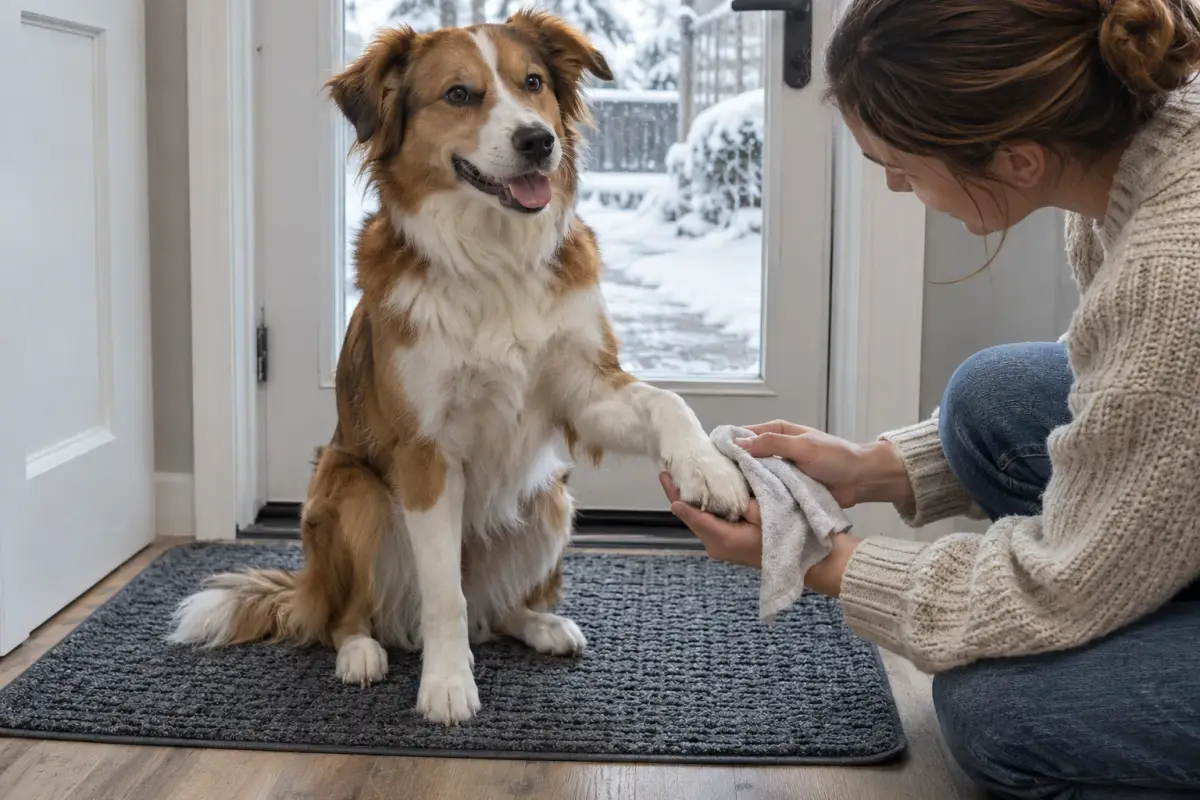
Protect the paws: dog boots for snow guard against ice, salt and sharp crusts, a paw balm adds a barrier for dogs that refuse boots, and trimming the fur between the toes stops ice balls forming. Wipe paws after every walk to remove ice melt. Lined styles such as fleece-lined dog snow boots and sherpa-lined winter dog boots add warmth, but a snug fit and short walks matter more than the lining. A coat or dog sweater helps short-coated breeds hold heat. If your dog lifts their feet, shivers or tries to turn for home, head inside.
This page is general information, not veterinary advice, and it cannot replace an examination by the vet who knows your pet.
Common questions
How cold does it have to be for a dog to get frostbite?
Risk begins below freezing, 32°F, and rises with wind, wet fur and time outside. Small, thin, wet or elderly dogs and dogs with poor circulation can be affected sooner than healthy, dry, thick-coated dogs.
What does frostbite look like on a dog's paw?
Early frostbite looks pale, gray or bluish and feels cold and painful. As it warms it turns red and swollen, and blisters or darkened skin can follow. Call your vet if you see any of these.
Can I put a frostbitten dog in warm water?
Warm, not hot, water is recommended by VCA if the area can stay warm afterward. Use water that feels comfortable on your hand, pat the area dry gently, and never rub it or use a heating pad.
Do dog boots prevent frostbite?
Boots help protect paws from snow, ice, salt and sharp crusts, which lowers the risk. They work best with short walks in severe cold, drying your dog afterward and watching for signs of discomfort.
Sources we checked
This guide is general information, not veterinary advice. If your pet is unwell or injured, contact your veterinarian.


