






Care & how-to
Pet-Safe Ice Melt: What It Means and How to Use It
No ice melt is truly safe for a pet to eat, and "pet safe" on a bag is a marketing term with no official standard behind it. Products based on urea or magnesium chloride are generally gentler than rock salt or calcium chloride, but they can still upset a stomach. The safest approach is a gentler product at home, wiping paws after every walk (a paw balm adds a barrier), and keeping the bag out of reach.
By Matt GarnettUpdated November 14, 20265 min read2 sources
How ice melt reaches your pet
Most pets never eat ice melt from a scoop. They walk across a treated sidewalk, the crystals and salty slush collect between their toes, and they lick their paws clean once they get home. Dogs also eat snow, and slushy snow along a treated path can carry a surprising amount of dissolved salt. A few pets, attracted by the salty taste, will chew into an open bag in the garage or mudroom.
That means the risk comes from two places: the ground you walk on, which you control only at home, and the bag you store, which you control completely. Sidewalks, parking lots and your neighbors' driveways will almost always be treated with ordinary rock salt or calcium chloride, so paw care after walks matters even if you only use a gentler product yourself.
Common ice melt ingredients compared
The four usual ingredients are sodium chloride (rock salt), potassium chloride, calcium chloride and magnesium chloride. The ASPCA says the most common effects of swallowing any of them are stomach upset, vomiting and diarrhea, and that a large amount can raise blood sodium enough to cause tremors and seizures. How serious it gets depends on your pet's size, how much they ate and which product it was. Calcium chloride can also cause sores in the mouth.
Products sold as pet friendly usually contain urea or magnesium chloride. The ASPCA describes these as generally safer, and the AKC agrees they are a sensible choice for your own steps and paths, but both note that they can still cause drooling, vomiting or diarrhea if eaten. Treat the label as "less harsh," not "edible." Read the ingredient list rather than the front of the bag, because two products with similar claims can be made from quite different salts.
Why "pet safe" on the label is not a guarantee
There is no specific legal requirement a deicer has to meet before it can be called pet safe, so the phrase tells you about the manufacturer's intent, not about a tested standard. Some products labeled this way are salt-free, some are blends that still include chloride salts, and some simply leave out the harshest ingredient. Non-toxic does not mean a dog should eat it, as the AKC points out.
When comparing products, look for a full ingredient list, avoid anything that does not disclose one, and keep the amount you spread small: you only need enough to break the bond between ice and pavement. Sand or non-clumping kitty litter can add grip on steps without any chemical at all, though they will not melt anything. If you are unsure about a particular product, ask your vet before using it where your pets walk.
How to protect paws on winter walks
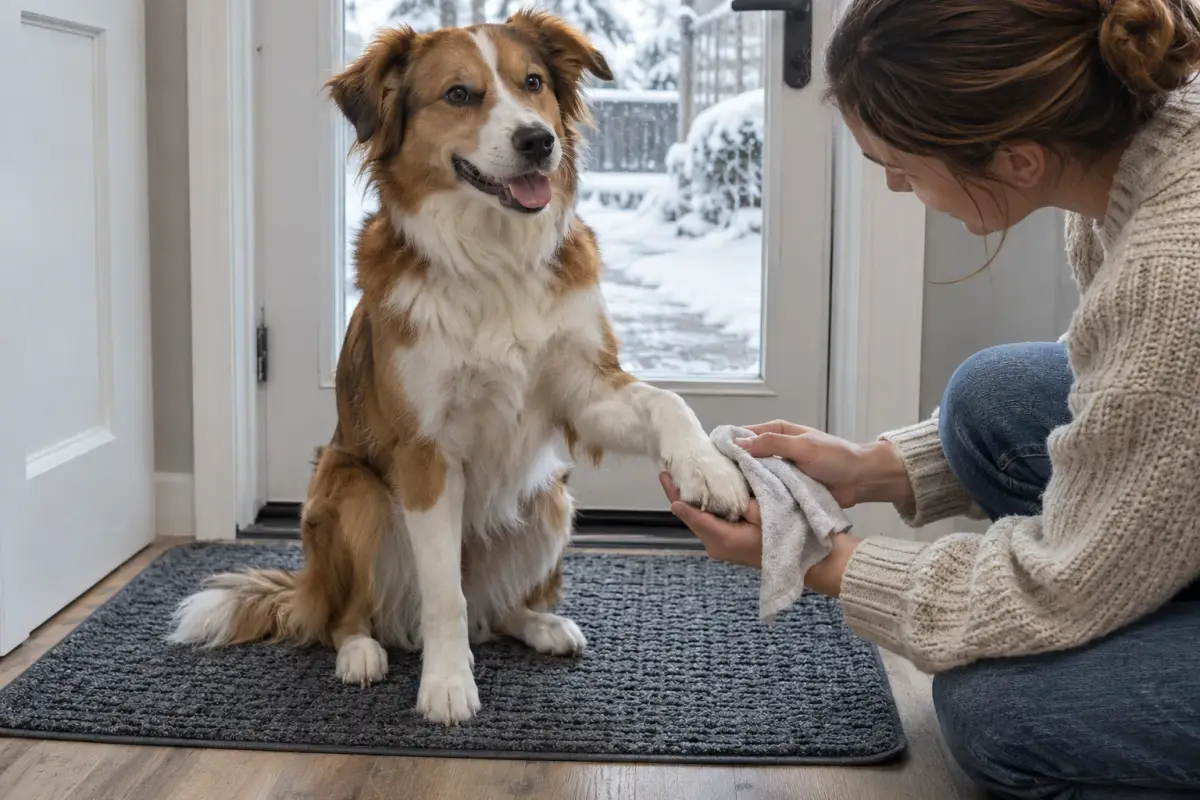
Wipe your dog's paws every time you come in from a walk on treated ground. A damp washcloth or a bowl of lukewarm water by the door works well; work between the toes and around the pads, where crystals lodge, then dry the feet so the skin does not crack. Keep your dog from licking their feet until you have done it, and do not let them eat snow or drink from puddles along the route.
Dog boots for snow are the most complete protection against salt, chemical melts and sharp ice crusts, and many dogs accept them with a slow introduction and a few treats. Take them off as soon as you get inside so the salt on them does not end up on floors and rugs. For dogs that will not wear boots, a paw balm or wax applied before the walk (the paw balm buying guide compares types, and our paw balm collection has more) creates a barrier, and keeping the fur between the toes trimmed reduces how much ice and salt can build up.
Signs ice melt has made your pet sick
Mild exposure usually shows up as vomiting, diarrhea, drooling or a pet that drinks more than usual. Red, cracked or sore paw pads, limping or constant licking of the feet point to irritation from contact. Calcium chloride in particular can cause redness or sores in the mouth, so a pet that paws at its face or will not eat after getting into ice melt may have a sore mouth.
More serious signs include repeated vomiting, blood in the vomit or diarrhea, weakness, wobbliness, muscle tremors or seizures. Call your vet promptly for any of these, and treat tremors or seizures as an emergency. If your pet ate ice melt straight from the bag, call your vet or the ASPCA Animal Poison Control Center at (888) 426-4435, or Pet Poison Helpline at (855) 764-7661, even before signs appear. A fee may apply. Have the packaging with you.
Storing ice melt and other winter hazards

Keep bags sealed, off the floor and in a cabinet or on a high shelf, and clean up any spills right away. Torn bags left by the door are one of the commonest ways dogs get into a large amount at once. If you scoop melt into a smaller container for convenience, make sure it has a lid that clicks shut and is clearly labeled.
Antifreeze is the other winter chemical that belongs in the same locked-away category. It tastes sweet, a small amount can be fatal, and it often drips from cars onto driveways and garage floors in cold weather. Wipe up spills immediately and call your vet or poison control at once if you think your pet licked any.
This page is general information, not veterinary advice, and it cannot replace an examination by the vet who knows your pet.
Common questions
What ice melt is safe for dogs?
No ice melt is completely safe to eat. Products based on urea or magnesium chloride are generally gentler than rock salt or calcium chloride, but can still cause stomach upset. Use small amounts and wipe your dog's paws after walks.
Is rock salt bad for dogs' paws?
Rock salt can dry, crack and irritate paw pads, and crystals caught between the toes are uncomfortable. Dogs also swallow the salt when they lick their feet. Rinse or wipe paws after walks, or use boots or paw balm.
Is pet-safe ice melt safe for cats?
Gentler products are a better choice around cats too, but cats groom their paws meticulously and can swallow what they walk through. Keep indoor cats off treated areas and wipe the paws of cats that go outdoors.
What should I do if my dog ate ice melt?
Move your dog away from it, keep the packaging, and call your vet or ASPCA Animal Poison Control at (888) 426-4435. Watch for vomiting, diarrhea, drooling, weakness or tremors, and seek emergency care for tremors or seizures.
Sources we checked
This guide is general information, not veterinary advice. If your pet is unwell or injured, contact your veterinarian.


