Buying guides
Best Automatic Dog Feeder: How to Choose One That Feeds Reliably
A good automatic dog feeder dispenses an accurate, measured portion at set times, works with your dog's kibble size, holds enough for your dog's daily ration, and keeps running if the power or Wi-Fi drops. For large dogs, capacity and a sturdy, theft-proof lid matter most. A feeder helps with routine and portion control, but it is no substitute for a person checking that your dog is eating.
By Matt GarnettUpdated November 10, 20264 min read2 sources
What matters most: accuracy and reliability
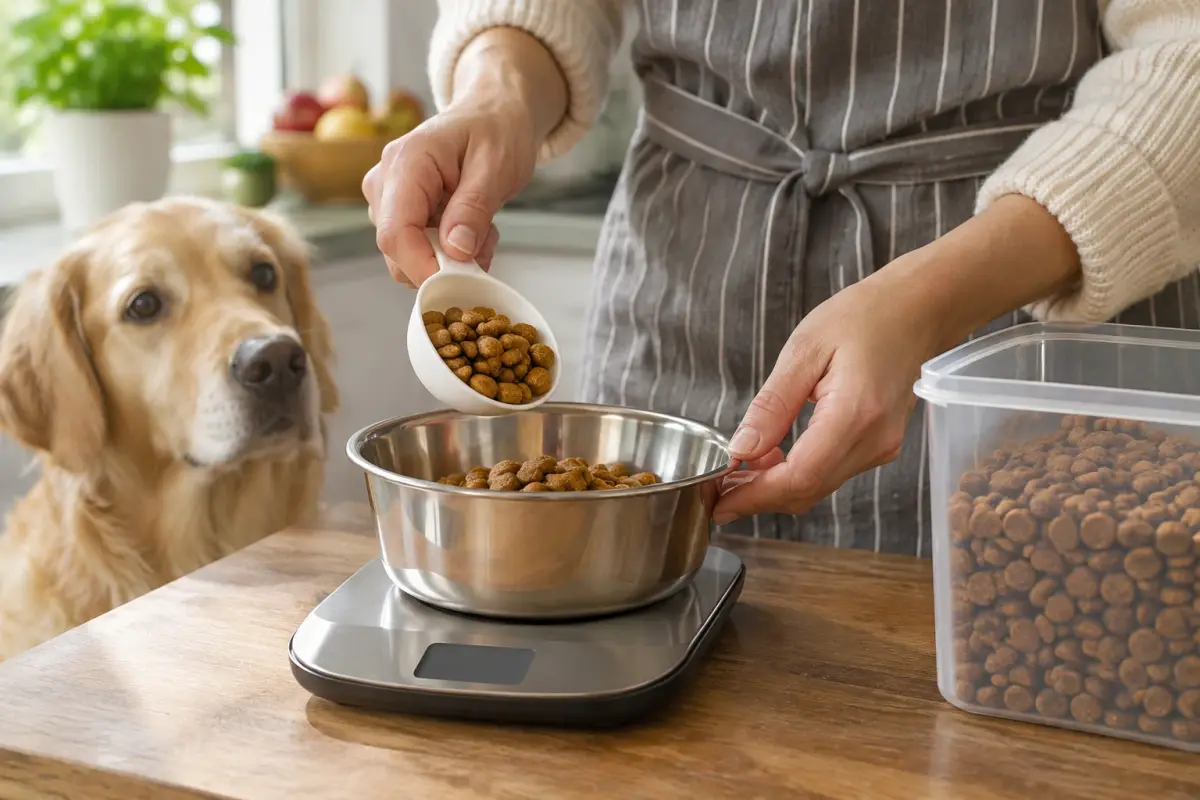
Portion accuracy decides whether the feeder helps or hurts your dog's weight. VCA's feeding guidance says the package guideline is a reasonable starting point and that your vet can set a calorie target; a feeder only delivers that target if each portion is consistent. Look for adjustable portions and test by weighing a few dispensed portions before you rely on it.
Reliability is next. Choose a feeder with battery backup so meals still dispense in a power cut, and with a schedule stored on the device, not only in a phone app, so it keeps working if Wi-Fi drops. A jam detector or low-food alert is useful. Check any of our automatic dog feeders against these points.
The main types compared
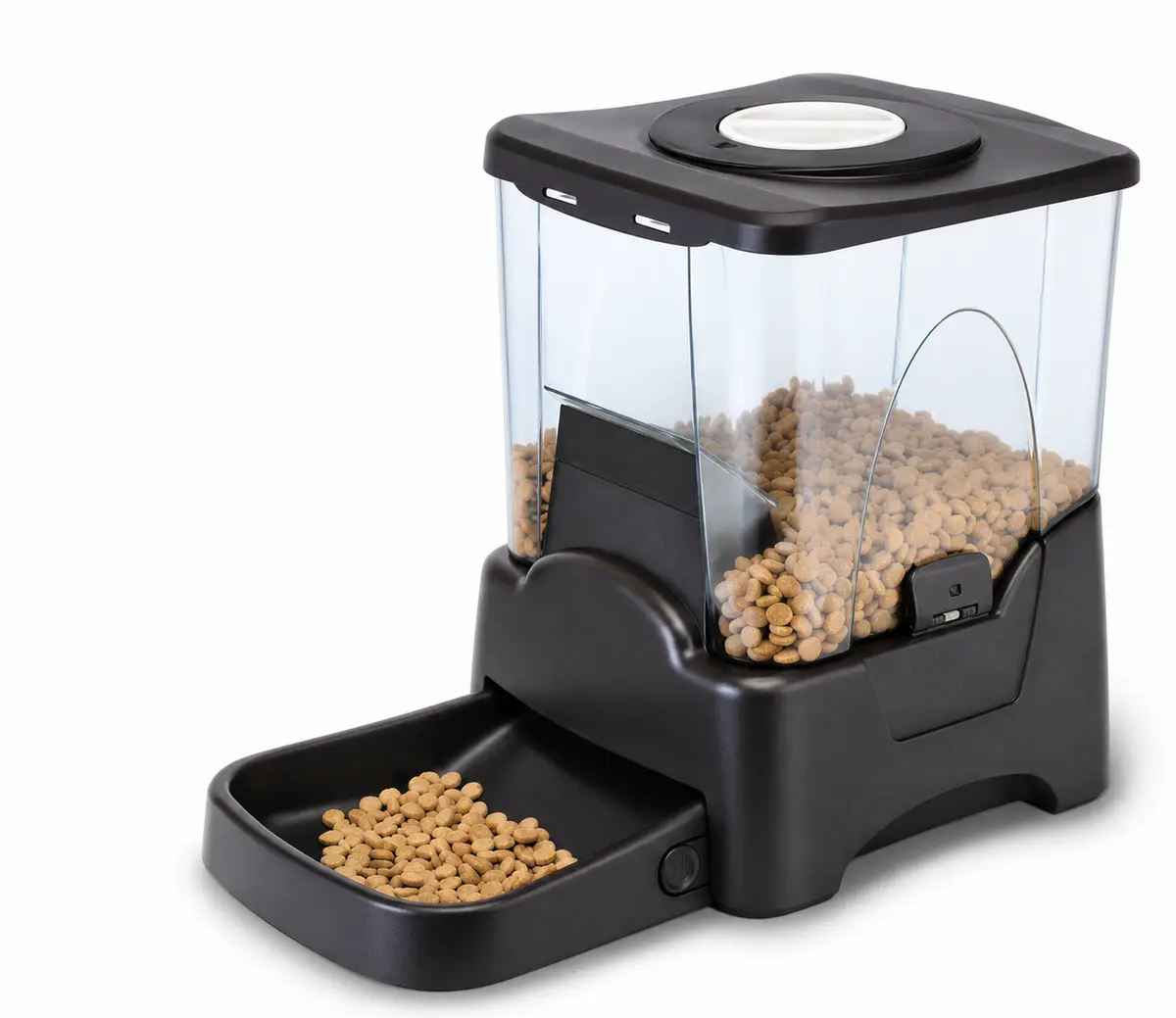
Timed feeders dispense set portions at scheduled times from a hopper, and are the most common and dependable type. Smart feeders add an app for remote scheduling, feeding logs and sometimes a camera so you can watch your dog eat. Gravity feeders simply refill the bowl as the dog eats, which suits only dogs that do not overeat.
Wet-food feeders use chilled, lidded compartments that open on a timer; they suit a meal or two, not a full day. Slow-dispensing and treat feeders release food gradually for enrichment rather than meals.
Best type for each dog
For large dogs, choose a feeder with a large hopper, often 15 to 25 cups, portions big enough for a meal, and a heavy, stable base. VCA notes many dogs do well on two or three meals a day, and a timed feeder makes that easy even on long workdays. For small dogs, precision at small portions matters more than capacity.
For fast eaters, choose a feeder that dispenses a meal over several minutes or into a slow-feeder bowl. For multi-dog homes, separate feeders, or microchip feeders that open for one pet, stop one dog eating another's food. For food thieves, a locking lid and a design that cannot be tipped.
What to avoid
Avoid feeders that only accept small kibble if your dog's food is large, and hoppers that jam with oily or irregular kibble; check the stated kibble size range. Avoid light plastic units a big dog can knock over or chew. Avoid gravity feeders for dogs prone to weight gain.
Avoid leaving a dog alone for days with only a feeder. A device cannot tell you if your dog has stopped eating, and a missed meal or refusal of food can be the first sign of illness. VCA lists obesity-related risks, but a sudden loss of appetite is just as important to catch and needs a vet if it lasts more than a day.
Setup and hygiene
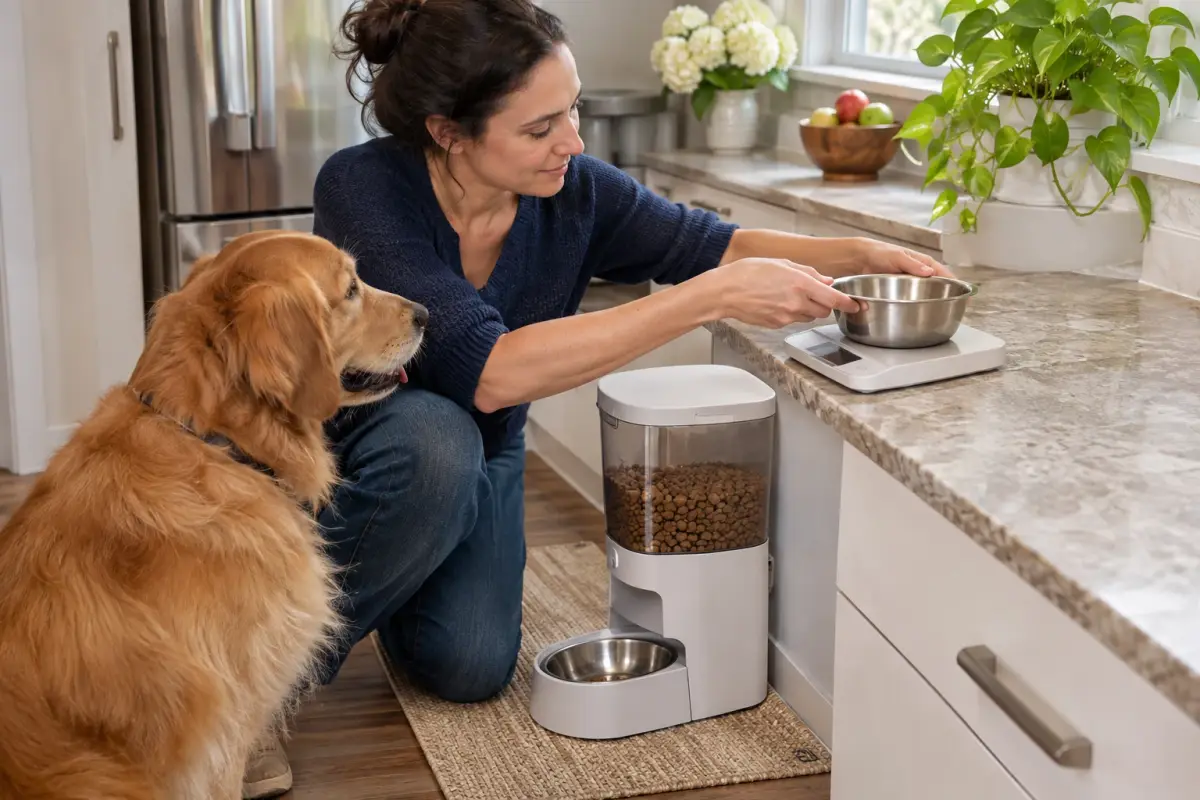
Set the feeder somewhere stable, away from the dog's water bowl to avoid wet kibble jamming the mechanism. Run it for a few days while you are home to check timing and portions. Keep the desiccant pack fresh if the hopper has one.
Wash the bowl daily and the hopper every week or two, drying it completely before refilling, because old crumbs and oils go rancid and attract pests. Do not top up old food with new; empty it first.
Lifespan and when to replace
A well-made feeder lasts several years. Replace it if portions drift, the motor strains, or the lid no longer locks. When you do, browse our automatic dog feeders for a replacement. Keep spare batteries. If you also want to slow mealtimes down, see our slow-feeder dog bowls and our guide on how to slow down a dog eating.
Remember that portion size is a decision for you and your vet, not the device. Weigh your dog regularly and adjust portions, using the rib check VCA describes: ribs that feel like the back of your hand are ideal.
This page is general information, not veterinary advice, and it cannot replace an examination by the vet who knows your pet.
Feeder dispensing and control mechanisms
| Type | How food reaches the bowl | Exact-model checks |
|---|---|---|
| Timed hopper | Stored food dispensed at scheduled times | Food compatibility and portion settings |
| App-connected | Electronic dispensing with remote controls | Supported app,connection and power supply |
| Gravity reservoir | Food falls into the bowl as space opens | Reservoir opening and cleaning access |
| Lidded compartment | A timer exposes a prepared compartment | Compartment size and stated storage conditions |
| Treat dispenser | A mechanism releases small amounts for activity | Controls,food size and intended use |
Common questions
Are automatic dog feeders worth it?
They are useful for keeping regular mealtimes and measured portions, especially for owners with long workdays. They work best as a routine aid, with a person still checking daily that the dog is eating normally.
What is the best automatic dog feeder for large dogs?
One with a large hopper, big adjustable portions, a sturdy non-tip base, a locking lid and battery backup. Check that it accepts large kibble sizes without jamming.
Can an automatic feeder work with wet food?
Only feeders designed for wet food, which use sealed, chilled compartments that open on a timer. They hold a meal or two, not several days, and need cleaning after every use.
Do smart feeders work without Wi-Fi?
Good ones store the schedule on the device and keep dispensing if Wi-Fi drops, though you lose remote control and alerts. Check this before buying, along with battery backup for power cuts.
Sources we checked
This guide is general information, not veterinary advice. If your pet is unwell or injured, contact your veterinarian.