






Care & how-to
How to Slow Down a Dog That Eats Too Fast
To slow down a dog that eats too fast, use a slow-feeder bowl or food puzzle, spread kibble on a cookie sheet or in a muffin tin, split meals into smaller portions, and feed dogs apart. Slow feeders are good for most dogs, because fast eating raises the risk of choking, vomiting and, in large breeds, bloat. A dog that is suddenly ravenous should see a vet.
By Matt GarnettUpdated November 14, 20263 min read3 sources
Why some dogs eat so fast
Many dogs eat quickly by nature, especially food-loving breeds such as Labradors and Beagles. Competition is a big driver: dogs that grew up in a litter, came from a shelter or share a home with other pets may gulp to make sure no one else gets their food. Hunger from a meal schedule that is too spread out, or portions that are too small, can play a part too.
Occasionally, a dog that suddenly becomes ravenous has a medical reason, such as diabetes, intestinal parasites, a hormonal problem or poor absorption of nutrients. If your dog's appetite or eating speed has changed noticeably, or it is losing weight while eating more, book a vet visit.
Why fast eating is a problem
Gulping food means swallowing air with it. The AKC lists choking, vomiting and discomfort as common results, and the bigger concern for large, deep-chested breeds is bloat: the AKC reports fast eaters have about five times the risk of slow eaters. Dogs that eat too quickly may also bring food straight back up and then eat it again.
Eating more slowly also gives your dog a few minutes of mental work at each meal, which many dogs enjoy, and lets the stomach register fullness before the bowl is empty.
Ways to slow your dog down
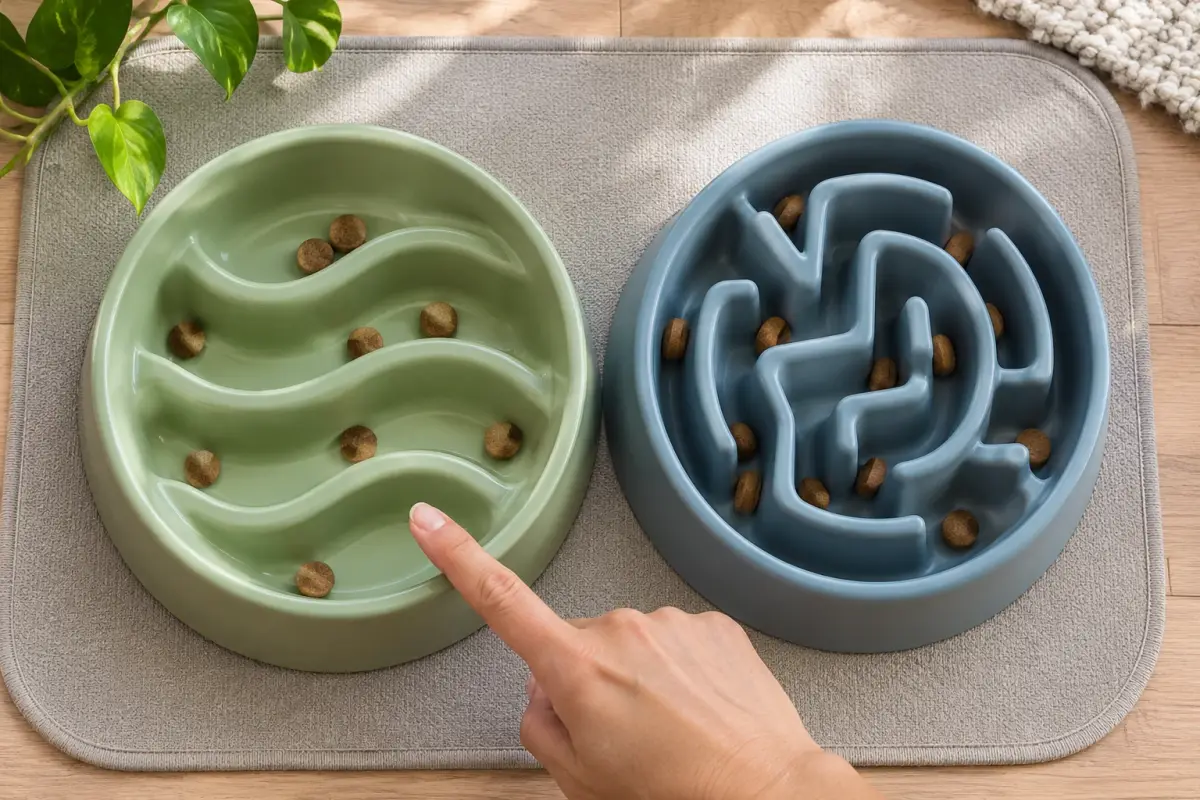
Slow-feeder bowls have raised ridges, spirals or mazes that break the food into small pockets so your dog has to work for each mouthful; an anti-gulp slow feeder bowl and a flower spinner slow feeder bowl are two designs. Food puzzles and treat-dispensing toys go further, releasing kibble a few pieces at a time. Snuffle mats hide kibble in fabric strips for your dog to sniff out.
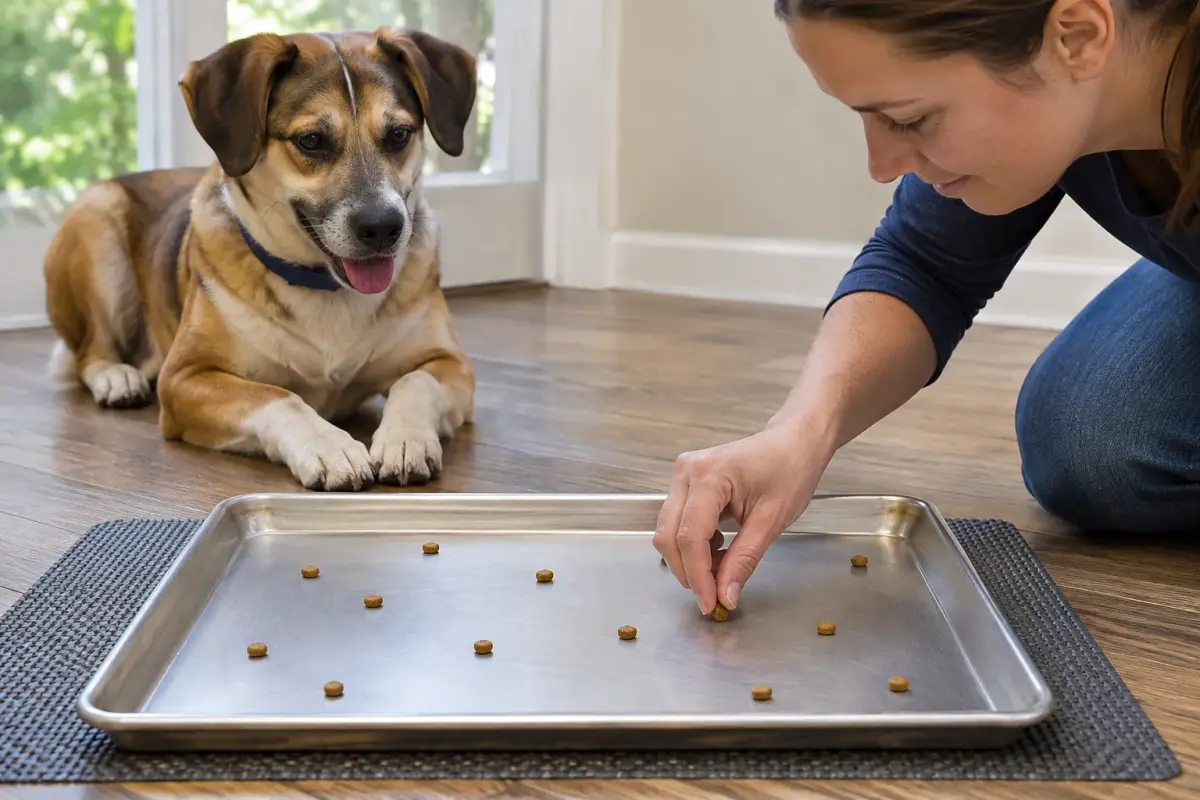
Household options work too. The AKC suggests spreading kibble across a cookie sheet, dividing it into the cups of a muffin tin, or turning a smaller bowl upside down inside a larger one so food sits in the gap. Hand-feeding part of the meal as training rewards slows things down and builds your bond. Avoid putting small stones or toys your dog could swallow in the bowl.
Feeding routine changes
Split the daily amount into two or three smaller meals rather than one large one, which reduces hunger and gulping and is also recommended for bloat prevention. Feed at regular times so your dog is not overly hungry. In multi-dog homes, feed each dog in a separate room or crate so no one feels it has to race, and pick up bowls when they are finished.
For wet food, a lick mat spread with the meal and frozen slows eating considerably. After meals, keep things calm and avoid running and rough play for about an hour, especially for large breeds.
Are slow feeders good for dogs?
For most dogs, yes. They are a simple way to cut eating speed, and the AKC notes that commercial designs generally work well, with homemade versions an option too. Choose a design that suits your dog's face: flat-faced breeds may struggle with deep, narrow mazes and do better with shallow ridges or a snuffle mat. Start with an easier design so your dog does not get frustrated and give up. Our slow feeder dog bowl guide compares designs, and you can browse all our slow feeder dog bowls.
Pick dishwasher-safe materials and clean the grooves thoroughly after every meal, because food residue builds up in them. Replace a plastic slow feeder that gets chewed or deeply scratched. If your dog still vomits after meals with a slow feeder, talk to your vet, since the cause may not be speed alone.
This page is general information, not veterinary advice, and it cannot replace an examination by the vet who knows your pet.
Common questions
Is it bad if my dog eats too fast?
It can be. Fast eating is linked to choking, vomiting and a higher bloat risk in large, deep-chested breeds. Slowing your dog down with a slow feeder or puzzle is an easy, worthwhile change.
How do I slow down my puppy's eating?
Use a shallow puppy-sized slow feeder (our guide to slow feeders for puppies compares them) or a snuffle mat, feed several small meals a day, and feed away from other pets. Keep puzzles easy at first so your puppy stays interested.
Can slow feeders cause frustration?
Some dogs get frustrated if the design is too difficult at first. Start with a simple pattern, praise your dog, and move to harder puzzles once it has the idea.
Sources we checked
This guide is general information, not veterinary advice. If your pet is unwell or injured, contact your veterinarian.


