






Care & how-to
How Often Should You Wash Your Dog's Bowl?
Wash your dog's water bowl every day and refill it with fresh water. Wash a dry-food bowl at least daily, and a bowl used for wet food, raw food or soaked kibble after every meal. Use hot, soapy water or the dishwasher, scrub away the slimy film, rinse well and dry. Replace bowls that are scratched, chipped or rusty.
By Matt GarnettUpdated November 9, 20263 min read2 sources
How often for each kind of bowl
Water bowls: every day. The AKC notes that drool, food crumbs and debris end up in water bowls, and within a day or two a slippery film called biofilm forms on the inside. That film is a layer of bacteria, and it can make water less appealing as well as less clean. Empty, wash and refill with fresh water at least once a day, more in hot weather or if your dog drops food in it.
Food bowls: after each meal for wet food, raw food or kibble soaked in water, because moist food spoils quickly at room temperature. For dry kibble, the AKC recommends washing at least daily, since oils and crumbs turn stale and sour and can put a dog off its food. Lick mats, puzzle feeders and slow feeders need the same treatment as the bowl they replace.
Step-by-step: how to clean a dog bowl
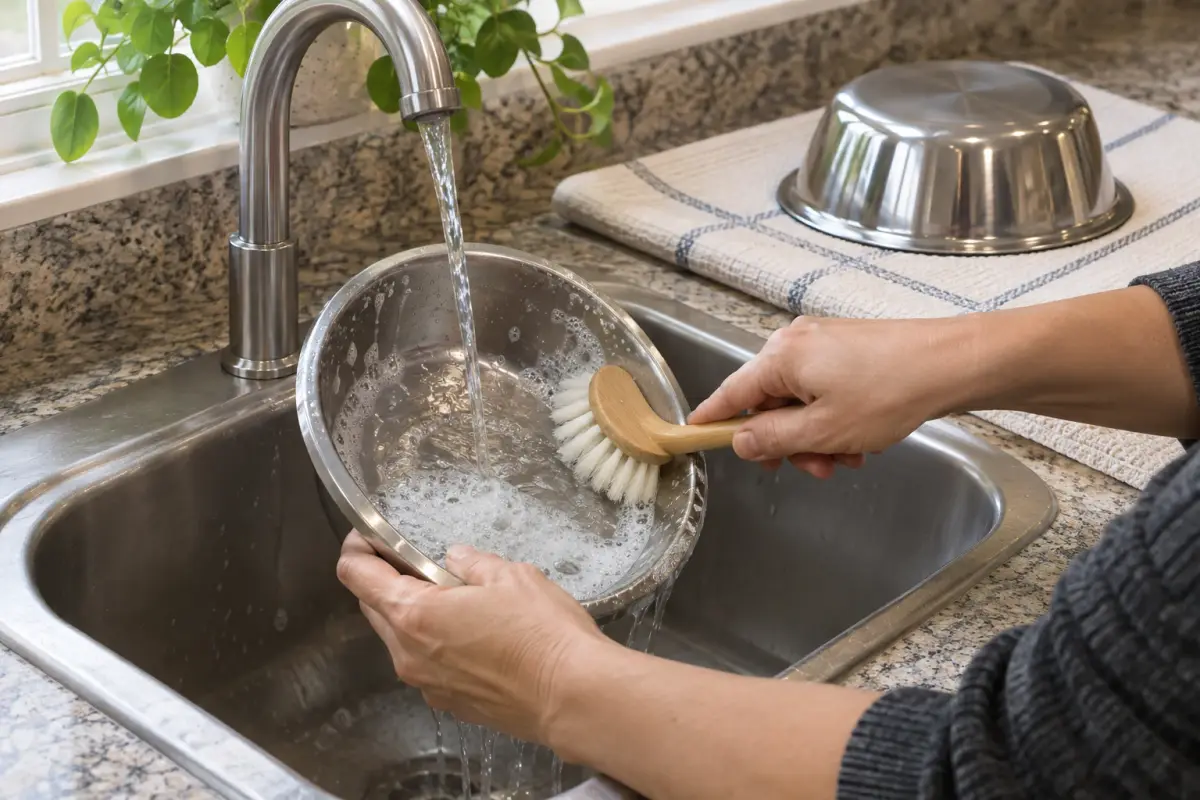
Step 1: Empty and rinse the bowl, then scrape off any stuck-on food. Step 2: Wash with hot water and dish soap, using a dedicated brush or sponge for pet bowls, not the one you use for your family's dishes. Scrub the inside, the rim and the underside, where hands and paws pick up dirt. Step 3: Rinse thoroughly so no soap remains, then dry with a clean towel or let it air dry.
Most stainless steel bowls, and many ceramic and plastic ones, are dishwasher-safe; check the label. A hot dishwasher cycle cleans more thoroughly than hand washing. For slow feeders and fountains with lots of grooves or parts, a bottle brush helps get into the corners.
Keeping pet bowls apart from family dishes
Pet bowls can carry bacteria from raw diets, saliva and the floor. Wash them separately from your family's dishes, or run them on their own in the dishwasher, and avoid washing them in the same sink as food preparation where possible. Wash your hands after handling your dog's bowls and food, particularly raw food.
Store dry food in its original bag inside a closed container, and scoop with a clean cup rather than the bowl itself. Refrigerate opened wet food and use it within the time on the label.
When to replace a bowl
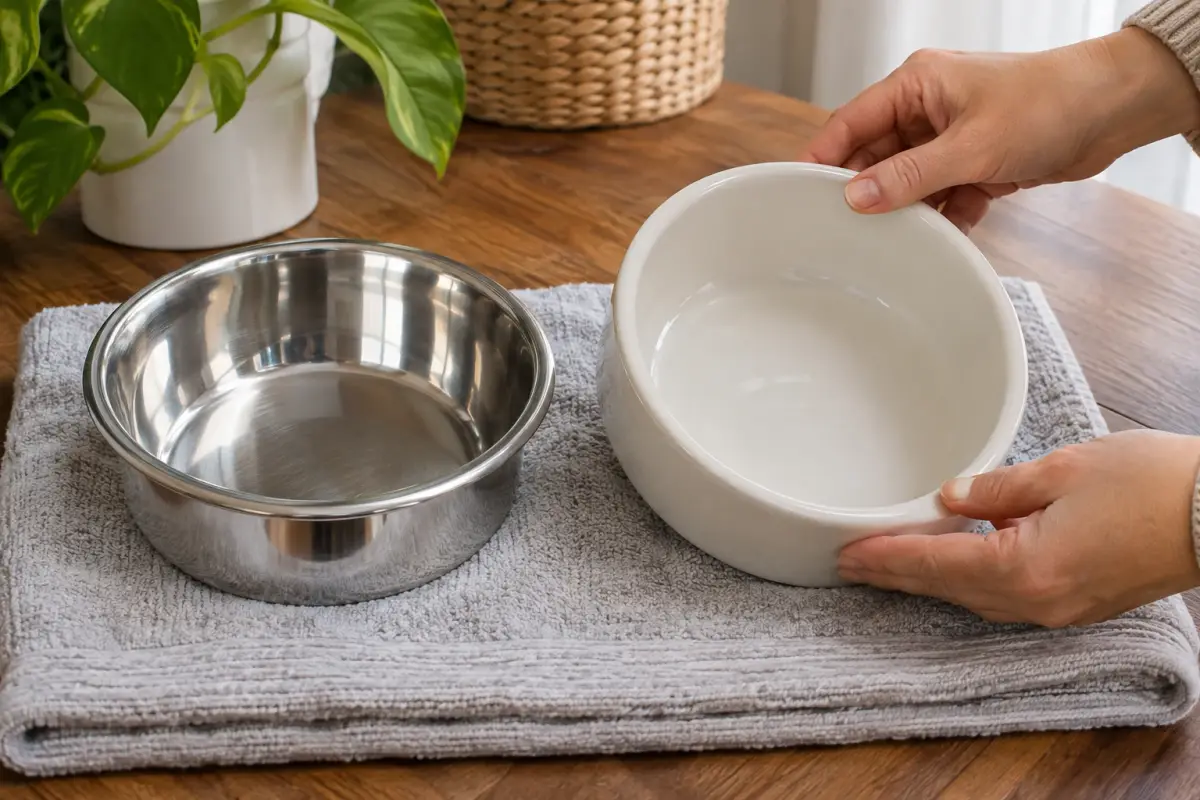
Inspect bowls every week or two. Replace plastic bowls that are scratched or chewed, because the grooves hold bacteria that washing cannot reach. Replace ceramic bowls that are chipped, cracked or have crazed glaze. Replace stainless steel bowls that are rusting or dented. The AKC advises checking bowls for damage regularly and replacing any that are damaged.
Stainless steel and ceramic last longest and clean most easily. If your dog develops red bumps or acne on its chin, ask your vet; switching from plastic to a classic stainless steel bowl and washing the bowl daily often helps.
Why it matters
A dirty bowl can make your dog less keen to eat or drink, which matters most in hot weather or when it is unwell. Old food in a bowl also attracts flies and ants, and leftovers from raw diets can carry bacteria that affect people too. A clean bowl is an easy, everyday part of keeping your dog well, and a spare from our stainless steel dog bowls makes rotating bowls simple.
If your dog suddenly stops eating or drinking from a clean bowl, the bowl is probably not the problem. A dog that refuses food or water for more than a day, or shows vomiting, diarrhea or lethargy, should see a vet.
This page is general information, not veterinary advice, and it cannot replace an examination by the vet who knows your pet.
Common questions
Can I wash my dog's bowl with dish soap?
Yes, regular dish soap and hot water work well. Rinse thoroughly so no soap residue remains, and use a separate sponge or brush for pet bowls.
Is it OK to put dog bowls in the dishwasher?
Most stainless steel bowls and many ceramic and plastic ones are dishwasher-safe, which gives a thorough clean. Check the label, and consider running them separately from your family's dishes.
What is the slime in my dog's water bowl?
It is biofilm, a layer of bacteria that builds up from saliva and food particles. Scrubbing the bowl daily with hot, soapy water removes it and keeps the water fresh.
Sources we checked
This guide is general information, not veterinary advice. If your pet is unwell or injured, contact your veterinarian.


