






Breeds
Ceramic vs Stainless Steel Dog Bowls: Which Is Best?
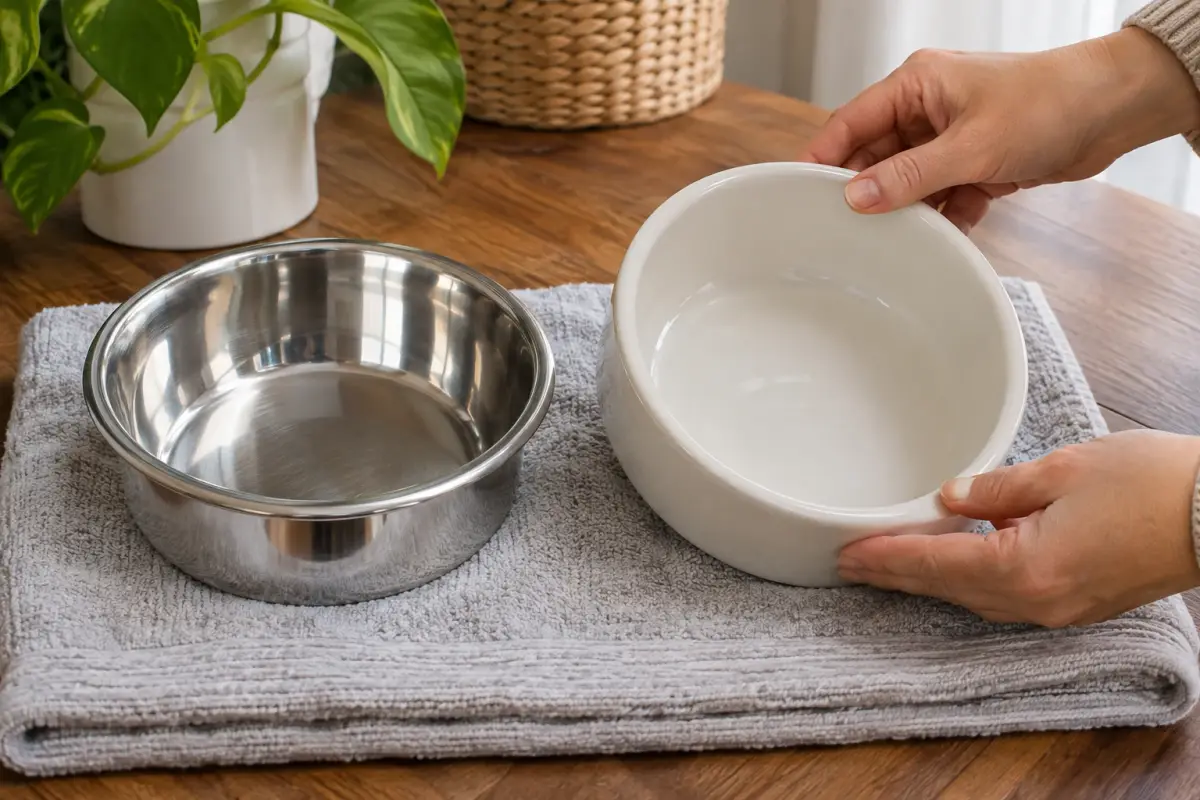
For most dogs, stainless steel is the best bowl material: it is durable, dishwasher-safe, does not scratch easily or hold odors, and is the most hygienic. Ceramic is a good second choice, heavier and less likely to slide or tip, but it can chip or crack and must be food-safe glazed. Plastic is the weakest option, because it scratches and harbors bacteria.
By Matt GarnettUpdated November 9, 20263 min read2 sources
Stainless steel: the all-round choice
The AKC describes stainless steel dog bowls as durable, easy to clean, dishwasher-safe and free of chemicals that could leach into food. It does not crack if dropped and is hard for a dog to chew through. Because the surface is smooth and non-porous, it resists the scratches where bacteria and slimy biofilm collect. The AKC also names stainless steel as the most hygienic material for water fountains.
The main downside is weight. A lightweight steel bowl can slide across a hard floor or be flipped by an enthusiastic eater or a playful puppy. Look for a bowl with a rubber ring on the base, a weighted bottom, or a stand that holds it in place. Choose a reputable, food-grade stainless steel rather than the cheapest option. Simple designs such as a classic stainless steel bowl or a stainless steel pet food bowl show what to compare for base and weight.
Ceramic: heavy and stable, but fragile
Ceramic bowls are heavy, so they stay put and are hard to tip, which suits large dogs, puppies that push their bowls around, and water bowls. They come in attractive designs and clean easily when the glaze is intact. The AKC notes that a ceramic bowl must be non-toxic and food-grade, and that not every ceramic bowl is dishwasher-safe.
Their weakness is damage. Ceramic can chip or crack if dropped, and a crack or crazed glaze gives bacteria somewhere to hide and can leave sharp edges. Check ceramic bowls regularly and replace any that are chipped or cracked. Buy from a maker that states the glaze is lead-free and food-safe.
Plastic and other materials
Plastic bowls are cheap, light and often dishwasher-safe, but they scratch easily, and the AKC notes they may need replacing more often for that reason. Scratches trap bacteria, and plastic that is not food-safe may contain chemicals you would rather avoid. Some dogs also chew plastic bowls, and a few develop skin irritation on the chin or muzzle with plastic, which usually settles once the bowl is changed.
Glass bowls are non-porous and easy to clean but can break. Silicone collapsible bowls are handy for travel and walks, but are not ideal as an everyday bowl for chewers. Whatever you choose, cleanliness matters more than material.
Which to choose for your dog
For an everyday food bowl, a stainless steel bowl with a non-slip base suits almost every dog. For water, a heavy ceramic bowl or a weighted steel bowl stays put and holds a good volume. For a fast eater, look at a slow-feeder design, which comes in steel, ceramic and plastic. For a chewer, avoid plastic and choose steel.
Size the bowl to your dog. A flat-faced breed or a dog with long ears may prefer a wide, shallow bowl. Large and giant breeds need a bowl big enough for their portion without spilling. Ask your vet before choosing a raised bowl for a large breed, because elevated bowls have been linked to a higher risk of bloat.
Keeping any bowl clean
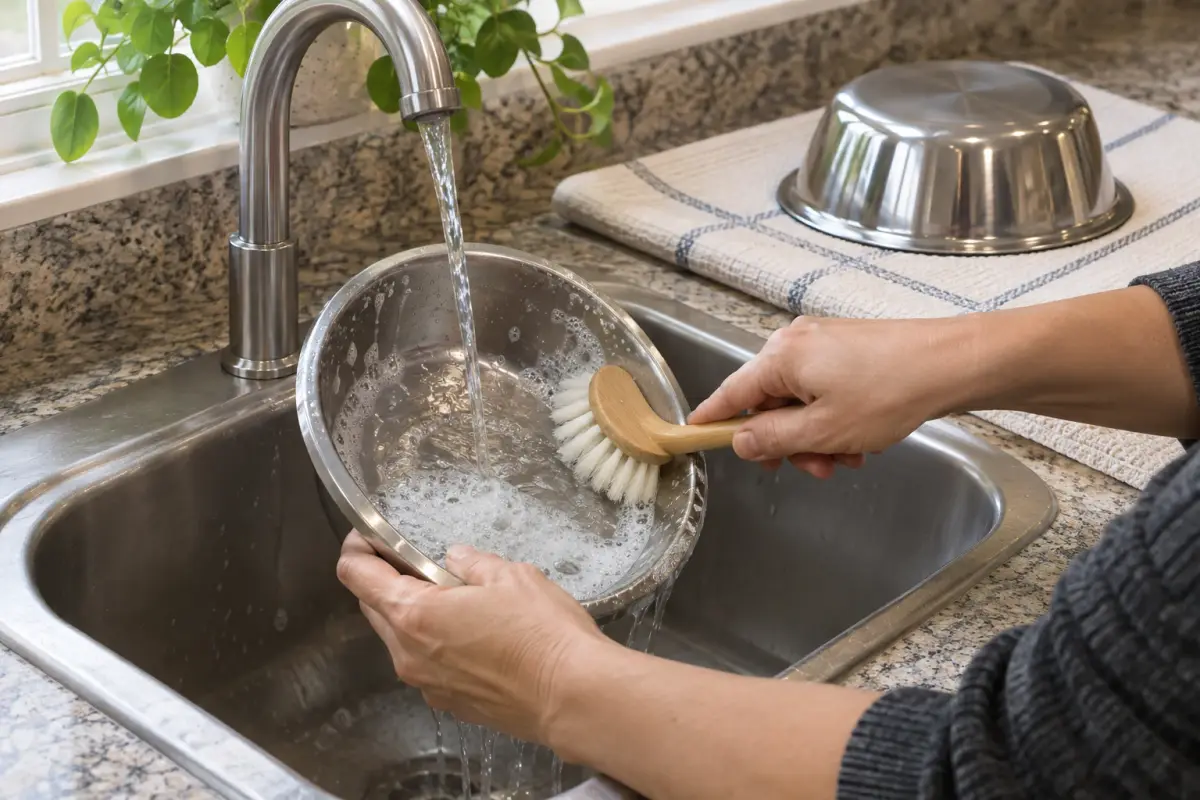
The AKC recommends washing food bowls after every meal of wet food, raw food or soaked kibble, and daily for dry kibble, and washing and refilling water bowls every day. Use hot, soapy water or the dishwasher, rinse well and dry. Having two sets of bowls makes this easier. You can compare materials across dog bowls and feeders in one place.
Check bowls regularly for chips, cracks, rust or deep scratches and replace them when damaged. If you notice your dog has chin acne, red bumps around the mouth, or seems to avoid its bowl, mention it to your vet and try switching material.
This page is general information, not veterinary advice, and it cannot replace an examination by the vet who knows your pet.
Other bowl materials and handling differences
| Material | Physical difference | Inspection point |
|---|---|---|
| Plastic | Light molded body | Scratches,chewing damage and exact care instructions |
| Glass | Rigid non-porous body | Cracks and breakage |
| Collapsible silicone | A body that folds for carrying | Folded shape and damage from chewing |
Common questions
Are stainless steel bowls better for dogs?
For most dogs, yes. Stainless steel is durable, does not scratch easily, is dishwasher-safe and is the most hygienic common material. Choose one with a non-slip base so it does not slide.
Are ceramic dog bowls safe?
Yes, if they are made with a lead-free, food-safe glaze and kept in good condition. Replace any ceramic bowl that chips or cracks, because damage can harbor bacteria and create sharp edges.
Why are plastic bowls bad for dogs?
They scratch easily, and the scratches trap bacteria. Some dogs chew them, and a few dogs react with chin irritation. If you use plastic, choose food-safe plastic and replace it when scratched.
Sources we checked
This guide is general information, not veterinary advice. If your pet is unwell or injured, contact your veterinarian.


