






Buying guides
Best Dog Food and Water Bowls: How to Choose the Right Set
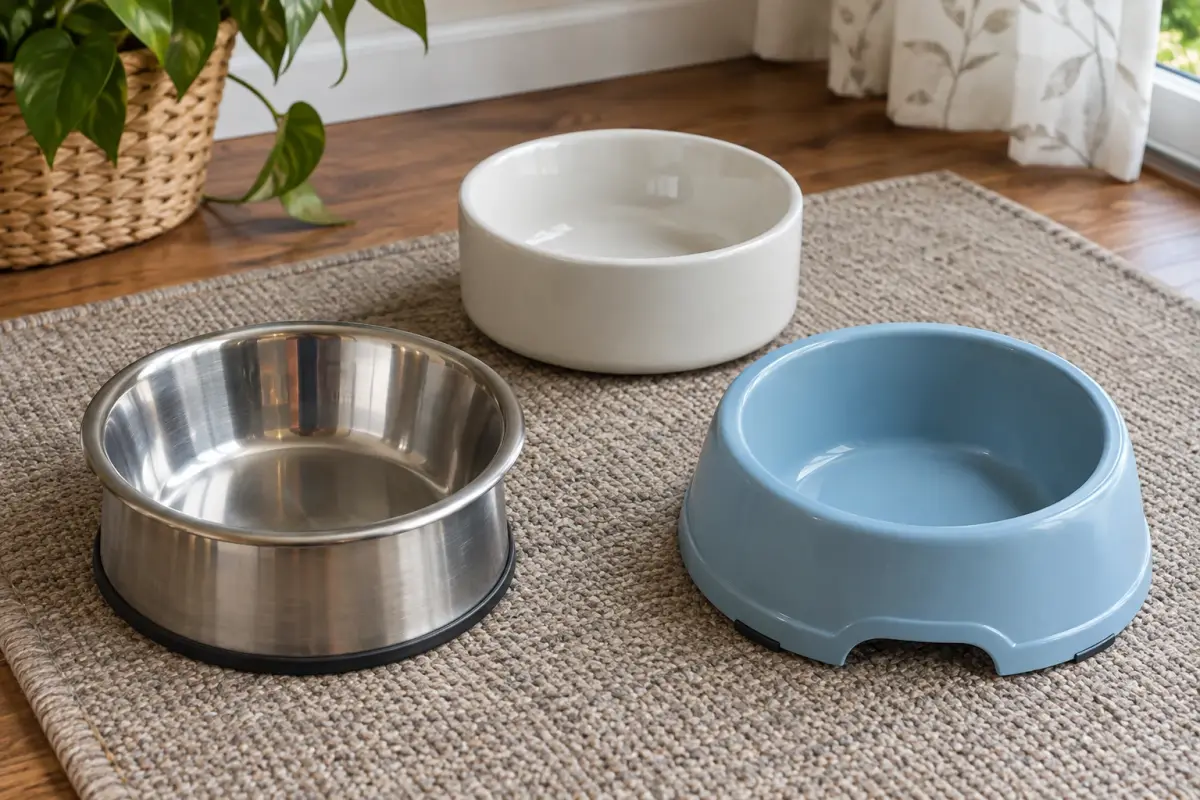
For most dogs the best food and water bowls are stainless steel, sized to hold a full meal and a full day of water, with a non-slip base and a shape that suits your dog's face. Ceramic is a heavy, stable alternative if it is food-grade and unchipped. Plastic is cheap but scratches. Whatever you choose, wash food bowls daily.
By Matt GarnettUpdated November 13, 20263 min read2 sources
What matters most: material
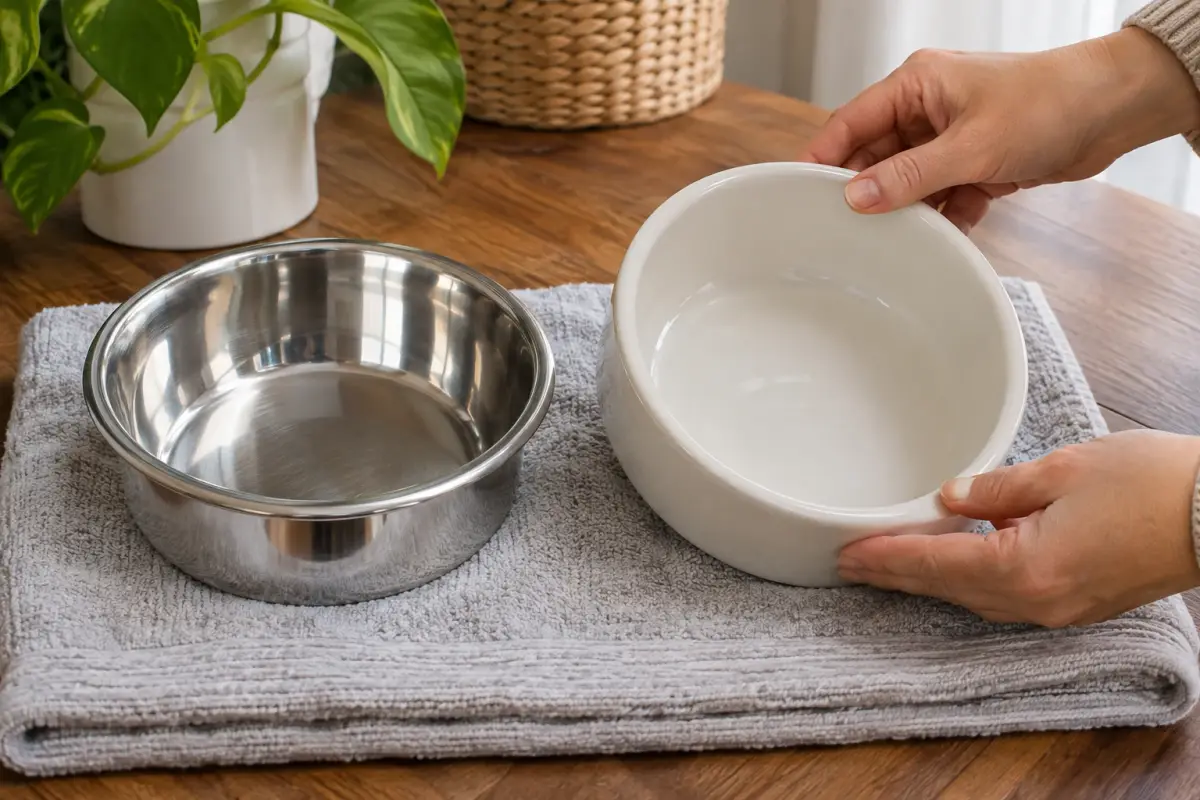
The AKC describes stainless steel as durable, easy to clean, dishwasher-safe and free of chemicals that might leach into food. Its one weakness is weight: a light steel bowl can be pushed around or tipped by an enthusiastic dog, which is why many come with a rubber ring or sit in a weighted stand.
Ceramic is heavy and stable, which reduces spills, but the AKC notes it should be food-grade and non-toxic and may chip or break if dropped; a cracked glaze is hard to clean and should be replaced. Plastic is inexpensive but lightweight and scratches easily, and scratches give bacteria somewhere to live. Non-food-safe plastic may also contain harmful chemicals. Browse our dog bowls and feeders with material in mind first.
Size and shape for your dog
The AKC's rule is simple: the food bowl should hold a whole meal and the water bowl enough water, and if you cannot refill often, a full day's supply. For a large dog that means a wide, deep water bowl of several quarts; for a toy breed, a shallow dish it can reach without straining.
Match the shape to the face. Dogs with narrow muzzles do fine with smaller bowls, while broad-faced and flat-faced dogs need wide, shallow openings. The AKC notes long-eared breeds, such as spaniels and Basset Hounds, benefit from narrow-mouthed bowls that keep ears out of food and water.
Best bowl for each situation
For large dogs, choose heavy stainless steel or ceramic with a wide non-slip base, and for fast eaters a slow-feeder insert. An anti-gulp slow feeder bowl is one version to compare. For small dogs, a shallow, stable bowl that does not slide on hard floors. For puppies, steel bowls survive chewing far better than plastic.
For messy drinkers, a no-spill water bowl with an inward lip or a floating disc reduces splashes, and a silicone mat under both bowls protects the floor. For dogs left alone for long periods, a larger water bowl, or a second one in another room, guards against a tipped bowl leaving the dog without water.
Raised bowls and slow feeders
Many owners of big dogs buy elevated dog bowls, but the AKC notes some studies link them to an increased risk of bloat and advises asking your vet first. Washington State University's veterinary hospital lists avoiding elevated feeding bowls among steps for dogs at risk. Floor-level feeding is the default unless your vet recommends otherwise for a medical reason.
Slow feeders, with ridges that make a dog work around them, help dogs that inhale their food. The AKC says they slow eating and make mealtime more engaging. Choose a pattern your dog can actually reach into, especially for flat-faced breeds.
Cleaning and when to replace
The AKC advises washing bowls daily, after every meal if you feed wet, raw or soaked food, and cleaning and refilling water bowls daily so drool and debris do not foul the water. Stainless steel and ceramic go in the dishwasher; plastic is better hand-washed and replaced more often.
Inspect bowls regularly and replace any that are chipped, cracked or deeply scratched. Compare replacements in our dog bowls and feeders. If your dog develops redness or bumps on the chin, some vets suggest switching away from plastic; ask yours. A change in how much your dog drinks is worth a call to your vet.
Bowl features for different feeding tasks
| Feature | What changes | What to inspect |
|---|---|---|
| Plain food bowl | An open space for the meal | Opening shape, depth and base stability |
| Slow-feeder pattern | Ridges divide the food area | Whether the dog can reach food between the ridges |
| No-spill water design | An inward lip or floating disc changes the drinking opening | Access to the water and access for cleaning |
| Non-slip base | A ring or wider base limits movement | Contact with the actual floor surface |
| Elevated stand | The bowl sits above floor level | Seek individual veterinary advice before choosing raised feeding for a medical reason |
Common questions
What is the best material for dog bowls?
Stainless steel for most dogs: durable, dishwasher-safe and easy to keep hygienic. Food-grade ceramic is a heavier, stable option. Plastic scratches and needs replacing more often.
What are the best dog bowls for large dogs?
Heavy stainless steel or ceramic bowls with a wide, non-slip base, a water bowl holding several quarts, and a slow-feeder insert if your dog eats fast.
What is the best dog bowl for small dogs?
A shallow, stable bowl the dog can reach without stretching, in stainless steel or ceramic, with a non-slip base so it does not slide on hard floors.
How often should I wash my dog's bowls?
Daily, according to the AKC, and after every meal if you feed wet or raw food. Clean and refill the water bowl every day too.
Sources we checked
This guide is general information, not veterinary advice. If your pet is unwell or injured, contact your veterinarian.


