






Buying guides
Best Dog Bowl for Small Dogs: How to Choose
The best dog bowl for a small dog is sized to its muzzle, heavy or grippy enough that it will not slide, easy to wash and made of a safe material. Stainless steel and food-grade ceramic are the usual choices. A small dog who gulps meals may also do better with a slow-feeding design.
By Matt GarnettUpdated November 13, 20264 min read2 sources
Size the bowl to the dog's face, not the dog's weight
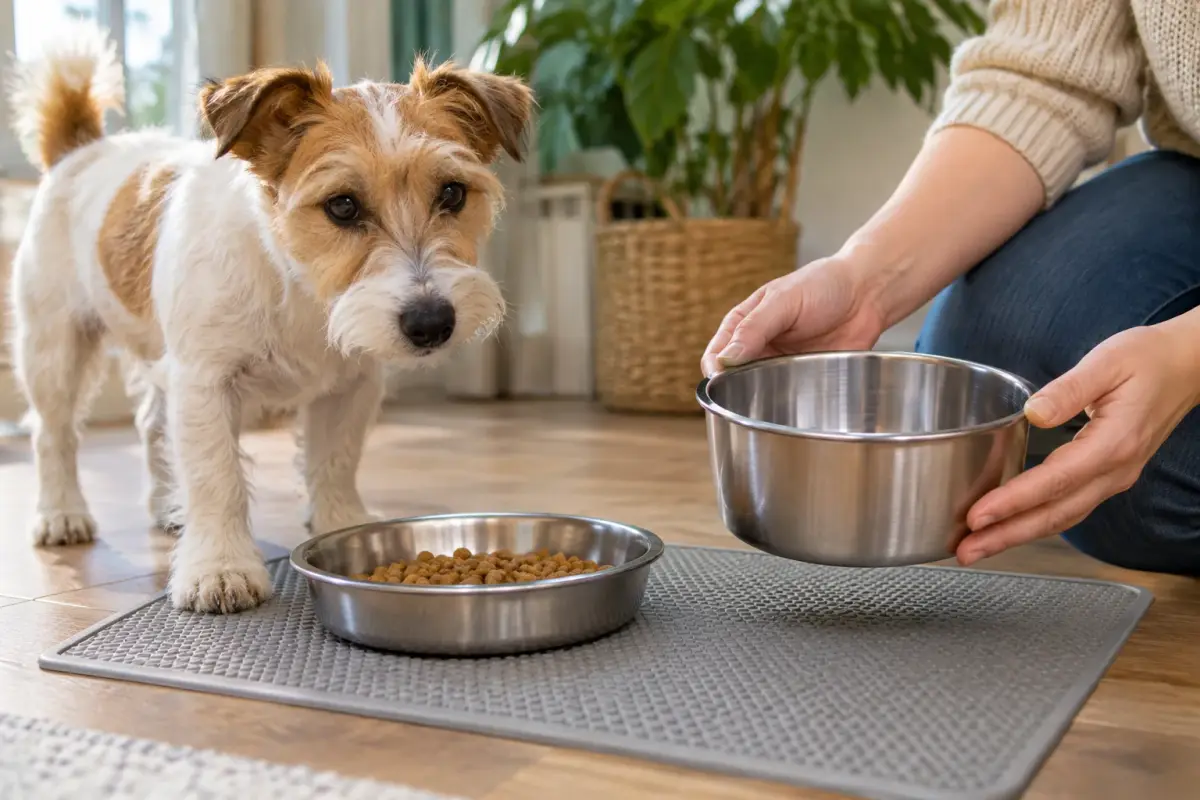
The AKC says a bowl should hold all of a meal and enough water, and that the opening should match the face: a narrow muzzle suits a smaller bowl and a large face needs a wide opening. That matters for small dogs, because an oversized bowl makes it hard to reach the last bite, and a tiny one overflows. Browse our dog bowls and feeders with your dog's muzzle in mind.
Water needs thought as well. The AKC says dogs should always have water available, and if you cannot refill the bowl several times a day, you should choose one that holds a full day's supply. For a small dog that usually means a stable, medium bowl for water placed away from the food bowl, rather than a small dish you must keep topping up.
Material: stainless steel, ceramic or plastic
According to the AKC, stainless steel is durable, easy to clean, dishwasher-safe and does not leach chemicals, but it is lightweight, so an active dog can tip it. Ceramic is heavy and less likely to spill, but it should be non-toxic, food-grade ceramic, it is not always dishwasher-safe and it chips or breaks if dropped.
Plastic is inexpensive and often dishwasher-safe, but it is lightweight, scratches easily and may need replacing more often, and plastic that is not food-safe may contain harmful chemicals. For a small dog who pushes a bowl across the floor, look for stainless steel with a rubber base or a heavier ceramic bowl, and avoid scratched or cracked plastic.
Shape and depth for flat-faced and long-eared dogs
Face shape changes what works. The AKC says dogs with long ears, such as hounds and spaniels, may do better with a narrow-mouthed bowl that keeps the ears out of the water. For flat-faced small dogs, the AKC's tear-stain article says a water bowl can soak the mouth and nose, and suggests a water bowl with a narrow flare, like those used for birds.
If your dog still gets wet, the AKC suggests using paper towels to absorb the excess water around the mouth after drinking. Very shallow dishes can scatter food, and very deep ones are awkward for a short muzzle, so try a moderate depth and watch how your dog eats before you commit to a set.
Slow feeders for small dogs who gulp
The AKC says slow-feed bowls have raised ridges that slow eating, which may aid digestion and make mealtime more engaging, and that puzzle feeders hide food in compartments the dog must work to open. A slow-feed bowl in a gentle pattern, such as the slow food bowl in a pizza design, is one example of the style for small dogs.
Choose a pattern that is shallow enough for a small muzzle to reach into, because a deep maze frustrates many small dogs. See our slow feeder dog bowls for more styles, and our guide to the best slow feeder dog bowls for how to pick the pattern. If your dog vomits after eating or gulps constantly, talk to your vet.
Raised bowls: ask your vet first
Raised bowls look comfortable, but the AKC says some studies link elevated bowls to a higher risk of bloat, so check with your vet first. Our guide to elevated bowls for small dogs covers the question in more detail before you buy a stand.
A floor-level bowl is the safe default for most small dogs, and that is one reason a stable, non-slip base matters. If your vet agrees that a raised bowl suits your dog, keep the height modest and the stand stable.
Cleaning and replacing bowls
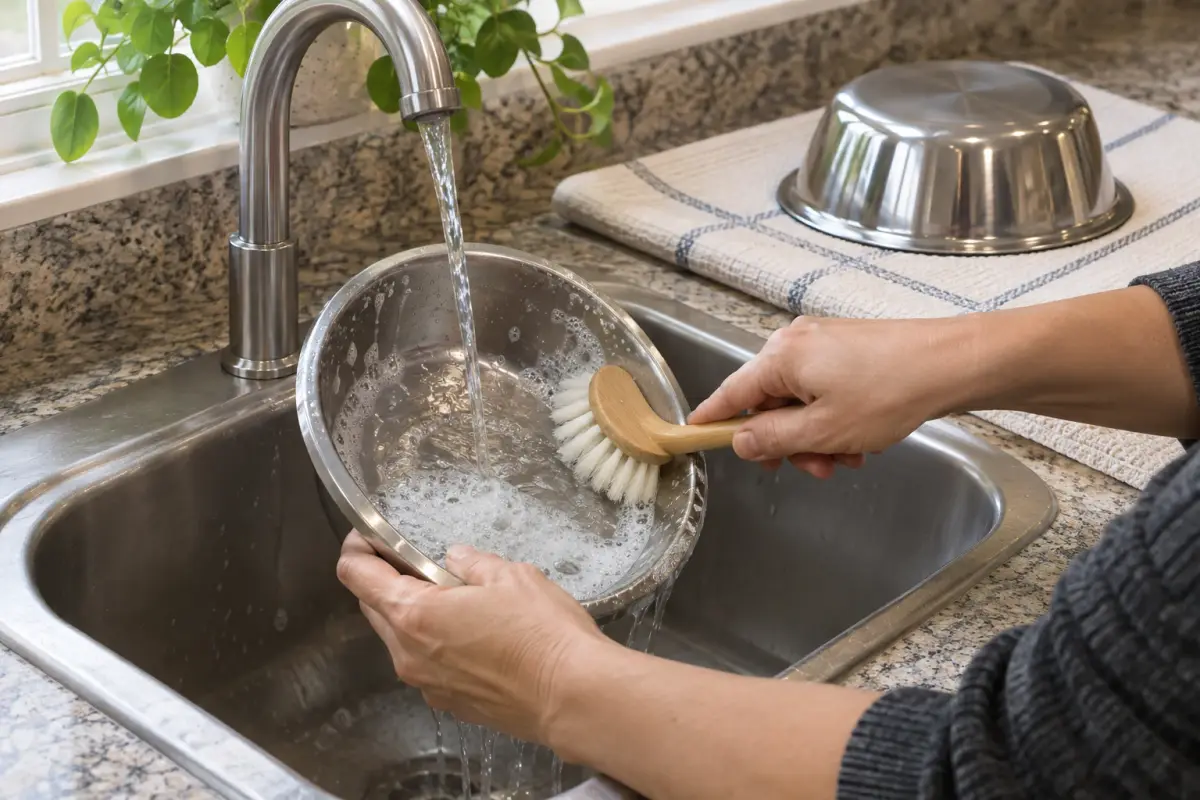
The AKC says to wash bowls after every meal if you feed wet, raw or soaked food, and daily even with dry kibble to prevent stale or sour odors. Refill and clean water bowls daily, and keep two food bowls so you do not have to wash the same one more than once a day.
Inspect bowls regularly and replace any that are chipped, cracked or deeply scratched, because damaged surfaces hold bacteria and can injure a small dog's mouth. When you are ready to compare designs, our dog bowls and feeders are sorted by type, and the general guide to the best dog bowls covers material and size.
Common questions
What size bowl does a small dog need?
Choose a bowl that holds a full meal with a narrow enough opening for your dog's muzzle. The AKC says a narrow muzzle suits a smaller bowl, while the water bowl should hold plenty so it never runs dry.
Is stainless steel or ceramic better for a small dog?
Both work. Stainless steel is durable and dishwasher-safe but light enough to tip, while food-grade ceramic is heavy and stable but can chip. Pick the one that stays put when your dog eats.
Are slow feeder bowls good for small dogs?
They can help a small dog who gulps, because raised ridges slow eating. Choose a shallow, gentle pattern a small muzzle can reach, and talk to your vet if your dog vomits after meals.
Should a small dog use a raised bowl?
Check with your vet first. The AKC notes some studies link elevated bowls to a higher risk of bloat, so a floor-level bowl is the safer default unless your vet advises otherwise.
Sources we checked
This guide is general information, not veterinary advice. If your pet is unwell or injured, contact your veterinarian.


