






Buying guides
Best Elevated Dog Bowls for Large Dogs: What to Know First
An elevated dog bowl can help a dog with arthritis, neck pain or certain medical conditions eat more comfortably, but it is not automatically better for big dogs. Some studies link raised bowls to a higher bloat risk in large, deep-chested breeds, so ask your vet first. If you do raise the bowl, set it at about elbow height on a heavy, non-tip stand.
By Matt GarnettUpdated November 13, 20264 min read4 sources
The question to answer first: bloat
Elevated feeders were once recommended to prevent bloat in large breeds. The evidence has since pointed the other way. The AKC notes that some studies link elevated bowls to an increased risk of bloat and advises asking your veterinarian before using one, and Washington State University's veterinary hospital lists avoiding elevated feeding bowls among prevention steps for at-risk dogs.
Bloat, or gastric dilatation-volvulus, is an emergency in which the stomach fills and can twist. Large and giant deep-chested breeds such as Great Danes, German Shepherds, Standard Poodles, Weimaraners and Dobermans are most at risk. For those dogs, floor-level feeding is the default unless your vet has a reason to raise the bowl.
When a raised bowl does help
For dogs with arthritis or other mobility problems, VCA recommends raising food and water bowls to about elbow height, and its advice for mobility-compromised dogs is between elbow and shoulder. Dogs that find it hard to lower their head may otherwise drink less, which VCA notes can contribute to dehydration and urinary problems.
Some medical conditions, such as megaesophagus, call for upright feeding on a vet's instructions. Older dogs with stiff necks, and very tall dogs that splay their front legs to reach the floor, are other cases where a vet may suggest elevation. This is a decision to make together, weighing your dog's comfort against its bloat risk.
How to measure the right height
Stand your dog squarely and measure from the floor to the point of the elbow. VCA's guidance of about elbow height means the rim of the bowl should sit roughly there, so the dog can eat with its neck level or slightly lowered rather than craning up. Subtract the bowl's depth if the stand height is quoted to the top of the frame.
Adjustable stands are worth considering for a growing puppy or a dog whose needs may change. Measure again after a growth spurt or if your dog starts eating with its head tilted up, which suggests the bowl is too high.
Elevated bowls for small dogs
For any bowl, the AKC says it should hold all of the dog's food and enough water. Dogs with narrow muzzles can use smaller bowls, dogs with large faces need wide openings, and dogs with long ears may do better with narrow-mouthed bowls, which keeps ears out of the food.
A healthy small dog that eats comfortably from the floor does not need a raised stand simply because it is sold for small breeds. Ask your vet whether elevation is appropriate before choosing the height. If it is, compare elevated bowls for small dogs by the individual dog's measurements and check that the stand remains stable.
Elevated bowl types compared
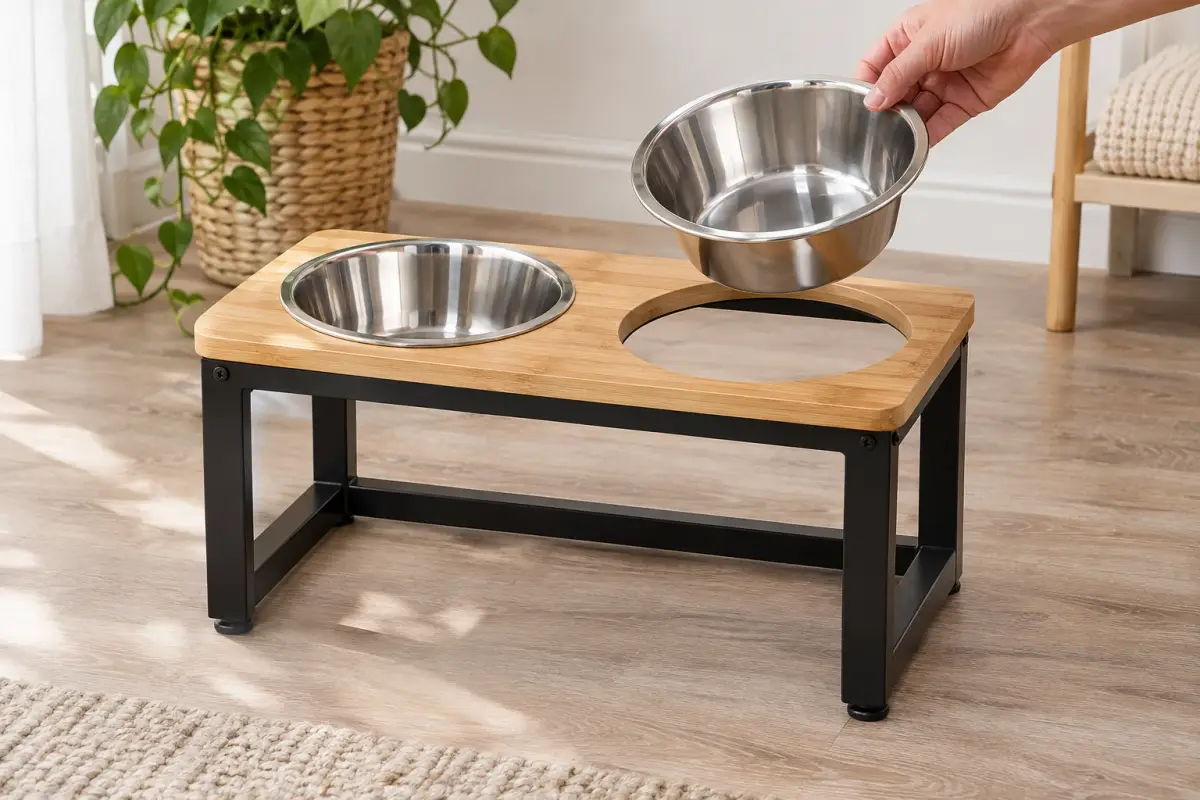
Fixed-height stands with stainless steel bowls are simple, sturdy and easy to clean. Adjustable stands change height in steps or slide. Stands with storage keep food nearby but add bulk. Single raised bowls suit one dog; double stands hold food and water together. Smaller dogs have their own height and bowl-size needs, covered in the small-dog section above.
Stability matters more than style: a stand should not rock, slide or tip when a large dog pushes into it. Look for a wide footprint, non-slip feet and removable stainless steel bowls that go in the dishwasher. Wooden stands should have a sealed finish that wipes clean.
What to avoid and care

Avoid raising bowls for a large, deep-chested dog purely for convenience, and avoid stands so tall the dog stretches upward. Avoid light frames that wobble and plastic bowls that scratch. If your dog bolts food, a floor-level slow feeder bowl addresses that more safely than raising the bowl.
Wash bowls daily, check the joints and feet of raised bowl stands regularly, and know the signs of bloat: a swollen or tight belly, retching without producing anything, drooling and restlessness. Those need an emergency vet immediately.
This page is general information, not veterinary advice, and it cannot replace an examination by the vet who knows your pet.
Raised-feeder stand and bowl arrangements
| Arrangement | What changes | What to verify |
|---|---|---|
| Fixed height | Bowls rest at one level | Actual bowl height and base footprint |
| Adjustable | Stand changes height or setting | Range and locking method |
| Storage stand | A cabinet or container beneath the bowls | Storage access and overall size |
| Single bowl | One dish in a raised support | Dish removal and support stability |
| Double stand | Two dishes share a frame | Each opening and clearance around the dishes |
Common questions
Are elevated dog bowls good for large dogs?
Not automatically. Some studies link raised bowls to higher bloat risk in large, deep-chested breeds. They can help dogs with arthritis or specific medical needs. Ask your vet first.
How high should an elevated dog bowl be?
About level with your dog's elbow, according to VCA, so the dog eats with its neck level. Measure from floor to elbow with the dog standing square.
Do raised dog bowls cause bloat?
They do not cause it directly, but some studies associate elevated bowls with increased bloat risk in large breeds, and university vets advise avoiding them for at-risk dogs.
Which dogs benefit from raised bowls?
Dogs with arthritis, neck pain or mobility problems, and dogs with conditions like megaesophagus on a vet's advice. Healthy dogs usually eat comfortably from the floor.
Are elevated dog bowls good for small dogs?
Not automatically. Cornell lists a raised food bowl as a bloat risk factor and the AKC cites studies linking raised bowls to bloat. Ask your vet first, especially if your dog has a health condition.
Sources we checked
- AKC — Dog Bowls: Choosing the Right Dog Bowl for Your Dog
- Washington State University Veterinary Teaching Hospital — Gastric dilation and volvulus (GDV) and bloat in dogs
- VCA Animal Hospitals — Creating a Comfortable Home for Your Mobility Compromised Dog
- Cornell University College of Veterinary Medicine — Gastric dilatation volvulus (GDV) or bloat
This guide is general information, not veterinary advice. If your pet is unwell or injured, contact your veterinarian.


