






Buying guides
How High Should a Dog Bowl Be?
For most healthy dogs, a bowl on the floor is fine and is the safest default for large, deep-chested breeds at risk of bloat. A raised bowl can help dogs with neck or joint pain or certain swallowing problems, but only on your vet's advice. If you do raise it, a common rule of thumb is a rim roughly level with the bottom of your dog's chest.
By Matt GarnettUpdated November 14, 20264 min read3 sources
The bloat question comes first
Raised feeders were once widely recommended to prevent bloat in big dogs. The research has not supported that. The AKC notes that later studies linked elevated bowls with an increased risk of bloat, and the Merck Veterinary Manual lists avoiding elevated food bowls among its prevention advice for at-risk dogs. Bloat, or gastric dilatation-volvulus, is a life-threatening emergency in which the stomach fills with gas and can twist.
So if you have a Great Dane, German Shepherd, Standard Poodle, Weimaraner, setter, Saint Bernard, Doberman or other large, deep-chested dog, keep the bowl on the floor unless your vet has a specific reason to raise it, in which case an elevated dog bowl is the thing to look at. Smaller meals, slower eating and calm mealtimes do far more for bloat risk than bowl height.
When a raised bowl can help
There are good medical reasons a vet may suggest raising a bowl. Dogs with arthritis in the neck, spine, shoulders or elbows can find bending to the floor painful. Very tall, older dogs may struggle to lower their heads and get up again. Dogs with megaesophagus, a condition in which the esophagus loses its normal function, are often fed in an upright position so gravity helps food reach the stomach, sometimes in a special feeding chair.
If your dog shows stiffness, hesitates at its bowl, eats lying down when it used to stand, or drops food, ask your vet whether pain or another problem is involved. A raised bowl, such as a raised ceramic double bowl stand or a tilted wooden raised bowl stand, may be part of the answer, alongside pain management.
How to measure the right height
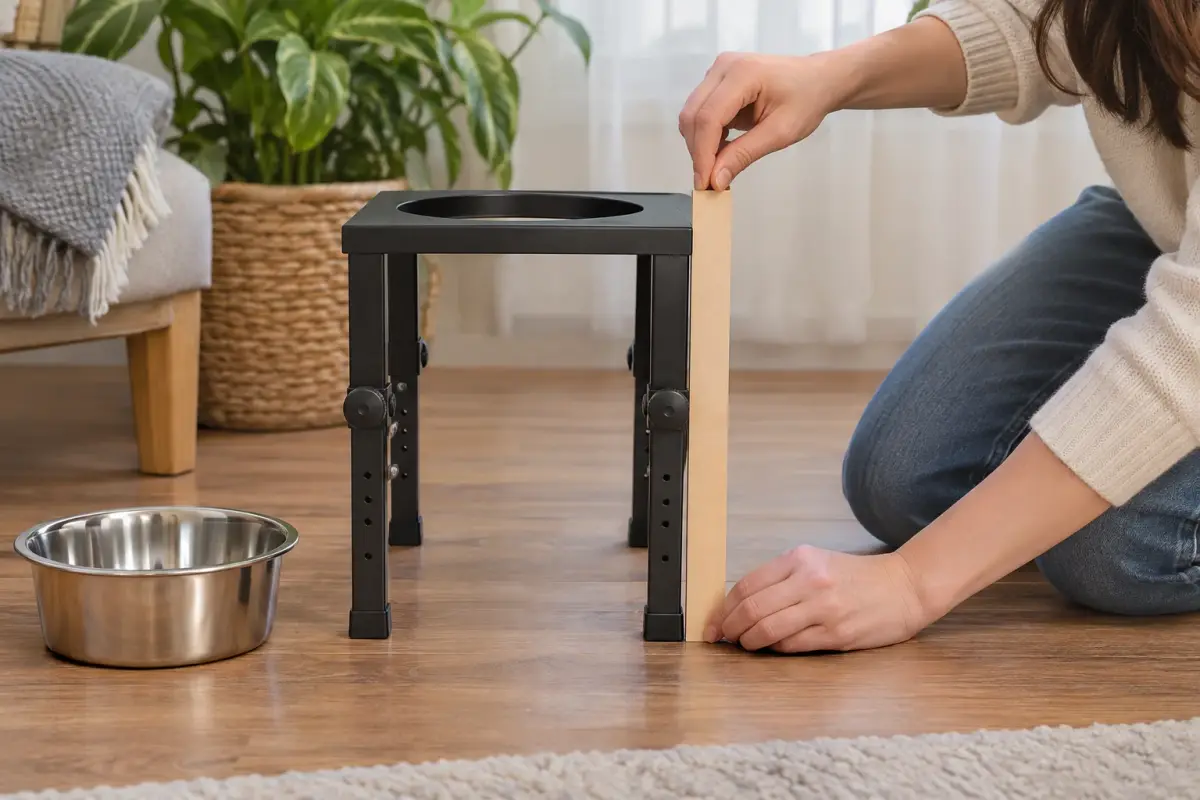
If your vet agrees a raised bowl is right, measure your dog standing squarely on all four feet. Measure from the floor to the bottom of the chest, just behind the front legs. A common rule of thumb is to set the rim of the bowl at about that height, so your dog can eat with its head and neck level or gently lowered, without stretching up or stooping down.
Another way often used is to measure from the floor to the top of the shoulders and subtract a few inches, roughly 6 inches for a large dog and less for a small one. Both are only starting points. Watch your dog eat: its back should stay fairly level, and it should not have to crane its neck upward. Adjustable-height stands make it easy to fine-tune.
Rough height ranges by dog size
As a general guide only, small dogs under about 20 lb usually need no more than a few inches of lift, if any. Medium dogs of about 20 to 50 lb tend to fall in the range of roughly 8 to 12 inches when raised, larger dogs of 50 to 90 lb around 12 to 16 inches, and giant breeds higher still. Leg length and chest depth vary so much between breeds that your own measurement always beats a chart.
For a dog with megaesophagus, your vet will usually give specific instructions about posture and how long to keep your dog upright after eating, which may involve far more than a bowl stand. Follow those rather than any general height guide.
Practical tips for any bowl
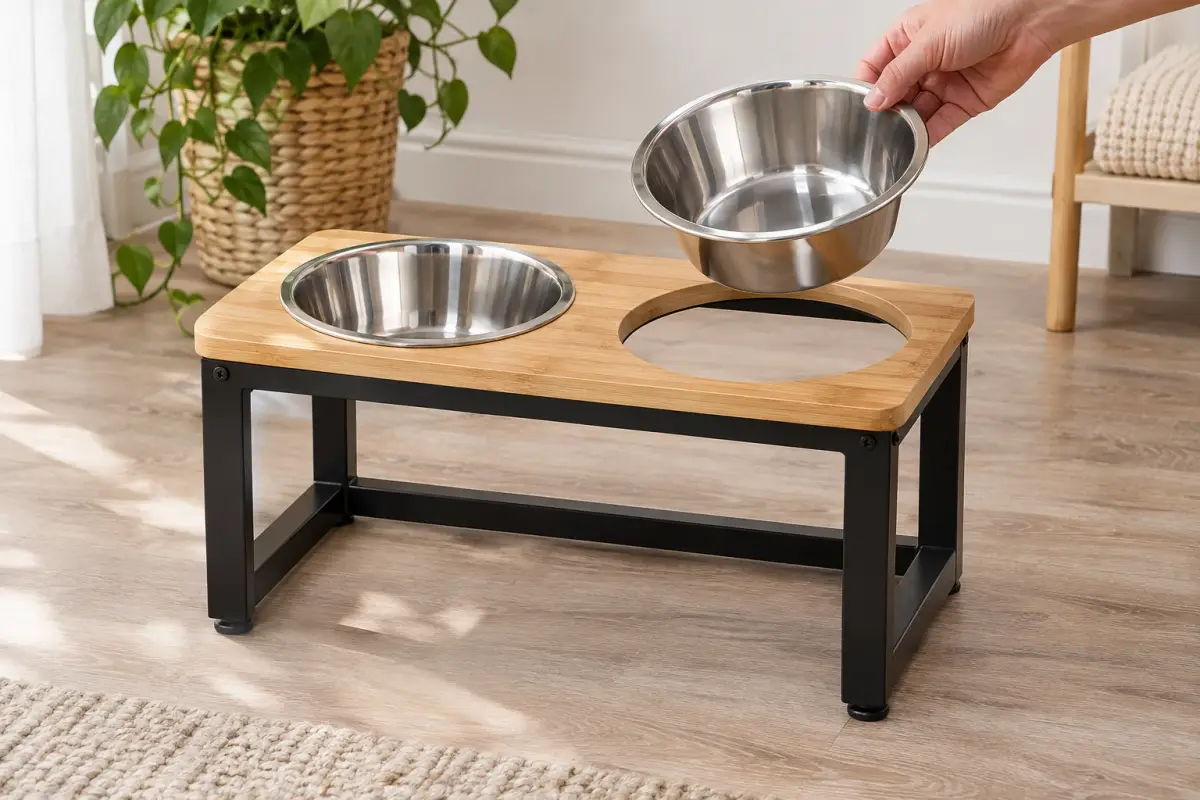
Whatever the height, choose a stable dog bowl that does not slide, ideally stainless steel or heavy ceramic, sized for your dog's portion. Place it in a quiet spot away from household traffic, and feed dogs separately if they compete. Wash food bowls daily, or after each meal for wet or raw food, and keep fresh water available.
For fast eaters, a slow feeder bowl or food puzzle helps far more than changing height. If you are unsure what suits your dog, ask at your next vet visit; it is a quick question that takes your dog's breed, size and health into account.
This page is general information, not veterinary advice, and it cannot replace an examination by the vet who knows your pet.
Common questions
Are raised dog bowls good or bad?
They are useful for some dogs with neck or joint pain or swallowing problems, but studies have linked them with higher bloat risk in large breeds. Ask your vet before using one, especially for a big dog.
Should a Great Dane eat from a raised bowl?
Great Danes are among the breeds at highest risk of bloat, and current guidance leans against raised bowls for them. Feed from the floor unless your vet advises otherwise for a medical reason.
How do I measure my dog for an elevated feeder?
With your dog standing, measure from the floor to the bottom of the chest. A rim at about that height usually lets your dog eat with its head level. Check by watching your dog eat.
Sources we checked
This guide is general information, not veterinary advice. If your pet is unwell or injured, contact your veterinarian.


