






Buying guides
Best Slow Feeder Dog Bowl: How to Choose the Right Pattern
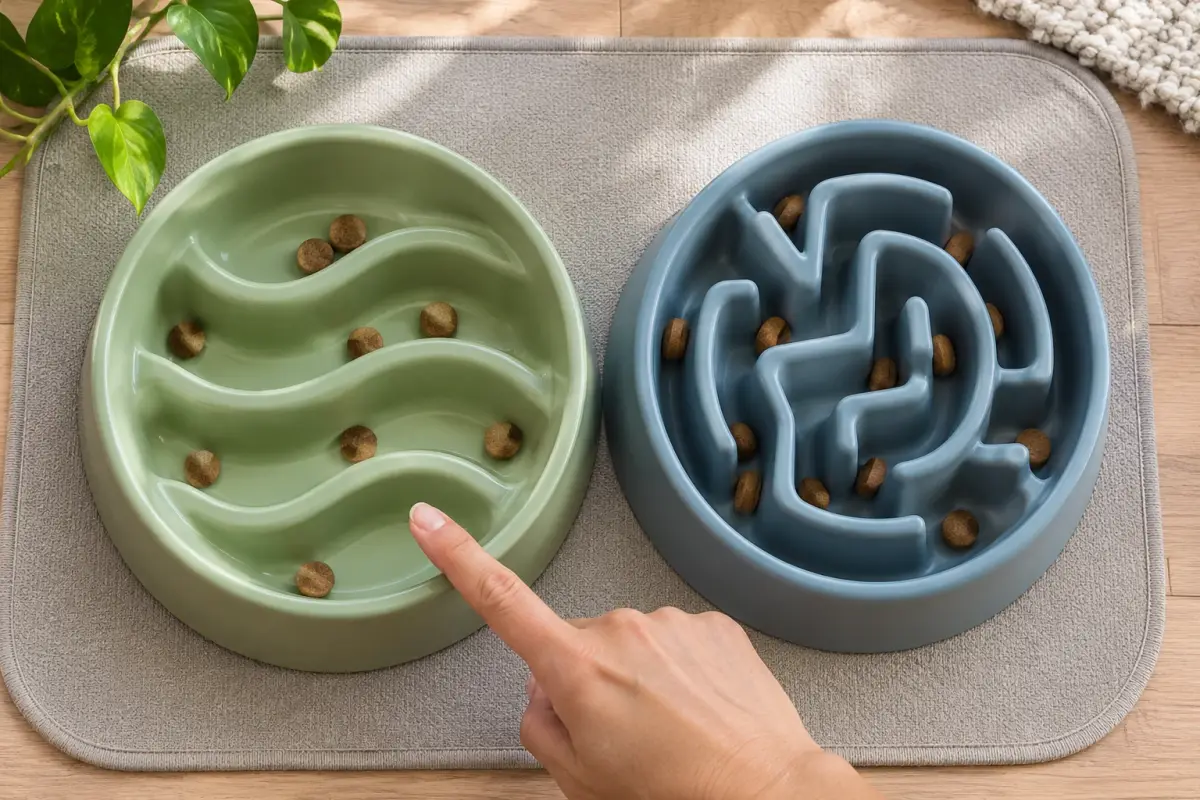
The best slow feeder bowl matches your dog's face and food. Ridges should be deep enough to slow eating but spaced so your dog's muzzle can reach every piece; flat-faced breeds need shallow, wide patterns. Stainless steel and ceramic are easiest to keep clean, and wet food needs open, rounded channels you can scrub. A non-slip base stops the bowl skating across the floor.
By Matt GarnettUpdated November 14, 20264 min read2 sources
What matters most: pattern, depth and your dog's face
A slow feeder works by breaking a meal into small pockets, so your dog has to work around ridges rather than inhale the bowl. The AKC's guidance on helping dogs eat more slowly describes slow-feed bowls as a physical way to slow a fast eater, and its bloat article notes fast eaters have about five times the risk of bloat of slow eaters. The design has to slow your dog without frustrating it.
The pattern and depth are the keys. Narrow, deep channels slow a fast eater most, but a dog with a short muzzle cannot reach the bottom. Wide, shallow spirals suit flat faces and small mouths. Start with a moderate pattern and watch: if your dog finishes in under a minute, go more complex; if it gives up or paws food onto the floor, go simpler.
Materials compared
Stainless steel slow feeders are the most hygienic and durable and go in the dishwasher, but they come in fewer patterns. Ceramic is heavy, stable and easy to clean, though it can chip. Plastic and silicone offer the widest choice of patterns and are light and inexpensive, but plastic scratches and holds bacteria in the grooves, so it needs careful cleaning and replacing once scratched.
Silicone inserts that fit into an ordinary bowl are a flexible option and easy to wash. For heavy chewers, avoid soft plastic that can be chewed into pieces. Whatever the material, a rubber base or weighted bottom stops the bowl sliding and stops determined dogs flipping it over to tip the food out.
Best slow feeder for each dog
For large, fast-eating dogs and deep-chested breeds, choose a large, stable bowl with a moderately complex maze, in stainless steel or heavy ceramic. For flat-faced breeds such as French Bulldogs, Pugs and Bulldogs, choose a shallow, open pattern with low ridges so the nose and jaw can reach every piece. For small dogs and puppies, use a small bowl with a simple pattern.
For wet or raw food, choose open, rounded channels rather than narrow pockets, since sticky food is hard to clean out of tight corners; lick mats are another option. For dogs that get frustrated, a simple spiral feeder or a scatter-feeding snuffle mat is gentler. For multi-dog homes, feed each dog separately so the slow feeder is not undone by competition.
What to avoid
Avoid patterns so deep that your dog has to jam its face into the bowl, and avoid narrow slots that trap kibble, which frustrate dogs and cause chewing on the bowl. Avoid thin plastic for strong chewers and any bowl with cracks or deep scratches. Avoid using a slow feeder as a reason to feed one big meal; smaller, more frequent meals help fast eaters too.
A slow feeder lowers one risk factor but does not prevent bloat. Learn the signs: a swollen belly, retching without bringing anything up, restlessness and drooling, especially after a meal. Any of these means calling your vet or an emergency vet immediately. If your dog vomits often after eating, ask your vet whether something besides speed is involved.
How to choose the right size
Choose a bowl that holds a full meal without kibble piling above the ridges, because food stacked on top is eaten as fast as from a normal bowl. Check the stated capacity in cups against your dog's meal size. For large dogs, that often means a bowl holding 3 to 4 cups; for small dogs, 1 cup or less.
The overall diameter matters for big dogs, which need room to move their muzzle between ridges. For stainless steel slow feeders, pick the size that suits your dog's mouth, not only its meal. If you are unsure, start with a moderate pattern and a size up, and adjust once you see how your dog eats.
Cleaning and how long it lasts
Wash a slow feeder after every meal. The ridges trap food and saliva, which grow bacteria quickly. A bottle brush or an old toothbrush gets into the channels, and most stainless steel, ceramic and many silicone feeders are dishwasher safe. Dry fully before refilling.
Stainless steel lasts for years. Replace ceramic when it chips and plastic as soon as it scratches or shows chew marks. Rotate two slow feeder bowls, so one is always clean. If your dog's eating speed changes suddenly, faster or much slower, it is worth checking with your vet, since appetite changes can be an early sign of illness.
This page is general information, not veterinary advice, and it cannot replace an examination by the vet who knows your pet.
Slow-feeder bodies and removable inserts
| Material or form | Construction difference | What to inspect |
|---|---|---|
| Stainless steel | Rigid metal feeding pattern | Groove access and exact cleaning directions |
| Ceramic | Heavier glazed body | Chips,cracks and pattern access |
| Plastic | Molded lightweight feeding pattern | Scratches and chewing damage |
| Silicone | A flexible feeding surface | Material condition and food-contact declaration |
| Removable insert | A separate pattern placed in a bowl | Fit within the actual bowl and removal for cleaning |
Common questions
Are slow feeder bowls good for dogs?
For fast eaters, yes. They slow eating, add mental work and lower one risk factor for bloat. Match the pattern to your dog's face so it is challenged but not frustrated.
What is the best slow feeder for a French Bulldog?
A shallow, wide pattern with low ridges, so a flat face can reach every piece, in a heavy or non-slip bowl. Deep mazes frustrate short-nosed dogs.
Can I use a slow feeder for wet food?
Yes, if the channels are open and rounded so you can clean them. Narrow pockets trap wet food. A lick mat is another good option for soft or wet meals.
Is a stainless steel slow feeder better than plastic?
For hygiene and lifespan, yes. Plastic offers more patterns but scratches and holds bacteria. If you choose plastic, wash it after every meal and replace it once it scratches.
Sources we checked
This guide is general information, not veterinary advice. If your pet is unwell or injured, contact your veterinarian.


