






Care & how-to
How Many Times a Day Should a Dog Eat?
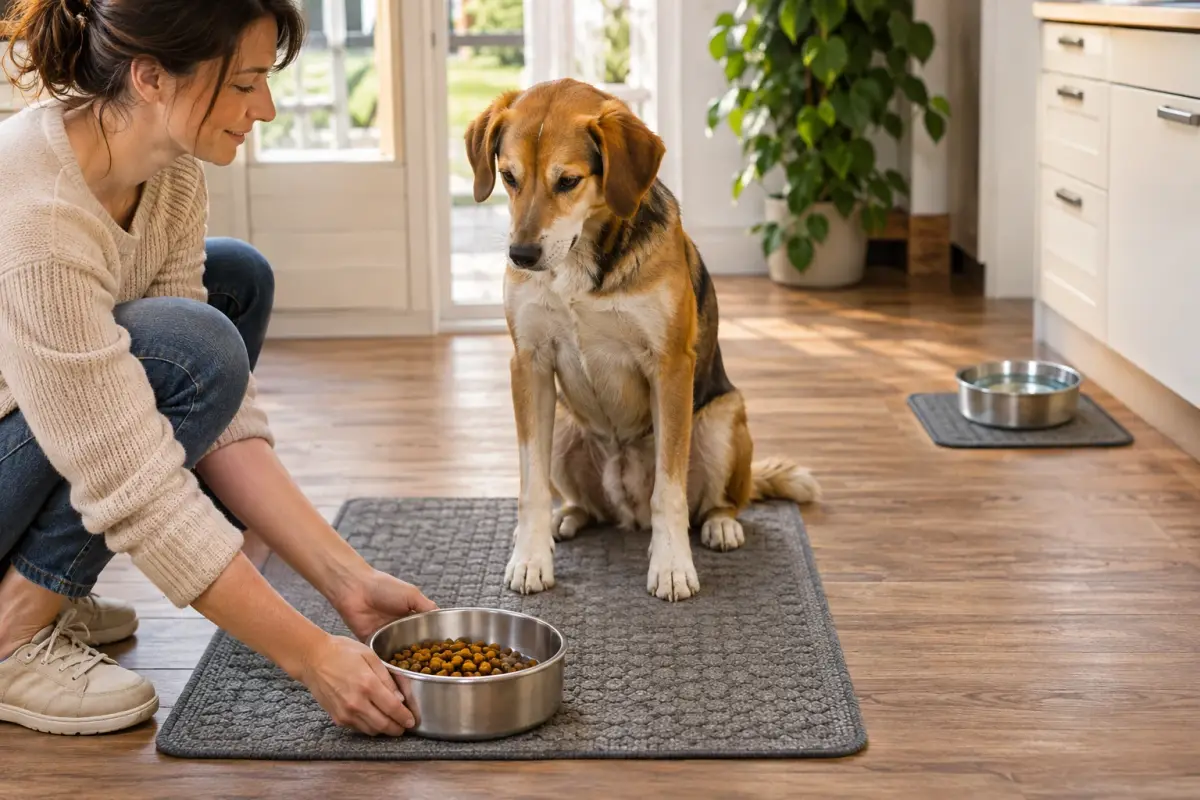
Most adult dogs should eat twice a day, roughly 8 to 12 hours apart. Puppies need more frequent meals: about four a day until around three months, three a day until about six months, then two. Toy-breed puppies may need meals even more often. How much to feed depends on your dog's size, age and activity, so start from the food label and adjust with your vet.
By Matt GarnettUpdated November 9, 20264 min read3 sources
Adult dogs: two meals a day
VCA Animal Hospitals recommends at least two meals a day for most dogs, and the AKC agrees that two is the right number for most adults. A typical schedule is breakfast around 7 a.m. and dinner around 6 p.m. Splitting the daily amount keeps your dog from getting overly hungry, makes mealtimes calmer, and lowers the risk of bloat in large, deep-chested breeds, which is higher when dogs eat one large meal a day.
Some dogs do fine on one meal, and research into once-daily feeding is ongoing, but it is not a reason to change on your own. Dogs with certain conditions, such as diabetes or reflux, may need meals timed around medication or split into three or more. Talk to your vet before changing the number of meals.
Puppy feeding schedule by age
Puppies have small stomachs and high energy needs. The AKC suggests that toy-breed puppies may need four to six meals a day in the first few months because they are prone to low blood sugar, medium breeds about three, and large breeds three to four. A common general pattern is four meals a day from 6 to 12 weeks, three meals a day from 3 to 6 months, and two meals a day from about 6 months onward.
Puppies usually need to potty within 10 to 15 minutes of eating, so build potty trips into the schedule. Feed a food formulated for growth, and for large and giant breeds choose one made for large-breed puppies, which supports steady rather than rapid growth. Your vet can advise on when to switch to adult food, often around 12 months for most dogs and later for giant breeds.
Sample daily schedules
Puppy, 8 to 12 weeks: 7 a.m., 11 a.m., 3 p.m. and 7 p.m., each followed by a potty break. Puppy, 3 to 6 months: 7 a.m., 12 p.m. and 6 p.m. Adult dog: 7 a.m. and 6 p.m. Senior dog: the same as an adult, or three smaller meals if your vet suggests it for digestion or weight.
Pick times that suit your household and keep them consistent; a timed automatic dog feeder, for example an automatic dry food feeder, can keep meals on schedule when your day varies. Dogs are creatures of habit, and VCA notes that regular mealtimes also make house training and any future food change easier. If you use food for training, take those treats or kibble from the day's total so you do not overfeed.
How much should I feed my dog?
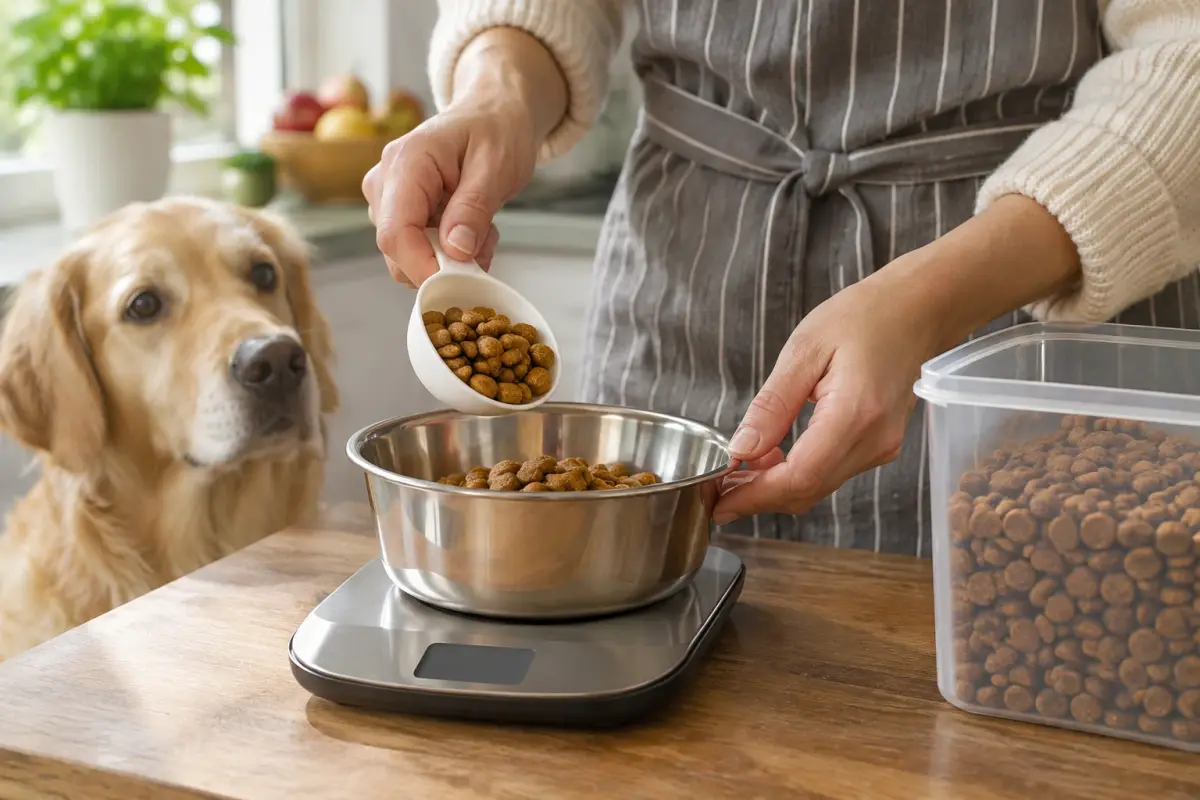
Portion size matters more than the number of meals. Start with the feeding guide on your dog's food, which gives a daily amount by weight, then divide it across the day's meals. The AKC cautions that label charts and generic guides can overestimate, so treat them as a starting point. Weigh or level-measure food with a proper cup rather than scooping by eye.
Check your dog's body every couple of weeks. You should be able to feel the ribs easily under a thin layer of fat and see a waist from above. If your dog is gaining, reduce the amount by about a tenth; if it is losing weight or seems hungry and thin, increase slightly. Your vet can give a calorie target based on ideal weight, which is the most accurate way to set portions.
Why free-feeding is discouraged
Leaving a full bowl out all day, known as free-feeding, is generally not recommended. VCA links it in puppies to obesity, binge eating, orthopedic problems and diabetes, and the AKC notes it makes it hard to know how much a dog has eaten, especially in multi-pet homes. It also takes away a useful health signal: a dog on scheduled meals that leaves food is telling you something.
If your dog is a grazer, you can still measure out the full daily amount in the morning and pick up whatever is left at the end of the day, or use food puzzles or a slow feeder bowl to spread eating out. Contact your vet if your dog skips more than a meal or two, or suddenly eats much more than usual.
This page is general information, not veterinary advice, and it cannot replace an examination by the vet who knows your pet.
Common questions
Is it OK to feed my dog once a day?
Some healthy adult dogs manage on one meal, but most vets recommend two, and once-daily feeding raises bloat risk in large, deep-chested breeds. Ask your vet before switching to one meal.
What time should I feed my dog?
Any consistent times that suit you work, typically morning and early evening about 8 to 12 hours apart. Avoid vigorous exercise for about an hour after meals, especially for large breeds.
When should a puppy go from three meals to two?
Most puppies move to two meals around six months, though toy and giant breeds can differ. Your vet can confirm the right timing at a puppy check-up based on your puppy's growth.
Sources we checked
This guide is general information, not veterinary advice. If your pet is unwell or injured, contact your veterinarian.


