






Breeds
Soft vs Hard Cat Carrier: Which Is Better?
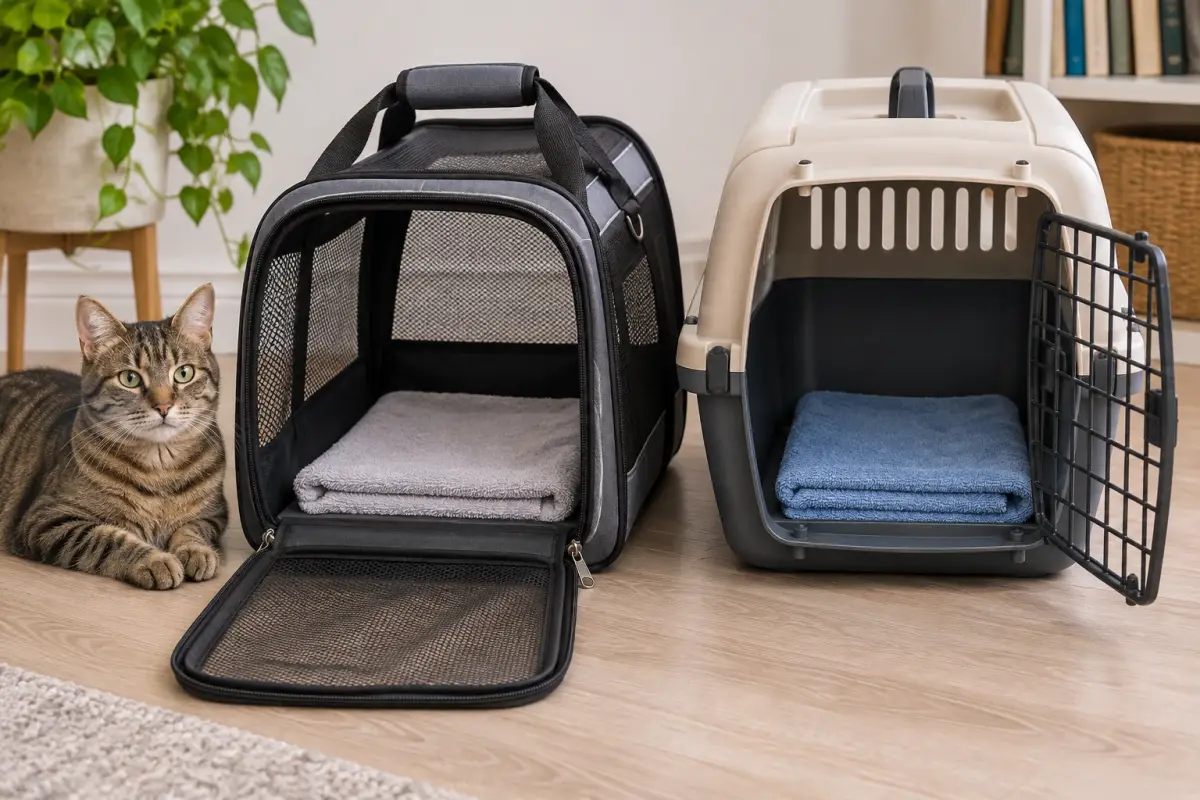
For most cats and most trips, a hard carrier that opens from both the top and the front is the better choice: it is sturdy, easy to clean and lets a reluctant cat be lowered in and examined without being pulled out. A soft carrier makes sense for in-cabin air travel and calm cats, as long as it holds its shape and has a top opening.
By Matt GarnettUpdated November 9, 20263 min read3 sources
What any good carrier needs
The Feline Veterinary Medical Association lists the essentials: sturdy, well ventilated, with a secure door that prevents escape, and easy to clean, leakproof and water-resistant. VCA and the FelineVMA both recommend a carrier with a top that removes or opens, so your cat can be placed in from above and stay in the bottom half during the exam.
Size it so your cat can stand, turn around and lie down comfortably, but not so large that it slides around in the car. Add a soft, absorbent towel that smells of home and does not slip. Both types are in our cat carriers range.
Hard carriers: pros and cons
Hard plastic carriers are strong and hold their shape, so a frightened cat cannot collapse the sides or claw through mesh. They wipe clean easily after an accident or vomiting on the way to the vet. Many models have a front door plus a top hatch, and the top half unscrews or unclips, which is exactly the feature vets and the FelineVMA favor.
The downsides are bulk and weight, and some are awkward to carry. A hard carrier is harder to fit under an airline seat, and cheap models with only a front door make it difficult to get a reluctant cat in or out.
Soft carriers: pros and cons
Soft carriers are light, fold flat for storage and are usually the type airlines accept for in-cabin pets, since they squeeze under a seat. Many have mesh panels that give good airflow and a view, and side pockets for treats and paperwork.
The FelineVMA specifically advises avoiding soft carriers that do not hold their shape, collapse easily or are hard to clean. A soft carrier with no top opening means zipping in a struggling cat, and urine soaks into fabric. Determined cats can sometimes claw through mesh or work a zipper open.
Which type for which trip
Vet visits and car trips: a hard carrier with a top opening, secured on the car floor behind a front seat, as the FelineVMA advises. Air travel in the cabin: a structured soft carrier that meets your airline's size rules and has a top zip. Moving house or long drives: a larger hard carrier, or a crash-tested carrier strapped in according to its maker's instructions.
Anxious cats, cats that scratch or bite during handling, and cats prone to motion sickness are usually better in a hard carrier that cleans easily and allows the top to be removed. Very calm cats that travel often may be fine in either. Our best cat carrier guide goes through what to look for in more detail.
Carriers to avoid
The FelineVMA advises against backpack-style carriers that let a cat move around too much and expose it to too many sights and sounds, carriers without removable tops, and soft carriers that collapse or are hard to clean. Avoid wicker or flimsy cardboard for anything longer than a short emergency trip.
Use one carrier per cat. The FelineVMA recommends separate carriers even for cats that get along, because stress in a small space can lead to fights.
Getting your cat used to it, and when to talk to your vet
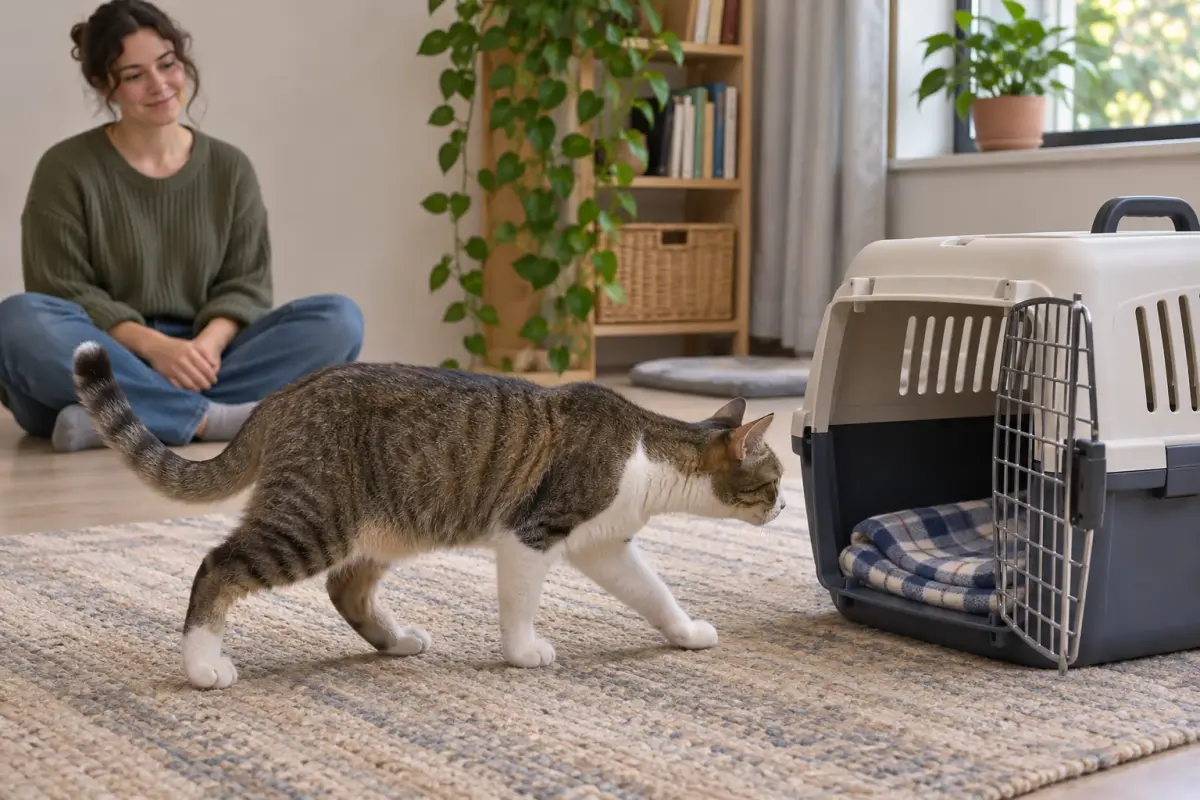
Whatever you choose from our cat carriers, leave it out at home with a soft blanket and occasional treats so it becomes a normal resting place, which VCA and the FelineVMA both recommend. Our guide to getting a cat in a carrier has the steps.
If your cat panics, drools, vomits or tries to escape every time it travels, talk to your vet before the next trip. VCA notes travel anxiety tends to grow with each visit, and your vet can suggest ways to help.
This page is general information, not veterinary advice, and it cannot replace an examination by the vet who knows your pet.
Common questions
Do vets prefer hard or soft cat carriers?
Most vets prefer a hard carrier with a removable top, because the cat can be examined in the bottom half without being dragged out. The FelineVMA recommends carriers with removable tops.
Are soft carriers safe for cats in the car?
A structured soft carrier secured on the car floor is reasonably safe for a calm cat, but it offers less protection than a hard carrier. Never let a cat travel loose in the car.
What size carrier does my cat need?
Your cat should be able to stand, turn around and lie down comfortably. For most adult cats that is about 18 to 24 inches long; large breeds need bigger. Avoid a carrier so big your cat slides around.
Sources we checked
This guide is general information, not veterinary advice. If your pet is unwell or injured, contact your veterinarian.


