






Buying guides
Best Cat Carrier for Car Travel and Vet Visits
The best cat carrier for most cats is a sturdy hard-sided carrier that opens from the top as well as the front, ideally with a lid that lifts off so a vet can examine a nervous cat without pulling it out. It should let your cat stand and turn around, have good ventilation, and strap securely into the car. Soft carriers suit calm cats and short trips.
By Matt GarnettUpdated November 14, 20264 min read2 sources
What matters most in a cat carrier
How the carrier opens matters more than how it looks. A cat that will not come out of the front door can be lifted gently out of the top, and a carrier whose top half unclips lets many cats stay in the bottom half during an exam. VCA Animal Hospitals notes that carriers that open differently may be more appealing to certain pets, and your vet can suggest options.
Size and security come next. The ASPCA advises a carrier large enough for a pet to stand, sit, lie down and turn around, well ventilated, and secured so it cannot slide during a sudden stop. A carrier that is too big lets a cat slide around inside, which is uncomfortable on every turn. Browse our cat carriers with those two checks in mind.
Hard vs soft carriers compared
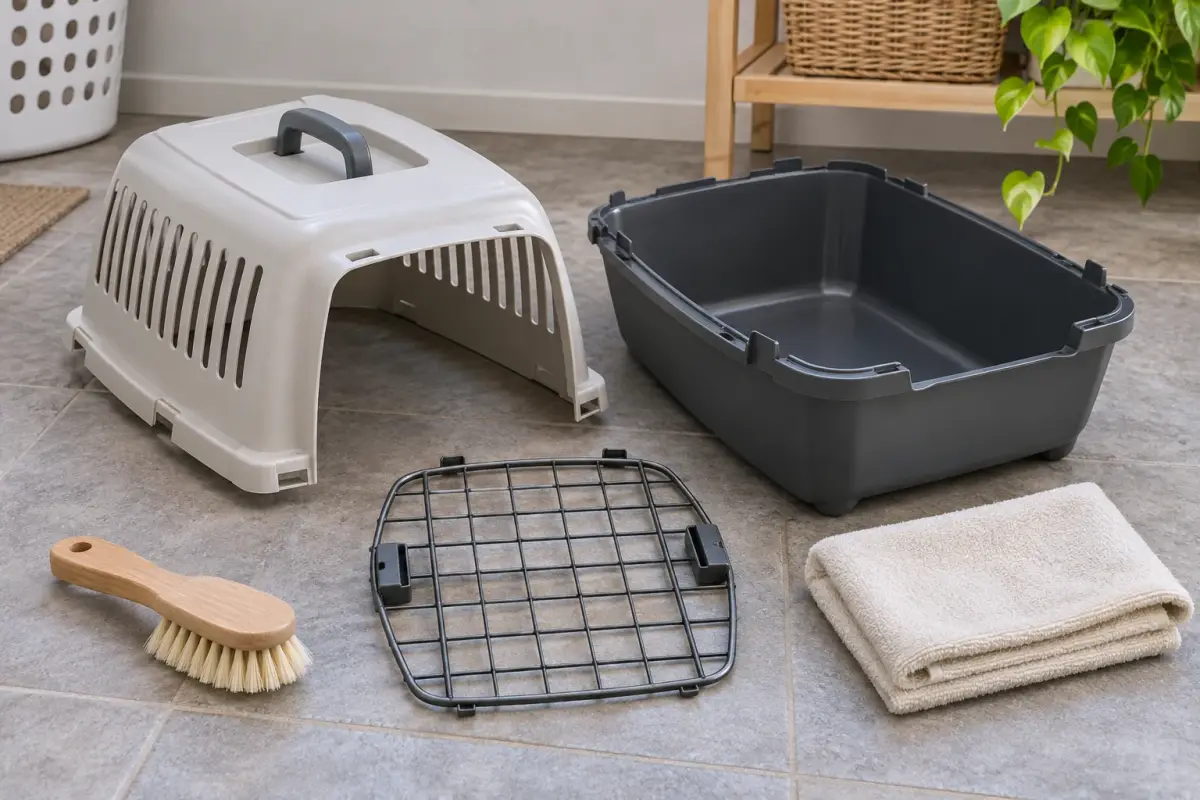
Hard plastic carriers are easy to clean after an accident, protect the cat if something falls on them, and are the most secure option for a cat that scratches or chews. Models with top and front doors and a removable lid are the most versatile. They are bulkier to store.
Soft carriers are lighter, easier to carry on your shoulder and often fit under an airline seat. They suit calm cats and short trips, and many have mesh panels for airflow. Their weak points are zips a determined cat can work open, a floor that sags, and fabric that is harder to clean. Among soft cat carriers, a shoulder carrier with a bubble window or a portable cat bag is the kind of design this applies to, so inspect the zips and base. Backpacks and sling carriers are for relaxed cats only.
Best type for each situation
For vet visits, a hard carrier with a removable top makes the visit calmer for cat and vet alike. For long car trips, choose a sturdy carrier large enough to stand and turn, belted in on the back seat or wedged on the floor behind a front seat, with a towel over part of it if your cat settles better unseen.
For flying, check the airline's size limits before you buy, because in-cabin rules are specific; a soft carrier with a firm base often fits best. For two cats, use two carriers rather than one large one; stressed cats can turn on each other. For a large cat, check that it can turn around inside, and size up if not.
Getting your cat to accept the carrier
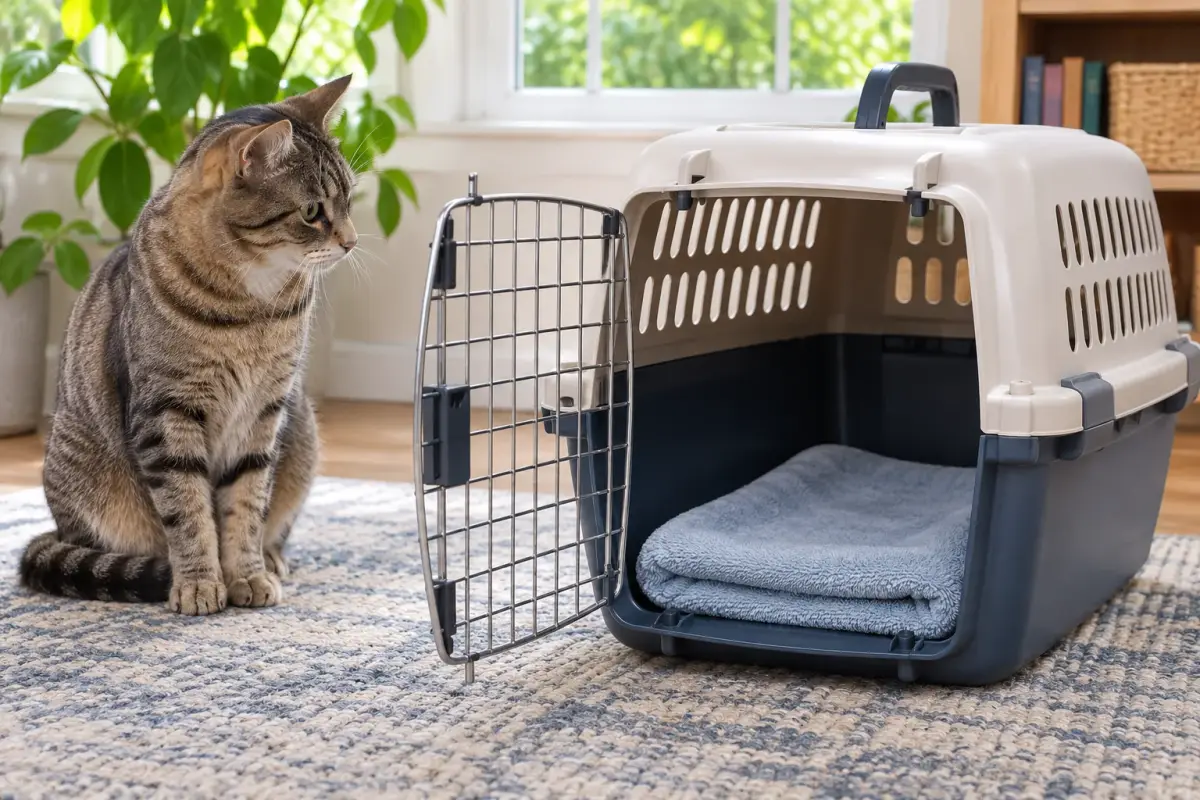
Most cats dislike carriers because they only see them before a vet visit. VCA suggests leaving the carrier out all the time in a quiet part of the main living area, with a favorite blanket and treats or meals inside and the door open, until your cat walks in and out freely. Then close the door briefly, praise and release. Our step-by-step guide on how to get a cat in a carrier covers this in more detail.
Next, carry the crate around the house, place it in the car with a treat, start the engine for a few minutes, and build up to short drives. If your cat keeps yowling, drooling or trying to escape despite gradual practice, VCA advises talking to your vet about managing travel anxiety. For longer journeys, see how to travel with a cat.
What to avoid and carrier care
Avoid carriers with only a small front door, flimsy latches, soft floors that collapse, and putting the carrier on the front seat, where an airbag can injure a pet. Never leave a cat alone in a parked car; the ASPCA warns that a car can quickly become dangerously hot or cold.
Line the carrier with an absorbent pad and a familiar blanket, and keep a spare for the trip home. Wash plastic carriers with unscented soap, because strong cleaning smells can put cats off. Check latches, bolts and zips before every trip, and replace a carrier with a cracked shell or a door that pops open. When it is time to replace one, compare cat carriers again.
Cat carrier access and storage compared
| Construction or opening | Practical difference | Check before use |
|---|---|---|
| Hard shell | Rigid body that is easier to wipe after an accident | Shell condition and secure latches |
| Removable top | Upper half separates from the base | How the two halves fasten together |
| Top and front doors | Two separate access directions | Door clearance and each closure |
| Soft-sided | Lighter body that is easier to store | Zippers, firm base and fabric condition |
| Backpack or sling | A different carrying position | Fit and the individual cat's response |
Common questions
What is the best type of carrier for a cat?
For most cats, a hard-sided carrier with top and front doors and a removable lid. It is secure in the car and lets a vet examine a nervous cat without dragging it out.
What is the best cat carrier for long car trips?
A sturdy carrier big enough to stand and turn around, belted in on the back seat or secured on the floor, with an absorbent liner and good ventilation.
Are soft cat carriers safe?
They are fine for calm cats and short trips, and often suit air travel. For cats that scratch or chew, or for long car journeys, a hard carrier is more secure.
What size cat carrier do I need?
Your cat should be able to stand, sit, lie down and turn around inside. Too large lets the cat slide around; too small is cramped and stressful.
Sources we checked
This guide is general information, not veterinary advice. If your pet is unwell or injured, contact your veterinarian.


