






Training & behavior
How to Get a Cat in a Carrier
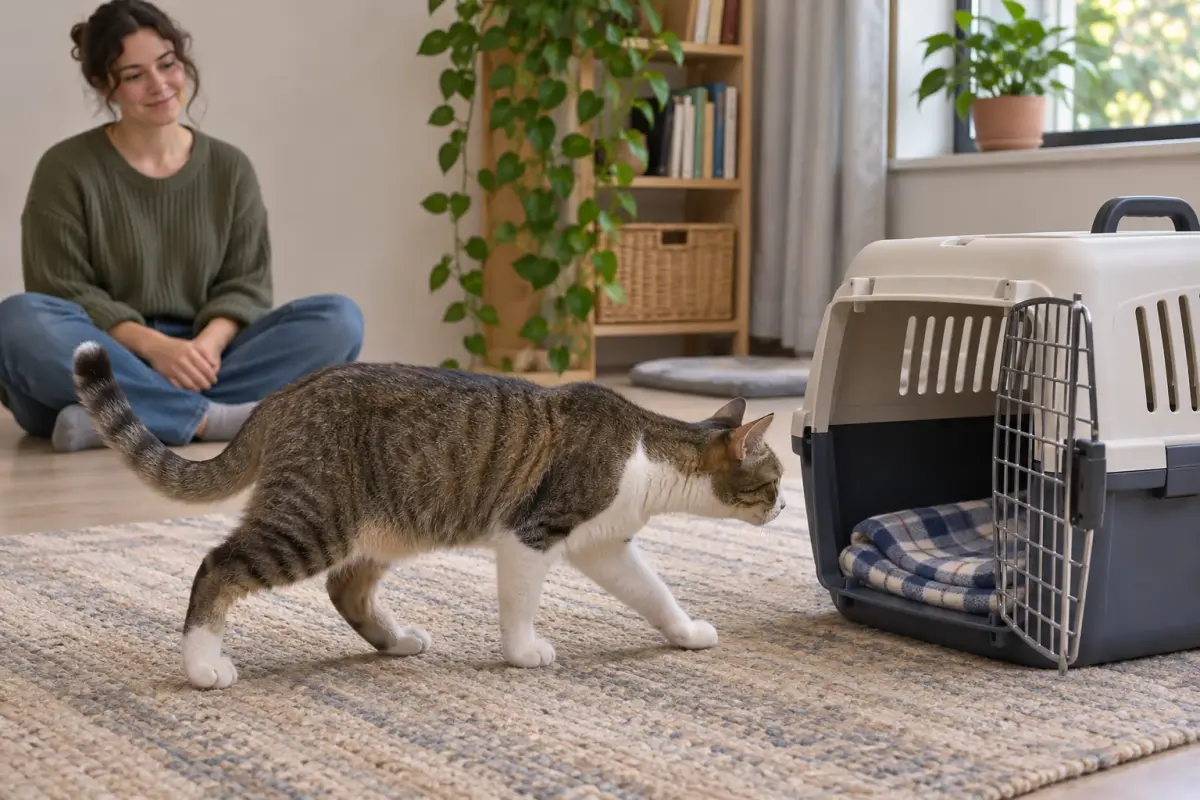
The easiest way to get a cat in a carrier is to make the carrier part of the furniture long before you need it, so your cat walks in on its own. On the day, close the doors to a small room, use a top-opening carrier, and either lure your cat in with treats, lower it in gently from above, or wrap it in a towel and slide it in. Never chase it.
By Matt GarnettUpdated November 13, 20264 min read3 sources
Why cats hate carriers
For most cats, the carrier only appears before a car ride and a vet visit, so it predicts something stressful. The Feline Veterinary Medical Association notes that if the carrier only comes out for veterinary visits, a cat may become fearful as soon as it sees it. Being chased and pushed in adds to the fear.
The fix is to change what the carrier means. A carrier that lives in the living room with a soft blanket and the occasional treat is just another resting place, and many trained cats will nap in theirs.
Step 1: Choose a carrier that makes it easier
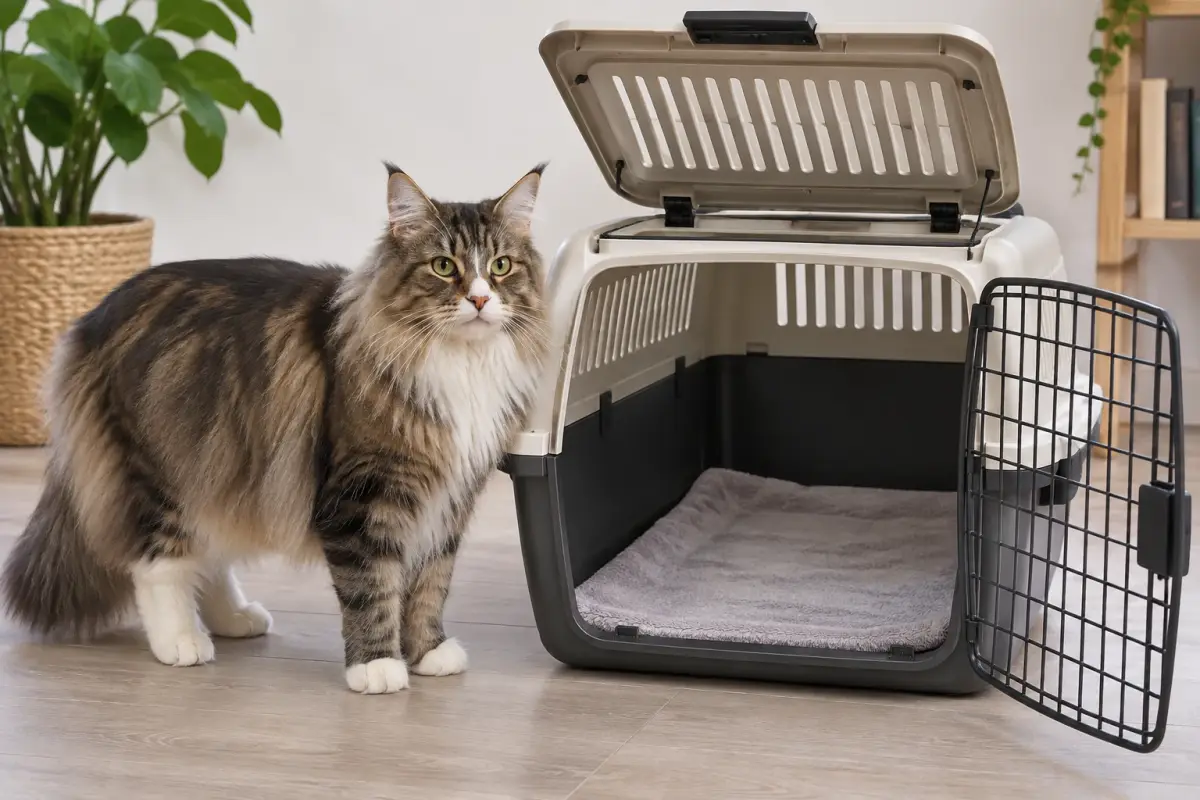
Pick a sturdy carrier that opens from both the top and the front, ideally with a top half that unclips. VCA recommends this, because you can lower a reluctant cat in from above and the vet can examine your cat in the bottom half. The FelineVMA adds that it should be well ventilated, easy to clean and have a secure door.
Avoid soft carriers that collapse when you try to zip a cat in, and backpack carriers that expose a nervous cat to too much. Our soft vs hard carrier guide compares the options.
Step 2: Carrier training at home
Leave the carrier out all the time in a room your cat uses, with the door open or removed and a soft towel or blanket that smells of home inside. VCA suggests regularly placing treats or toys in it, and some owners feed meals beside it, then just inside, then at the back.
Once your cat goes in freely, close the door for a few seconds, then open it and reward. Build up to carrying it around the room, then out to the car and back. VCA's travel steps add sitting in the car with the engine on, then short drives that end at home. Go at your cat's pace; this can take days or weeks.
When furnishing the carrier for practice, compare cat beds for the resting area outside it rather than filling the carrier with a bed that crowds your cat.
Step 3: Getting your cat in on the day
Bring the carrier into a small room with few hiding places, such as a bathroom, before you bring your cat in, and close the door. Spray the towel inside with a synthetic feline pheromone about 15 minutes ahead if you use one; both VCA and the FelineVMA suggest this. Stay calm, since cats pick up on stress.
Stand the carrier on its end with the opening facing up, or take the top off. Then either lure your cat in with treats, gently lower it in from above, hind end first, or set it on the blanket in the bottom half and clip the top back on. VCA describes all three approaches.
For a cat that panics: the towel wrap
If your cat struggles, VCA suggests keeping the carrier nearby but out of sight, wrapping your cat snugly in a thick towel or blanket that smells familiar, and quickly but gently placing the bundle in the carrier. Many cats calm down once they are wrapped and in the dark.
Never pull a cat out from under a bed or force it through a front door by its legs. If getting your cat in is a battle every time, tell your vet when you book; VCA notes that unaddressed anxiety tends to grow with each visit, and your vet can discuss options to make visits easier.
During the trip, and when to call the vet
Carry the carrier with both hands underneath it, not swinging from the handle, as the FelineVMA advises. Cover it with a towel so your cat can hide, and secure it on the floor of the car behind a front seat rather than on a seat. Drive smoothly and keep the radio low.
Call your vet before the appointment if your cat cries constantly, drools, vomits or tries to escape in the carrier. These are signs of real distress, and your vet can suggest ways to reduce it for future visits.
Our cat carrier guide explains what to inspect across cat carriers before the next visit.
This page is general information, not veterinary advice, and it cannot replace an examination by the vet who knows your pet.
Common questions
How do you get an angry cat into a carrier?
Close yourself in a small room with the carrier, stay calm, wrap your cat in a thick towel and lower the bundle into a top-opening carrier. Do not chase or grab its legs.
Should I put food in my cat's carrier?
Treats and small meals are excellent for carrier training at home. On the day of a vet visit, ask your clinic whether to withhold breakfast, since a slightly hungry cat may be easier to lure.
How do I calm my cat in a carrier in the car?
Cover the carrier with a towel, add a blanket that smells of home, secure the carrier on the car floor, drive smoothly and talk quietly. Practice short drives at home beforehand.
Should two cats share a carrier?
No. The FelineVMA recommends one carrier per cat. Even friendly cats can become stressed and fight in a small space, and separate carriers make the vet visit easier.
Sources we checked
This guide is general information, not veterinary advice. If your pet is unwell or injured, contact your veterinarian.


