






Care & how-to
How to Travel With a Cat in the Car
To travel with a cat in a car, keep your cat in a secure carrier for the whole drive, belted in or on the floor behind a front seat. Get your cat used to the carrier and short drives weeks ahead, skip breakfast on travel day to reduce nausea, pack litter, water and food from home, and never leave your cat alone in a parked car.
By Matt GarnettUpdated November 13, 20264 min read2 sources
Start with the carrier, weeks ahead
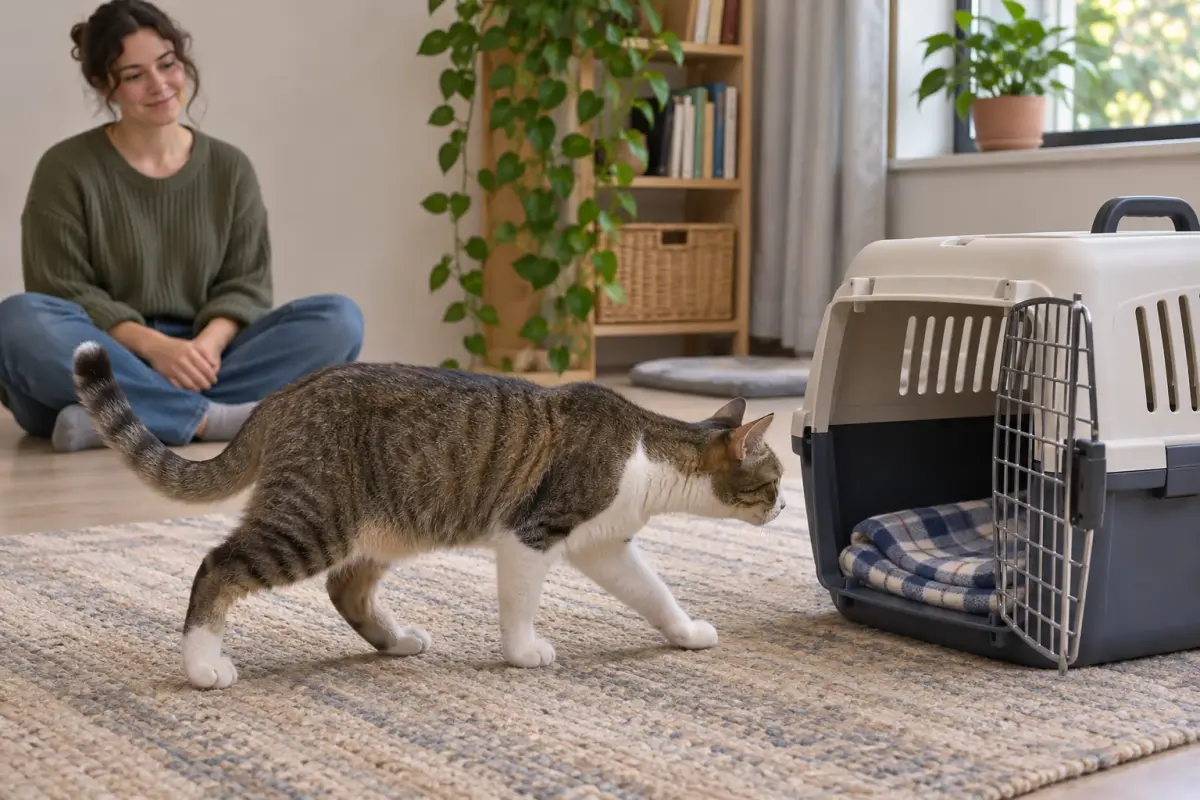
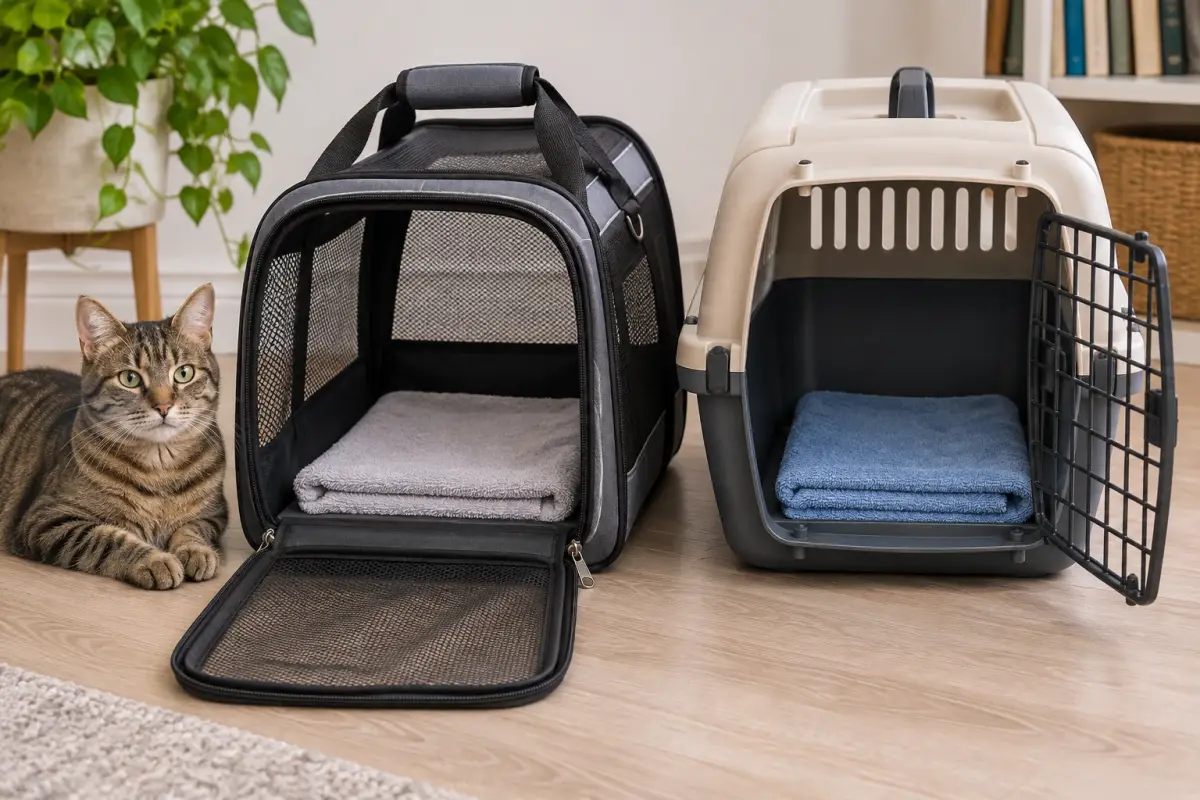
The carrier is your cat's seat belt and safe den, so make it a normal part of the house. VCA recommends leaving it out and open all the time, feeding meals inside it and lining it with familiar bedding. A sturdy, well-ventilated hard-sided carrier, or a soft one with a firm base, is safest; a removable top makes loading easier. For long trips some owners use a large dog crate with a small litter pan inside.
Build up in steps. VCA suggests practicing getting in and out with rewards, then carrying the carrier around the house, sitting in the car with the engine running, short drives around the block and home again, and gradually longer trips of 20 to 30 minutes. If your cat becomes anxious, stop and try again another day rather than forcing it. Our guide to getting a cat into a carrier covers the first steps.
Setting up the car
Keep your cat in the carrier for the entire drive. A loose cat can get under the pedals, distract the driver, or escape when a door opens. Secure the carrier with a seat belt on the back seat or wedge it on the floor behind a front seat, never in the front passenger seat with an airbag. Cover part of the carrier with a light towel if your cat is calmer when it cannot see the moving scenery.
Keep the car cool, quiet and smooth: low music, no smoking, steady driving. A pheromone spray on the bedding, applied before your cat goes in, helps some cats, so ask your vet if it suits yours. If your cat must come out at a stop, put a well-fitted harness and leash on first and only open the carrier inside the closed car.
Food, water and litter on the road
VCA advises withholding breakfast on travel day to reduce the risk of nausea and vomiting, then offering a small meal when you stop for the evening. Bring your cat's usual food in portions, and water from home, since a sudden change in water can upset some stomachs. Offer water at rest stops in a familiar, unbreakable bowl.
Line the carrier with an absorbent pad and pack spares, plus zip-top bags, paper towels and gloves. For long drives, bring a small travel litter box with your cat's usual litter and offer it during stops, with the car doors and windows closed. Many cats will not use it in the car, which is normal; most can comfortably wait several hours.
Motion sickness and stress
VCA notes that most motion sickness in cats comes from travel stress, especially in cats that only ride in the car on the way to the vet. Signs include loud meowing or howling, pacing, lip-licking, drooling, lethargy, vomiting and soiling the carrier. Practice drives that end somewhere boring, with a treat, help break the link between the car and something unpleasant.
Most cats travel without medication. If your cat is very stressed or carsick, talk to your vet before the trip; they can recommend anti-nausea or calming options and may suggest a trial run at home first, since some need to be started days ahead. Never give your cat a human medicine or a dog product, many of which are dangerous to cats.
Overnight stops and arrival
For a multi-day trip, VCA recommends confirming in advance that hotels accept cats. In the room, check for gaps behind furniture and appliances where a cat can hide, set up the litter box, water and food in the bathroom, and keep the carrier open as a safe hiding spot. Hang the do-not-disturb sign so housekeeping does not open the door while your cat is loose.
Make sure your cat has ID throughout: a microchip with current details and a collar tag or a harness tag with your phone number and destination address. Never leave your cat alone in a parked car, even with the windows cracked; VCA warns the interior can reach dangerous temperatures within minutes. Call a vet if your cat will not eat for more than a day after the trip, has not urinated within a day, vomits repeatedly or breathes with an open mouth.
Compare the layouts in our cat carrier guide before choosing from cat carriers; confirm the individual carrier's securing instructions for your car.
This page is general information, not veterinary advice, and it cannot replace an examination by the vet who knows your pet.
Common questions
How long can a cat travel in a car?
Many cats can manage a full day's drive with stops, especially if they are used to the carrier. Offer water at breaks, bring a litter box for long trips, and split very long journeys over several days.
Should I let my cat out of the carrier in the car?
No. Keep your cat in the carrier for the whole drive. If you must take them out at a stop, use a harness and leash and open the carrier only inside the closed car.
Should I feed my cat before a road trip?
VCA suggests skipping breakfast on travel day to reduce nausea and offering a small meal at your evening stop. Keep water available, and ask your vet if your cat has a medical condition.
Can I give my cat something to calm down for car rides?
Only with your vet's advice. Your vet can recommend safe calming or anti-nausea options and a trial run at home. Never give human medicines, which can be dangerous to cats.
Sources we checked
This guide is general information, not veterinary advice. If your pet is unwell or injured, contact your veterinarian.


