






Care & how-to
Flying With a Cat: How to Make It Calm and Safe
Flying with a cat goes most smoothly when your cat travels in the cabin, in an airline-approved soft carrier they already know and trust. Book your cat's spot when you book your seat, check whether you need a health certificate, practice with the carrier for weeks beforehand, and plan for the TSA checkpoint, where your cat must come out of the carrier. Avoid sedation unless your vet advises it.
By Matt GarnettUpdated November 14, 20265 min read2 sources
Before you book: airline rules and paperwork
Every airline sets its own pet policy, and most limit the number of animals allowed in each cabin, so call or book online as soon as you have your own ticket. The ASPCA advises checking whether your cat can fly in the cabin or must go as cargo, the fee, and any limits on size, breed, health, route or weather. Most domestic cats fit within in-cabin limits, which is by far the better option: your cat stays with you, in a temperature-controlled space.
See your vet well ahead of the trip. Many airlines and some states ask for a recent health certificate, often dated within a set number of days before travel, plus proof of rabies vaccination. International trips can need a microchip, vaccinations and lab tests that take months to arrange, so check the requirements of the country you are flying to and the USDA's pet travel information early.
Choosing and training with the carrier
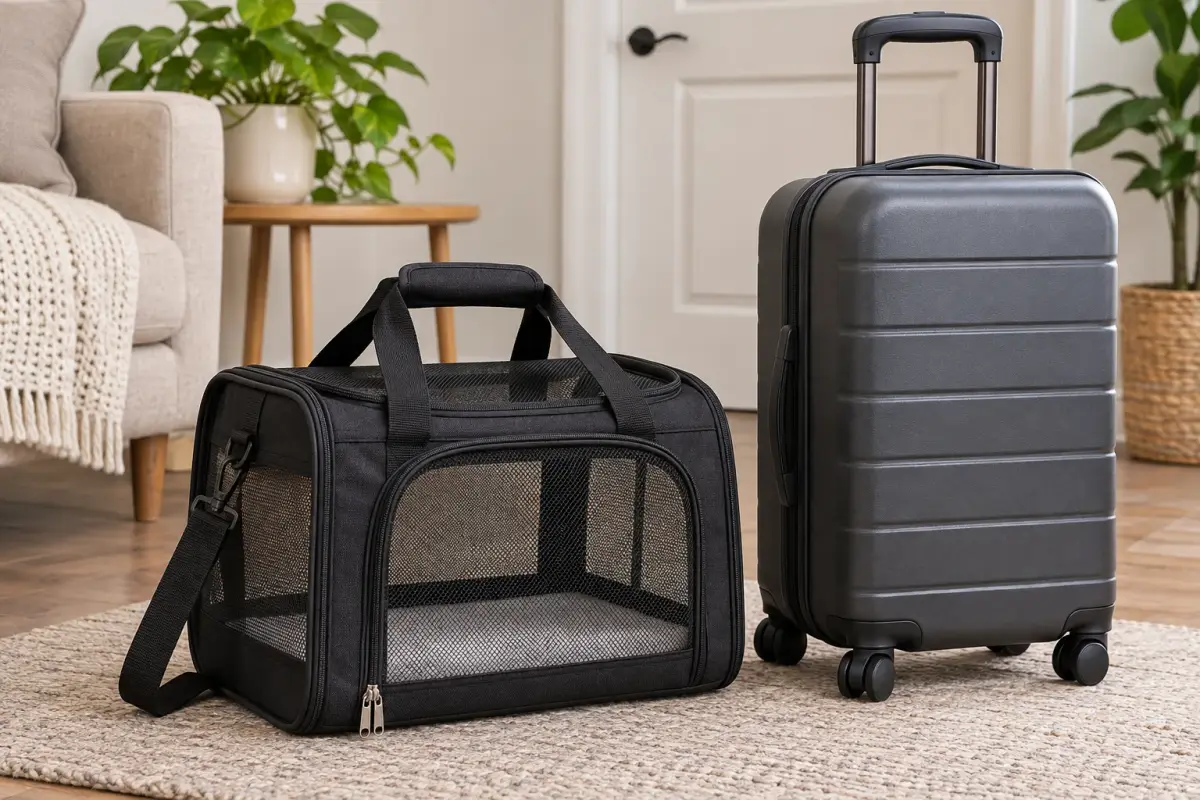
Airlines generally require a soft-sided, well-ventilated carrier that fits under the seat in front of you, with room for your cat to stand and turn around. Check your airline's exact under-seat dimensions, since they vary by aircraft. A carrier with a top opening and a side opening makes loading easier, and a zippered pocket holds paperwork, a leash and spare pads.
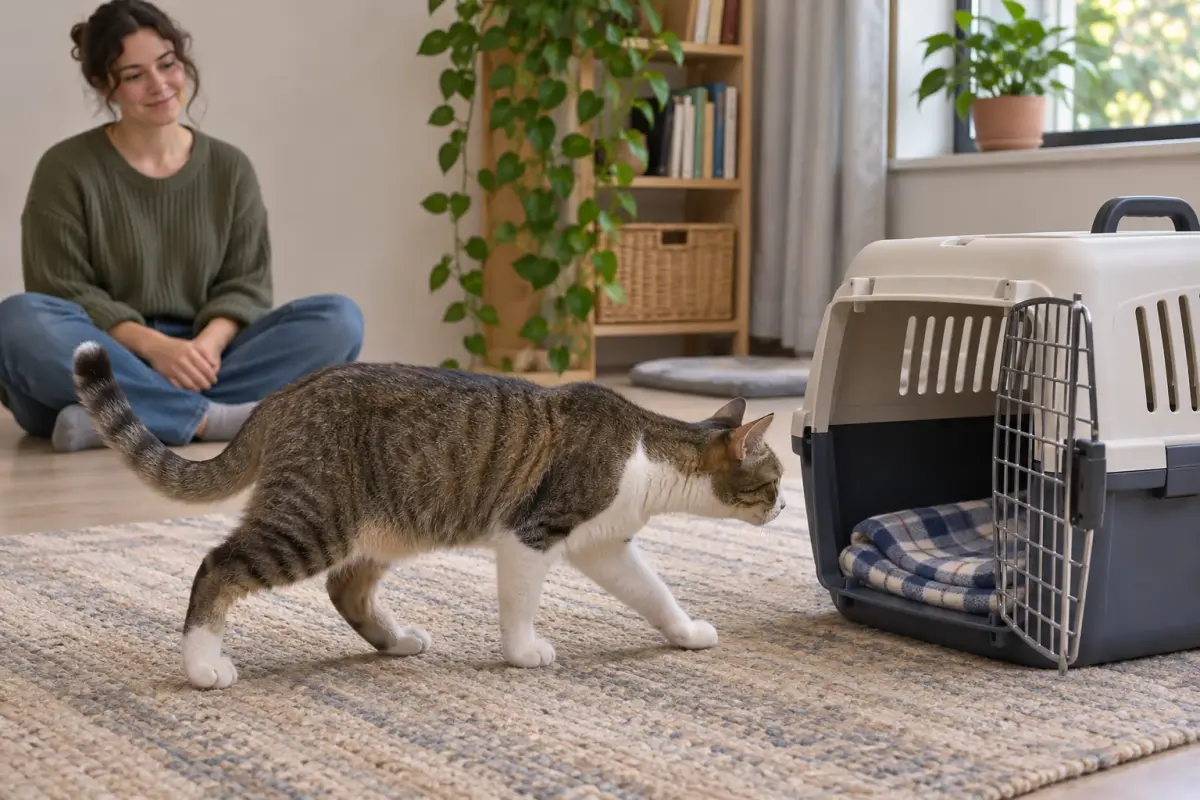
The carrier training matters more than the carrier. Leave it open in the living room for a few weeks, line it with a blanket that smells of home, and feed meals and treats inside it. Then close the door for short periods, carry your cat around the house, and take a few short car rides. Our guide to getting a cat into a carrier walks through each step. A cat that already sees the carrier as a safe den copes far better with an airport. Browse our soft cat carriers for flying, such as the expandable foldable soft carrier, and compare each against your airline's under-seat limits.
Getting through airport security
Cats cannot go through the X-ray machine. The TSA asks you to take your cat out of the carrier just before screening, put the empty carrier on the belt, and carry your cat through the walk-through detector; an officer may swab your hands afterward. Then return your cat to the carrier at the re-composure area, away from the busy lanes.
An airport is noisy and unfamiliar, and even calm cats can bolt. Put a well-fitted harness on your cat before you leave home and hold the leash during screening. If you think your cat may panic, ask a TSA officer for a private screening room before you reach the belt. You go there with your cat still in the carrier, and the door can be closed before you take your cat out.
Food, water and litter on travel day
Offer a small meal a few hours before you leave rather than a full breakfast just before, which can help prevent travel sickness. Keep water available up to departure, and on long trips offer a little water or an ice cube at the gate or during the flight. Do not leave the carrier door open on the plane, and never put the carrier in an overhead bin.
Most cats will hold on for a few hours, but delays happen. Line the carrier floor with an absorbent puppy pad, and pack spare pads, a small bag of litter and a disposable tray for long journeys or layovers; some airports have pet relief rooms where you can offer it. Add a change of bedding, wipes and a zip-top bag in case of accidents.
Sedation and calming: talk to your vet
Do not sedate your cat for a flight without your vet's advice. The ASPCA and the AVMA both caution that sedatives can increase the risk of breathing and heart problems at altitude, and many airlines will not accept a sedated pet. Your vet may suggest a different approach for an anxious cat, and if they do prescribe something, the ASPCA recommends a trial run at home first, when your vet is available.
Non-drug comforts help many cats. A familiar blanket in the carrier, a light cover over part of it to block busy views, and a calm voice all reduce stress. Some owners use a pheromone spray on the bedding, applied well before the cat goes in. Ask your vet whether that suits your cat, and never use essential oils, which can be harmful to cats.
After you land
Give your cat a quiet room at your destination with their litter box, water, food and the open carrier, and let them come out in their own time. Check that the room is cat-proofed: windows closed, no gaps behind appliances, and no dropped medications or rodent bait, which the ASPCA specifically warns about. Many cats eat little for the first day after travel.
Call a vet if your cat will not eat for more than a day, has not urinated within a day, is breathing with an open mouth, vomits repeatedly or seems lethargic. Male cats that strain in the litter box without producing urine need a vet the same day. Before you travel, save the number of a vet near your destination along with your own.
This page is general information, not veterinary advice, and it cannot replace an examination by the vet who knows your pet.
Common questions
Can I bring my cat on a plane in the cabin?
Usually yes, if your airline allows pets in the cabin, there is space on the flight and your cat fits in an approved carrier under the seat. Book early, because most airlines limit how many pets can fly on each flight.
Do cats need a health certificate to fly?
It depends on the airline and destination. Many ask for a recent health certificate and rabies vaccination record, and international travel needs more. Check with your airline and see your vet several weeks ahead.
How do cats go to the bathroom on a plane?
Most cats wait until they land. Line the carrier with an absorbent pad, and on long journeys bring a little litter and a disposable tray to offer in an airport pet relief room or private restroom.
Should I give my cat something to calm down before flying?
Only with your vet's advice. Sedatives can raise the risk of breathing and heart problems at altitude, and many airlines refuse sedated pets. Your vet can suggest safe options and help you plan.
Sources we checked
This guide is general information, not veterinary advice. If your pet is unwell or injured, contact your veterinarian.


