






Buying guides
Best Airline Approved Cat Carrier: How to Choose One for Flying
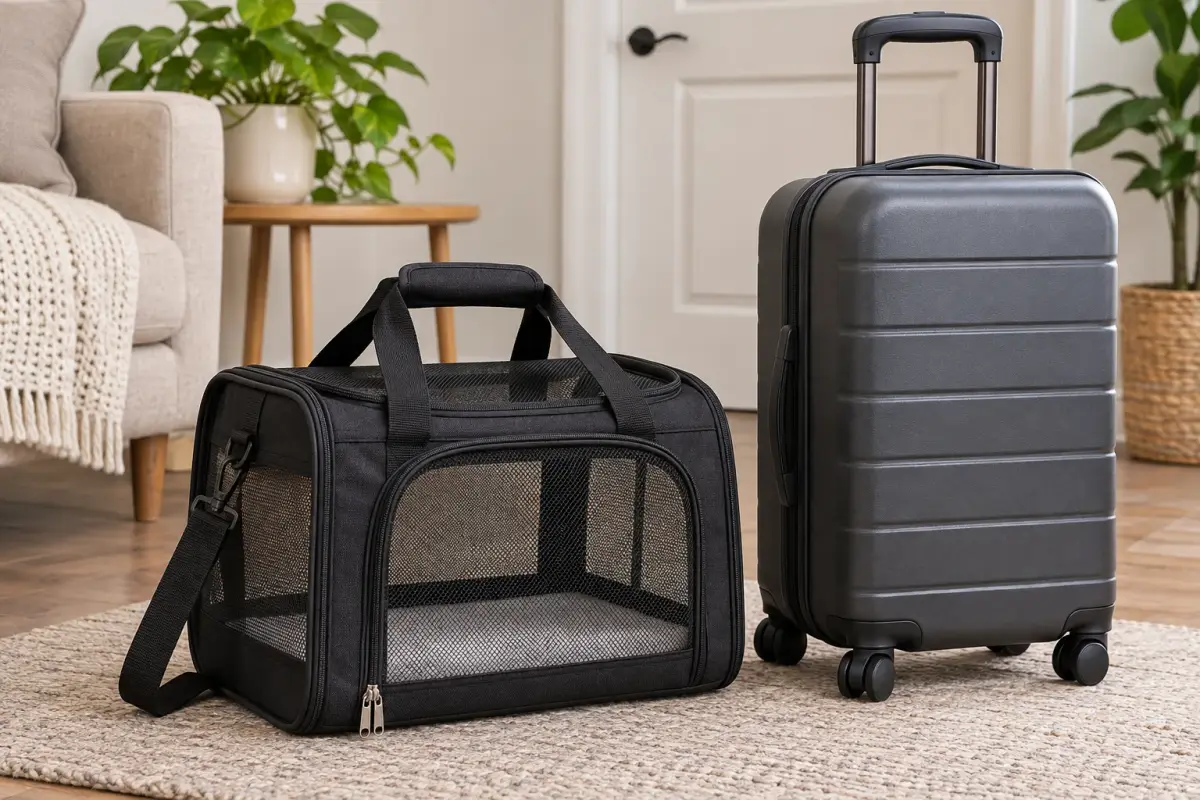
The best airline cat carrier is a soft-sided carrier that fits under the seat in front of you, with good ventilation on several sides, escape-proof zips, a waterproof base and enough room for your cat to stand and turn around. Airlines set their own size and weight limits, so check yours before buying; carriers that flex a little often fit under-seat spaces that rigid ones do not.
By Matt GarnettUpdated November 14, 20264 min read2 sources
What matters most: under-seat fit, security and ventilation
In the cabin, a cat travels in a carrier under the seat in front of you, and the AKC's airline guidance notes that most airlines require the carrier to fit there, with the combined weight of pet and carrier often limited to around 20 pounds, though many US airlines focus more on whether it fits. Each airline publishes its own limits, and under-seat space varies by aircraft, so check before you buy any of our airline-approved cat carriers.
Security comes next. A cat that bolts in an airport is very hard to recover, so look for lockable zips, a strong frame and an internal tether that clips to a harness. Ventilation matters too: mesh on at least two or three sides keeps air moving during a long wait at the gate or on the tarmac.
Soft-sided and hard-sided carriers compared
Soft-sided carriers are the usual choice for cabin travel. They are light, they flex to fit under seats, and many have expandable panels for more room during layovers. Look for a rigid, waterproof base and a frame that keeps the roof off your cat's head when the carrier is squeezed.
Hard-sided plastic carriers are sturdier, easier to clean and better for car travel and vet visits (compare them in our best cat carriers guide), but they rarely fit under airline seats because they cannot compress. Backpack carriers are comfortable to carry through airports but check that they meet your airline's limits (our best cat backpack guide covers them). A wheeled trolley carrier is another way to cross a long terminal. For cargo travel, airlines have separate, stricter crate rules.
Best carrier for each cat and trip
For an average-size cat on a domestic flight, a soft-sided carrier at the top of your airline's under-seat limit, with mesh on several sides and a washable pad, suits most trips. For a large cat, choose the tallest carrier your airline allows, ideally with an expandable side panel to open during layovers, and check your cat's weight plus the carrier against any limit.
For anxious cats, a carrier with a cover or privacy flap over the mesh helps, since many cats feel safer in the dark. For long trips, choose a carrier with a pocket for documents, a spare pad and absorbent liners. For cats that claw, check that the mesh is heavy-duty.
What to avoid
Avoid carriers with flimsy zips or no locking clips, mesh a cat can claw through and carriers so tight that your cat cannot turn around. Avoid buying a carrier on the day of travel; your cat needs time to accept it. Avoid putting a cat in a carrier without a harness and ID during security screening, when you may have to carry it through the scanner in your arms.
Ask your vet about travel well before the flight, especially for cats with health problems, flat faces or a history of travel stress. Some destinations require a health certificate. Never give a cat any human medication for travel; only your vet can decide whether any calming help is appropriate.
How to measure your cat and check fit
Measure your cat standing, from nose to the base of the tail, and from the floor to the top of the head. The AKC's guidance for airline carriers is that the pet should be able to sit, stand, lie down and turn around comfortably. Compare your cat's measurements with the carrier's internal dimensions, not the external ones.
Then compare the carrier's external size with your airline's under-seat limit, as covered in flying with a cat. If your airline gives a range, a soft carrier that compresses slightly in height is often the safest choice. Weigh your cat in the carrier on a bathroom scale to check any weight limit.
Getting your cat ready, and care
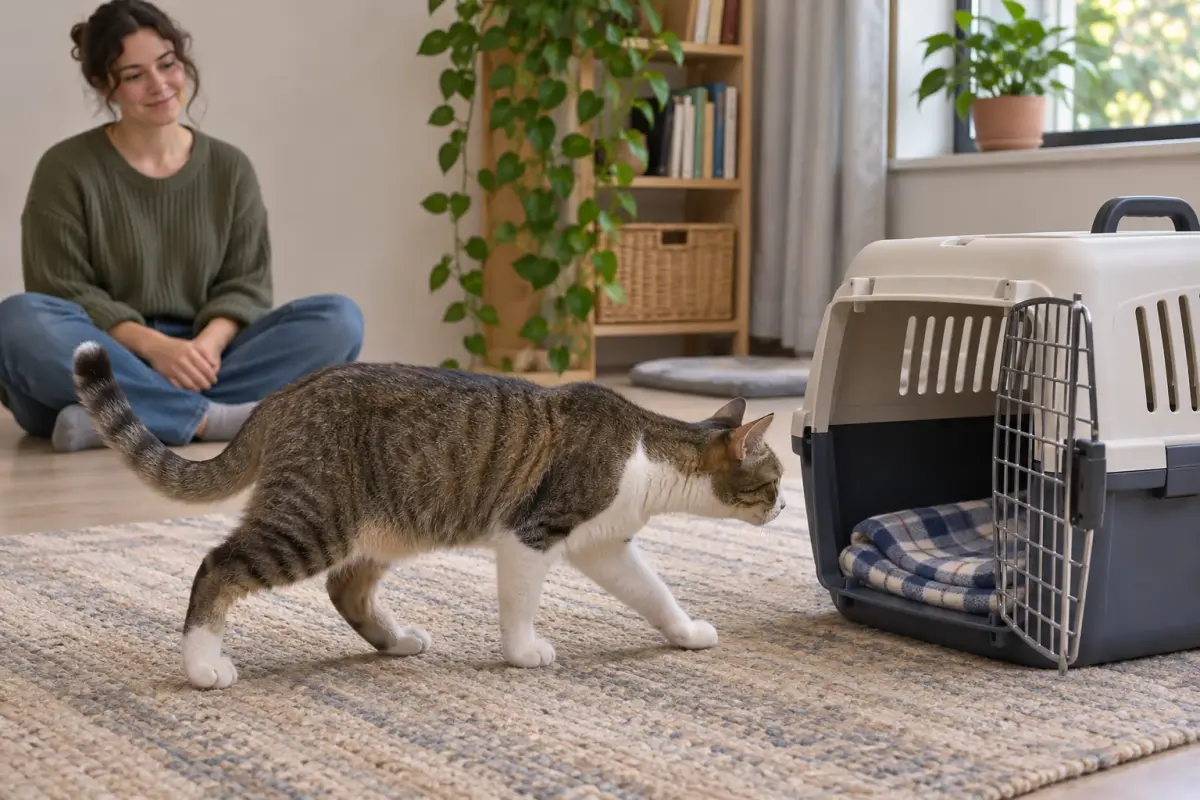
Leave the carrier out at home for weeks before the trip (our guide to getting a cat in a carrier shows how), with a soft pad, treats and a worn T-shirt inside, so it becomes a normal resting place. Practice short car rides. On travel day, line the base with an absorbent pad and pack spares, wipes and a small zip bag.
After the trip, wash the pad and wipe the interior. Check zips, seams and mesh before each journey; replace a carrier with a stuck zip or torn mesh, and browse cat carriers when it is time. A well-made soft carrier lasts years, and a cat that is used to its carrier is calmer at vet visits too.
Carrier body and carrying formats for comparison
| Format | Physical arrangement | Check before any flight |
|---|---|---|
| Soft-sided | Fabric body with a supporting frame | Exact outside limits and usable interior after any compression |
| Hard-sided | Rigid plastic shell | The airline’s rules for that shell and transport mode |
| Backpack | A carrier with shoulder straps | Whether that exact configuration is accepted |
| Wheeled trolley | A carrier with wheels and a handle | Whether wheels alter the permitted dimensions |
Common questions
What size cat carrier is allowed on planes?
Each airline sets its own under-seat limit, and space varies by aircraft. Check your airline's pet policy before buying, and choose a soft-sided carrier that compresses slightly in height.
Is a soft or hard carrier better for flying with a cat?
Soft-sided carriers are better for cabin travel because they flex to fit under the seat and are light to carry. Hard carriers are sturdier but rarely fit under airline seats.
How do I keep my cat calm on a flight?
Get your cat used to the carrier weeks in advance, cover the mesh for privacy and keep the carrier level. Talk to your vet well before the trip; never give human medication.
What is the best airline carrier for a large cat?
The tallest soft carrier your airline permits, ideally with an expandable panel for layovers. Check your cat's weight plus the carrier against your airline's limits.
Sources we checked
This guide is general information, not veterinary advice. If your pet is unwell or injured, contact your veterinarian.


