






Care & how-to
Scaly Leg Mites in Chickens: Signs, Spread and What to Do
Scaly leg mites are tiny parasites that burrow under the scales on a chicken's legs and feet, leaving them thick, crusty and raised. They spread by direct contact and hide in roosts and housing, so the whole flock and the coop matter, not just the one bird. Only a vet who treats poultry can confirm the mite and advise on treatment.
By Matt GarnettUpdated November 13, 20265 min read2 sources
What scaly leg mites are
Scaly leg mites (Knemidocoptes mutans) are microscopic mites that live their whole life cycle in the skin of a chicken's legs and feet. According to the Merck Veterinary Manual, they burrow under the leg scales, which is what makes the scales lift and the skin underneath thicken and crust over. A related extension answer describes them as smaller than northern fowl mites, and they feed on the tissue beneath the scales rather than roaming over the bird.
They are not the same problem as red mites or northern fowl mites. Red mites hide in cracks and nest boxes by day and feed at night, and northern fowl mites live on the bird around the vent. Scaly leg mites stay on the legs, which is why the legs are where you look first. Merck notes they are rare in large commercial flocks but not uncommon in backyard flocks, and that they mainly affect older birds.
Signs to look for on the legs
The early sign is subtle: scales that look slightly lifted or rough, often on one foot first. As the infestation builds, the legs become thick, crusty and uneven, and the scales stand away from the skin. Merck also lists lameness and reduced eating in affected birds, and says the comb and wattles are occasionally involved.
Check legs and feet when you handle your birds, not only when something looks wrong. Hold each hen gently, turn the foot over and look at the toes as well as the shanks. A bird that is walking stiffly, shifting its weight or spending more time sitting is worth examining closely. Heavy buildup that has been left can restrict blood flow to the toes, and the extension answer warns that in severe cases a bird can lose toes.
How the mites spread through a flock
Transmission is by direct contact between birds, and the mites can survive in the poultry house. Roosts are the usual route, because every bird grips the same bar night after night. Merck adds that an infestation can stay quiet for a long time and then flare when a bird is stressed, so one bird showing signs today may have carried the mites for months.
That is why a single affected hen should prompt a check of the whole flock. Look at every bird's legs, including the ones that seem fine. Newly added birds are another common route, so inspect legs when you introduce new chickens and keep them apart from the flock for a while first. If you keep older hens, check them most often.
What to do if you find it
Start by separating the affected bird so it cannot pass the mites along the roost, which is the control approach Merck describes: isolate or cull affected birds and clean the housing. Then call a vet who treats poultry. Diagnosis is by microscopic examination of skin scrapings, and the vet can rule out other causes of crusty legs such as other mites or infection. Do not guess at a product from a forum.
Treatment choices are for the vet to make. Merck notes that ivermectin use in chickens is extralabel, which means it needs a veterinarian's prescription and carries rules about eggs, so never reach for a medicine on your own. Some keepers also use soft coatings on the legs to soften scales, and an extension answer mentions this, but a vet should tell you whether it suits your bird. Scales take a long time to regrow, so legs can look abnormal for weeks after the mites are gone.
Cleaning the coop and roosts
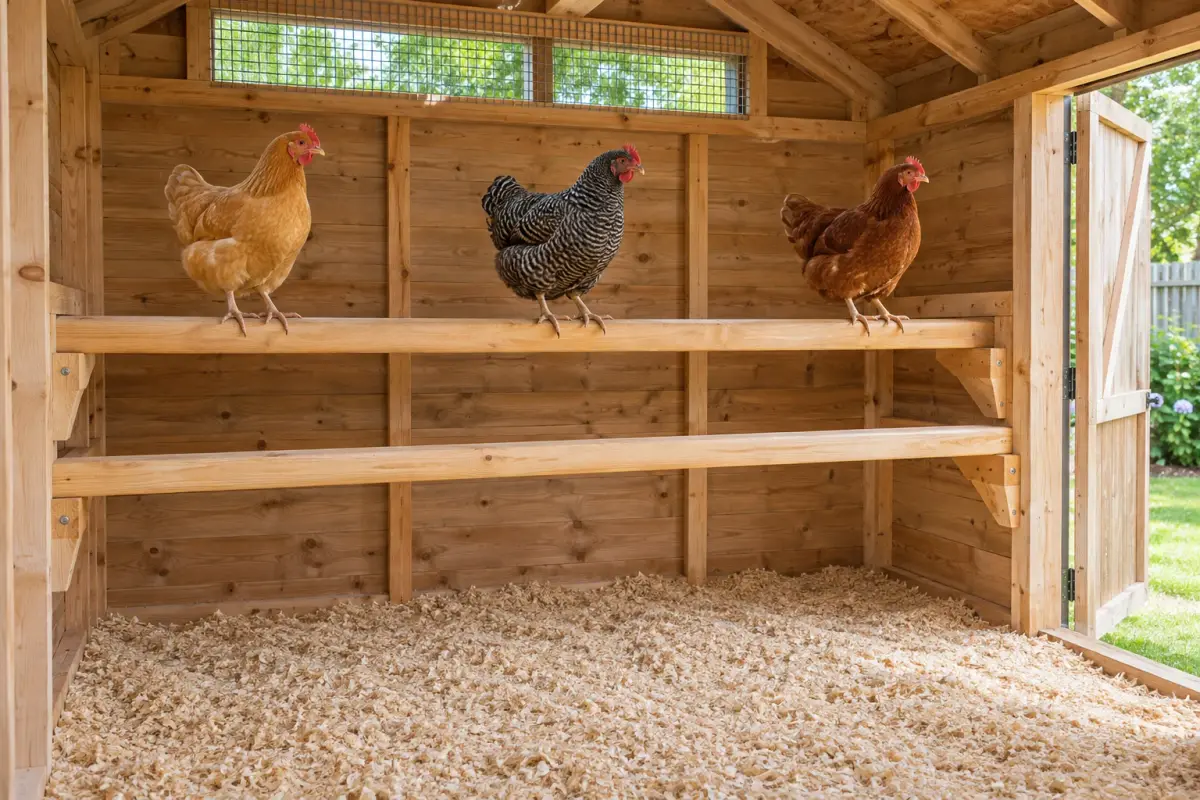
Because the mites can persist in housing, both Merck and the extension answer put cleaning at the center of control. The extension answer suggests removing all litter, clearing cracks and crevices in the walls, and treating the nesting area and roosts. A coop with smooth, easy-to-scrub surfaces and few hiding places makes this far easier, which is worth thinking about when you look at chicken coops or plan changes to an existing one.
Our guides on coop bedding and cleaning and chicken roosts cover how to keep these areas clean and dry. If you are choosing a new house, the guide to choosing a chicken coop explains which features make deep cleaning practical. Pair a good clean with regular leg checks, and put any pesticide choices past your vet or local extension office first.
When to call a vet
Call a vet who treats poultry if you see thickened, crusty or raised leg scales, lameness, a bird that stops eating, or any swelling, bleeding or toe loss. Several flock members showing signs is a reason to book the visit sooner. If you cannot find a poultry vet, your state's extension office can often point you to one.
Keep an eye on the wider flock for weeks after treatment, since leg checks are the only way to spot a recurrence early. Browse our wider range of backyard chicken supplies when you need to replace worn roosting or housing items. This page is general information, not veterinary advice, and it cannot replace advice from a veterinarian who treats poultry.
Common questions
How do I know if my chicken has scaly leg mites?
The signs are raised, rough or crusty scales on the legs and feet, often thickened over time, sometimes with lameness. Other conditions can look similar, so a vet who treats poultry should confirm it with a skin scraping.
Can scaly leg mites spread to other chickens?
Yes. Merck explains they spread by direct contact, and the mites can survive in the coop. Roosts are a common route, so check every bird's legs and clean the housing, not only the visibly affected hen.
Do scaly leg mites go away on their own?
Not reliably. The mites live under the scales and can stay hidden until stress lets numbers climb. Merck describes lameness, reduced eating and eventual death if untreated, so see a poultry vet promptly.
Can people catch scaly leg mites from chickens?
The sources I opened describe these mites as a parasite of birds and do not discuss human infection. Wash your hands after handling affected birds, and ask your own doctor or vet if you have concerns.
Sources we checked
This guide is general information, not veterinary advice. If your pet is unwell or injured, contact your veterinarian.


