






Care & how-to
Chicken Roosts: Plan Safe Access and Practical Cleaning
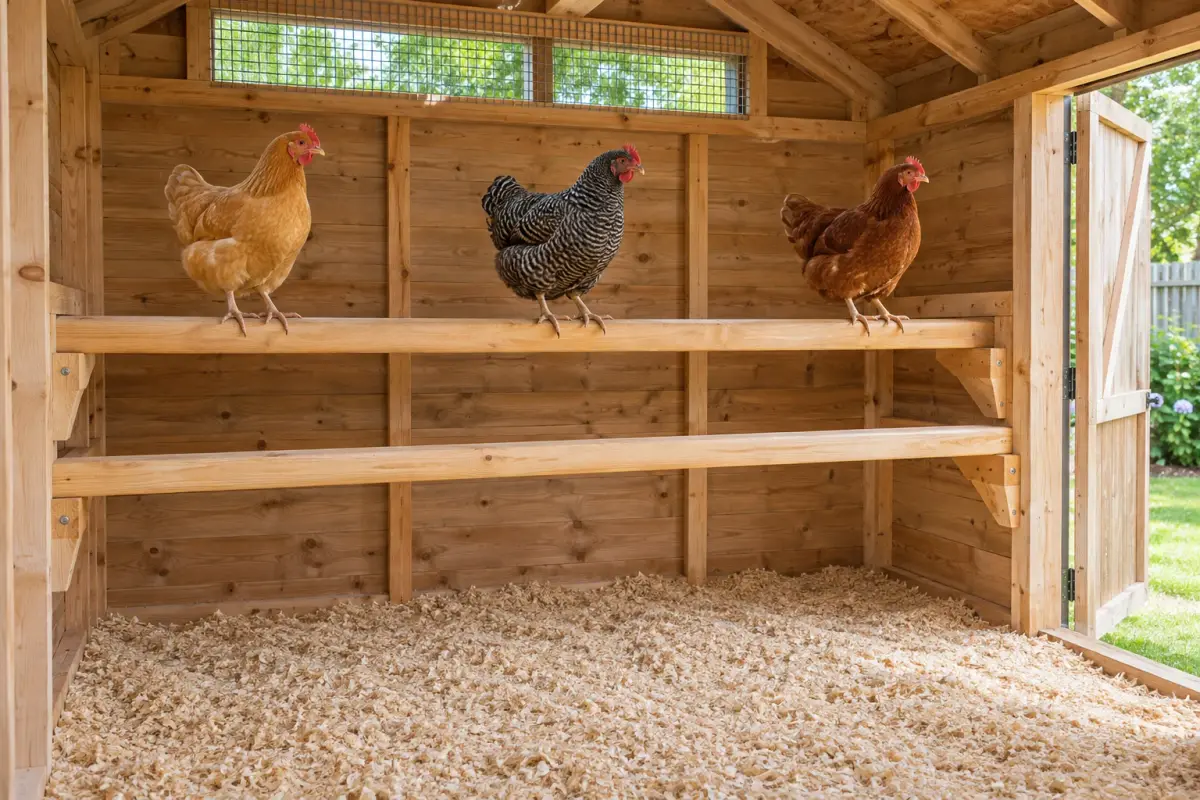
Chicken roosts should give the birds that use them a secure resting place with room to get on and off safely. Perching is a normal preference for many laying hens, but a tall bar is not automatically better. Adult size, mobility, landing space, and cleaning access all matter. Plan for the actual flock and ask a poultry professional about birds that cannot use the arrangement comfortably.
By Matt GarnettUpdated November 11, 20264 min read4 sources
Plan for the birds you actually keep
Poultry extension describes roosting as a continuing behavioral preference in domestic chickens. It also notes that heavier meat-type birds may not use perches in the same way as laying hens. A design copied from a light laying flock therefore may not meet the needs of every bird on your property.
Record adult size, age, mobility, and any birds recovering from injury before choosing a layout. Do not force a struggling chicken to use a high perch because other hens manage it. Ask a poultry veterinarian or extension professional about suitable alternatives and any health reason behind a new reluctance to perch.
Allow usable room instead of counting only bar length
Colorado State’s backyard guide provides a general allowance of six to twelve inches of roost length per bird depending on breed size. Treat that as planning context rather than proof that every layout works when a total is divided on paper. The birds need to reach and use the available space without being crowded off it.
Observe the flock at settling time. A long section behind an obstacle is not equivalent to an accessible section, and a bird repeatedly excluded from a favored area needs attention. Review the number and placement of bars alongside group behavior rather than adding height as the only response.
Make getting down part of the design
The extension perch guide describes collisions and keel injuries associated with misjudged landings. Adequate clear landing space and sensible distances between surfaces matter as much as the resting position itself. Avoid arranging bars so a bird leaving an upper level is likely to strike another perch or piece of equipment.
Consider the bird’s route in both directions before installing the system. Keep feeders, water containers, sharp projections, and clutter out of that route. If the flock includes heavy, older, or mobility-limited birds, obtain specific advice instead of assuming that the highest layout used by another keeper is suitable.
Choose sound surfaces and inspect them regularly
The university perch guide discusses differences in materials and shape, as well as associated welfare tradeoffs. It emphasizes avoiding sharp edges. Choose a sound surface that can be maintained, and check it for splinters, loose fasteners, instability, or wear rather than deciding from appearance alone.
A surface that was suitable when installed can become a problem as joints loosen or material deteriorates. Make inspection part of cleaning and repair defects promptly. Do not wrap a damaged structure indefinitely to hide roughness, or use a coating without checking whether it is appropriate for poultry contact.
Keep the roost area accessible for cleaning
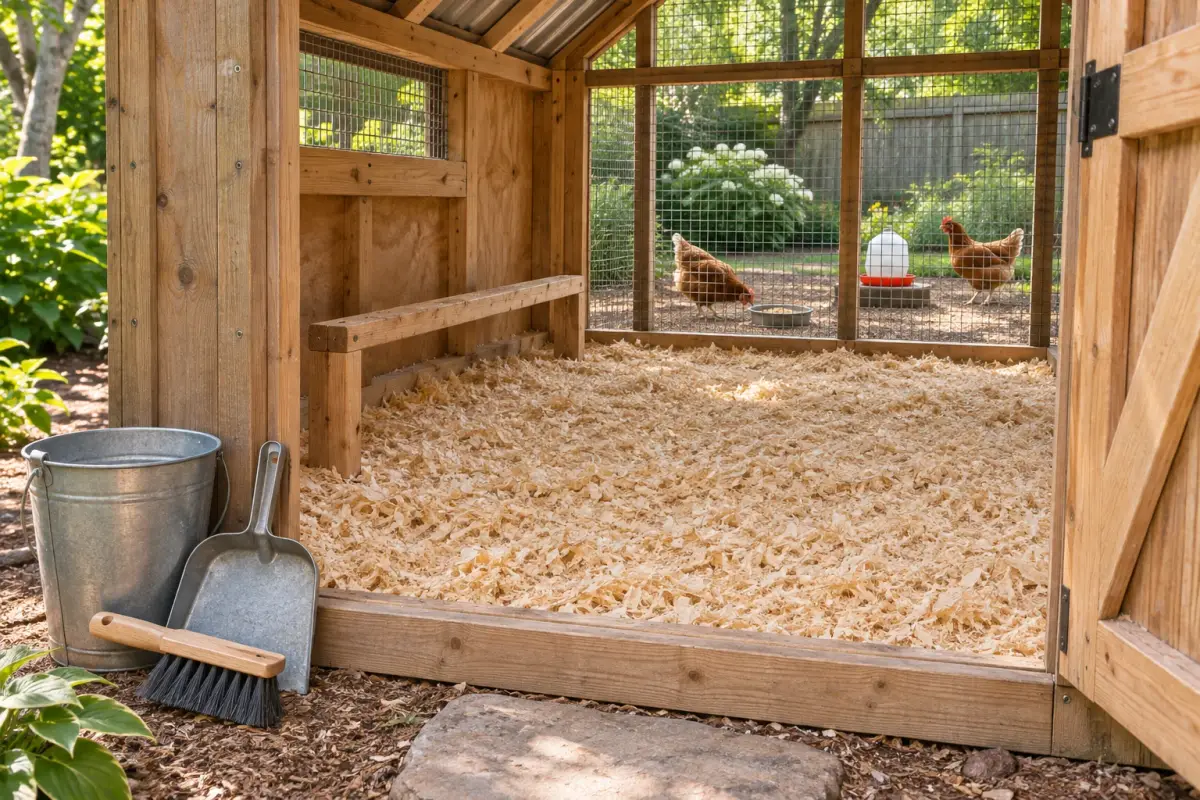
Poultry extension explains that manure tends to accumulate beneath roosting birds. A removable arrangement and access beneath it help make cleaning practical. Plan this before installation so the design does not require awkward reaching through occupied nests or moving essential equipment every time waste is removed.
The extension parasite guide also describes chicken mites hiding in housing cracks and crevices during the day. Inspect joints and secluded areas while maintaining the roost, and obtain advice about suspected parasites. Do not assume that a new perch material eliminates the need to check the birds and their surroundings.
Respond to foot problems and changes in use
A hen newly avoiding a roost, limping, or resting differently may need assessment rather than a higher bar or forced exercise. Merck identifies lameness and changes in activity among signs worth noticing in backyard poultry. Contact a poultry veterinarian about persistent changes, swelling, wounds, or difficulty bearing weight.
Compare the Chicken Coops and Chicken Runs collections against the complete care routine: safe movement, ventilation, essential resources, and cleaning access. Recheck the arrangement as birds grow or flock membership changes. Good roost planning remains an ongoing part of care rather than a one-time measurement.
This page is general information, not veterinary advice, and it cannot replace advice from a veterinarian who treats poultry.
Common questions
Do all chickens use roosting bars in the same way?
No. Many laying hens prefer perching, while heavier meat-type birds may use housing differently. Plan for adult size and mobility, and ask about a bird that newly struggles with the existing arrangement.
How much roost length should I plan per chicken?
Colorado State gives six to twelve inches per bird depending on breed size. Usable access and group behavior still matter; a total length does not establish that every hen can perch comfortably.
Is a higher chicken roost always better?
No. Birds must get down without collisions or difficult landings. Consider clear space, obstacles, distances between bars, and the abilities of the actual flock rather than selecting height alone.
Why does a roost need cleaning access?
Droppings accumulate beneath resting birds, and joints can conceal parasites or damage. A practical removable design helps maintenance. Persistent limping, wounds, or changes in perching should also be discussed with a poultry veterinarian.
Sources we checked
This guide is general information, not veterinary advice. If your pet is unwell or injured, contact your veterinarian.


