






Care & how-to
How to Introduce New Chickens to a Flock
Introduce new chickens in stages: first keep arrivals in a separate quarantine area, then allow protected visual contact, and supervise any later mixing. University of Minnesota Extension recommends separating new or returning birds for at least 30 days. A divider beside the old flock helps with social introductions after quarantine; it does not provide the same disease separation as a properly separate arrival area.
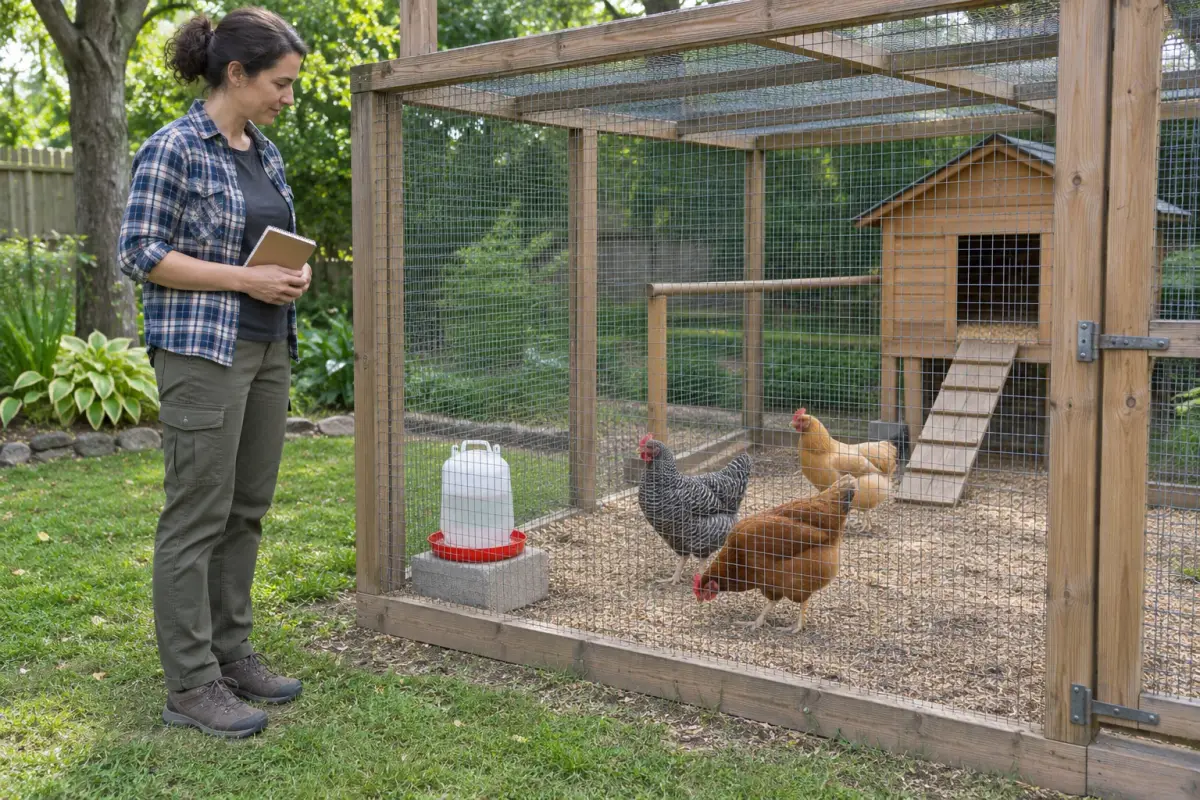
By Matt GarnettUpdated November 11, 20264 min read4 sources
Plan the arrival area before bringing birds home
Adding chickens can introduce disease even when the new birds look healthy. Cooperative Extension’s biosecurity guidance explains that recovered birds may remain carriers. Decide where arrivals will stay, which equipment they will use, and how daily care will avoid carrying dirty material between the new group and the established flock.
University of Arizona Extension advises keeping quarantined birds far enough away that they do not share airflow with the existing flock. Ask a poultry veterinarian about your property if the available spaces do not permit effective separation. A crate inside the occupied coop should not be described as quarantine.
Use the separation period for observation
Minnesota’s avian influenza guidance recommends at least 30 days of separation for new or returning birds. Follow any longer or more specific advice from the veterinarian managing the flock. Do not shorten the period because the arrivals are quiet, seem friendly, or are urgently wanted in the main coop.
Watch eating, drinking, activity, breathing, and droppings, and note any change. Contact a poultry veterinarian if signs of illness appear. Do not move an unwell arrival into the main group to see whether company improves it; obtain instructions about assessment, testing, and the other birds that may have been exposed.
Check size and housing before social contact
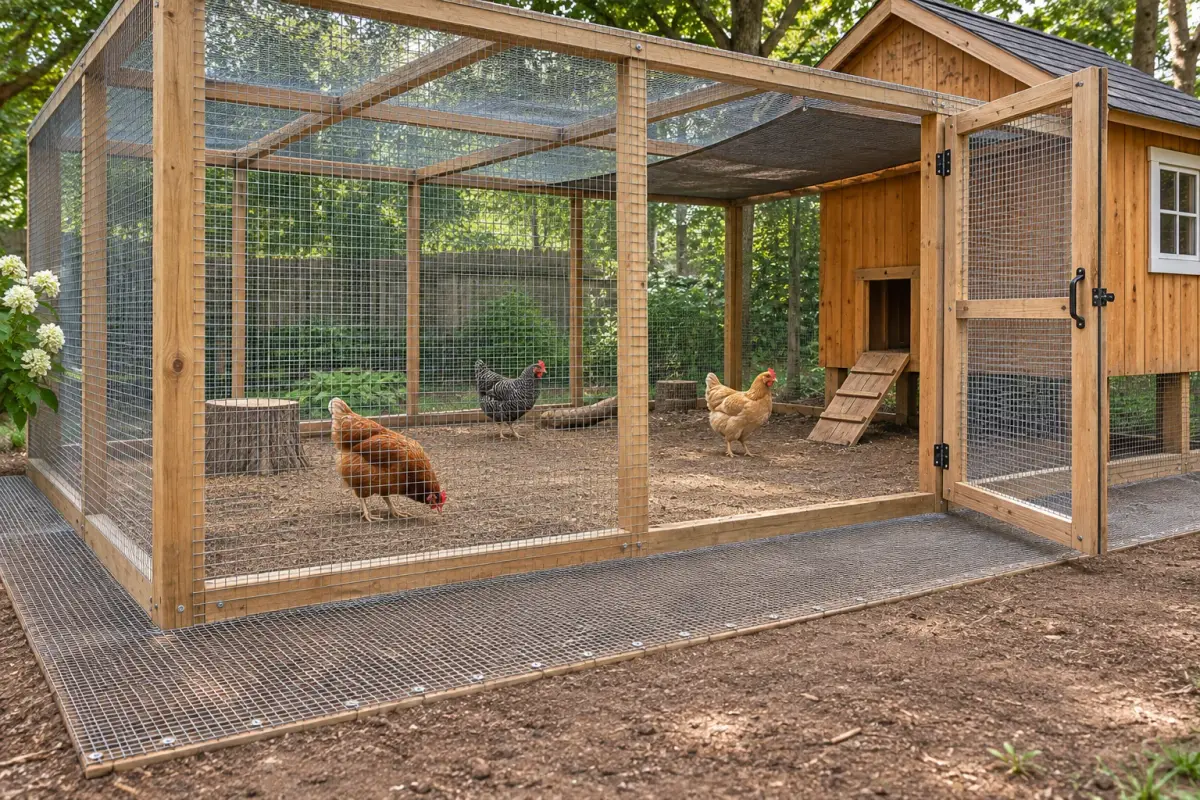
A chick small enough to pass through a divider is not protected by that divider. Arizona Extension advises waiting until young birds are an appropriate size and conditions are suitable before integration. Review the openings and latches from both sides, including whether an established hen can reach through and injure a smaller bird.
Make sure the housing has enough usable room, feeding access, and drinking access for the eventual combined group. Keep the separate setup available so you can reverse a failed introduction. Do not dismantle it on the assumption that moving the new birds into the coop will settle the problem in one evening.
Start with protected familiarity after quarantine
After the health separation period and any veterinary clearance, allow the groups to see one another across a secure physical barrier. Arizona Extension describes this as a way to become familiar without direct fighting. Confirm that neither group can escape the partition or trap a bird against its edge.
Observe how the arrangement works during normal feeding and resting periods. Every bird must be able to reach its own provisions without crossing the barrier. A calm first look is useful information, but it does not guarantee the next stage will be uneventful or replace supervision when direct contact begins.
Supervise mixing and stop injury
Some pecking and noise can occur as the social order changes, but persistent attacks and injury are reasons to intervene. Arizona Extension recommends supervision and extra feed, water, and roost space during integration. Stay close enough to separate birds safely rather than leaving a newly combined group unattended immediately.
If a bird is bleeding, repeatedly chased, cornered, or prevented from eating or drinking, separate it from the attacker and assess the situation. Contact a poultry veterinarian for wounds or an unwell bird. Do not assume that severe bullying must simply run its course because a flock has a pecking order.
Keep watching after the first successful session
Recheck access to feeders and drinkers when the group is active, and look at each individual bird rather than only the general appearance of the flock. Record repeated conflict, reduced eating, or a bird staying apart. Return to separation when needed and ask an extension poultry specialist about the layout and management.
Call a poultry veterinarian promptly for breathing changes, unusual quietness, persistent abnormal droppings, or injury. Sudden deaths or several birds becoming ill requires immediate advice before moving birds elsewhere. Explain the recent arrivals and integration history so the professional can assess both social and contagious-disease concerns.
Plan the separated housing arrangement before arranging an introduction. The Chicken Coops and Chicken Runs collections can help you compare layouts, but an adjacent enclosure is not a substitute for the initial quarantine arrangements described above.
This page is general information, not veterinary advice, and it cannot replace advice from a veterinarian who treats poultry.
Common questions
How do I introduce new chickens to a flock?
Use separate quarantine first, then protected visual contact, then supervised mixing when the birds and setup are suitable. Keep the separate accommodation available and reverse the introduction if birds are injured or denied feed and water.
Is a divider inside the coop enough for quarantine?
No. A divider can help social familiarization after quarantine, but it does not provide the same disease separation as a separate arrival area. Arizona Extension advises avoiding shared airflow during the health separation period.
How long should new chickens be separated?
Minnesota Extension recommends at least 30 days for new or returning birds. Follow any specific veterinary instructions, especially if illness appears, and do not treat the passage of time alone as a guarantee of health.
Should I let chickens fight until the pecking order settles?
Do not allow persistent attacks or injury to continue. Supervise introductions, provide adequate access to resources, and separate birds when needed. A wound or a bird unable to eat or drink needs prompt attention.
Sources we checked
This guide is general information, not veterinary advice. If your pet is unwell or injured, contact your veterinarian.


