Breeds
Shih Tzu vs Lhasa Apso: How to Tell These Tibetan Breeds Apart
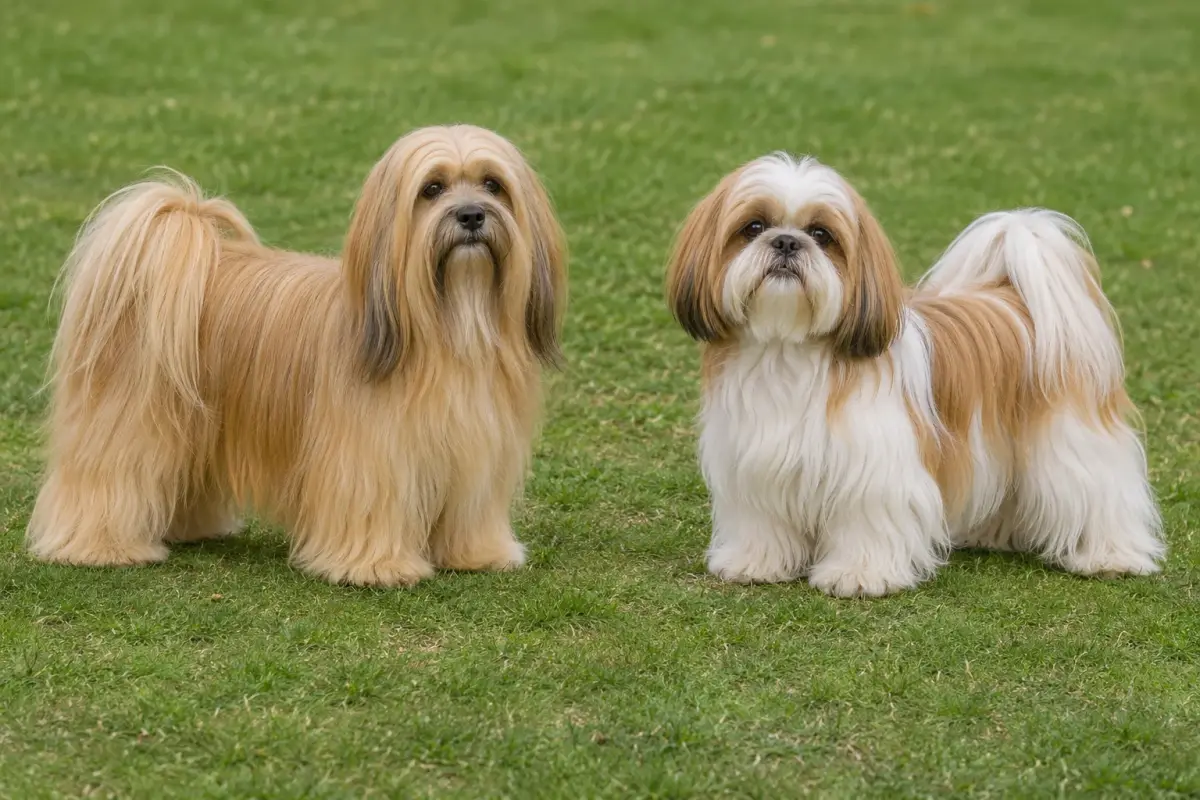
The Shih Tzu and the Lhasa Apso are both small, long-coated breeds with Tibetan roots, and they are often confused. The Shih Tzu is the friendlier, more outgoing lap dog, bred as a palace companion; the Lhasa Apso is a bolder, more independent watchdog, bred to sound the alarm at monasteries, and is aloof with strangers. Sizes are close: the AKC lists Shih Tzu at 9 to 16 pounds and Lhasas at 12 to 18. Both need serious coat care, starting with a good dog brush.
By Matt GarnettUpdated November 10, 20265 min read4 sources
Side by side
Size: the AKC lists Shih Tzu at 9 to 10.5 inches and 9 to 16 pounds, and Lhasa Apsos at 10 to 11 inches for males and 12 to 18 pounds. Lifespan: AKC gives the Shih Tzu 10 to 18 years and the Lhasa 12 to 15. Popularity: the Shih Tzu ranks 20th on the AKC list and the Lhasa 94th. Coat: both long and dense; VCA describes the Shih Tzu coat as fairly straight and the Lhasa's as long, hard and straight. Shedding: below average for both.
Strangers: VCA calls the Shih Tzu outgoing and the Lhasa aloof. Training: VCA rates the Shih Tzu 2 out of 5 and the Lhasa 1 out of 5 for ease of training, and both can be slow to housetrain. Heat: both dislike hot weather; the Shih Tzu is rated 1 out of 5. Children: both rated 3 out of 5. Best for: Shih Tzu for a sociable lap dog; Lhasa for an alert, independent companion in an adult household.
Palace dog and monastery sentinel
VCA explains that small Tibetan lion dogs reached China and, in the late 1800s, were bred with Pekingese, Pugs and other Chinese dogs in the kennels of the Dowager Empress to create the Shih Tzu. The breed nearly vanished in China after the revolution; all modern Shih Tzu descend from 14 foundation dogs, and the AKC recognized the breed in 1969. The AKC calls it a little lion dog where giggles and mischief follow.
The Lhasa Apso is older. VCA says DNA studies place it among the most ancient AKC breeds, and in Tibet it served as a lookout in villages and monasteries, barking to announce visitors; its native name means bark lion sentinel dog. It reached America around 1930 and was recognized by the AKC in 1935. The AKC calls Lhasas family comedians but regally aloof with strangers.
Temperament and training
VCA describes the Shih Tzu as both an affectionate lap dog and a fun-loving companion, playful and good with children, outgoing toward strangers and good with other dogs and pets. It learns quickly but has a stubborn streak and does poorly with force; reward-based training with food or games works well. Housetraining can take longer than with many breeds, and VCA notes many can learn to use indoor potty systems.
The Lhasa Apso is loyal and entertaining, playful with children, generally friendly with other dogs and pets, but a one-family dog that tends to be aloof with strangers, per VCA. It is bold, stubborn and independent, so force methods are extremely unproductive; patient, reward-based training and early socialization with new people are essential. Some Lhasas bark a lot, true to their sentinel origins.
Grooming
Both coats are a real commitment. VCA says each needs brushing and combing every other day to prevent mats (our slicker brushes are one option), keeping hair out of the eyes, and regular checks of the hair around the rear for hygiene. Many owners choose professional grooming or keep the dog in a short trim that is far easier to manage at home. Budget for a groomer every few weeks if you go that route.
For the Shih Tzu, VCA adds weekly ear checks, because poor air circulation under the hair can cause problems, and regular tooth brushing, since the breed is prone to periodontal disease. A full, long coat also becomes heavy when wet, so VCA advises against unsupervised swimming for both breeds.
Exercise and daily life
Neither needs much running. VCA says a walk around the block once or twice a day, plus indoor games, meets the outdoor needs of both, though they still need the mental stimulation of sniffing outdoors. On wet-weather days, toys for Shih Tzu such as a plush squeaky duck or a squeaky toy set for small dogs give either breed an indoor outlet. Lhasas do well at dog parks if separated from large dogs; VCA suggests Shih Tzu stick to small-dog areas only.
The Shih Tzu's short muzzle makes it prone to overheating, and VCA notes Lhasas do not enjoy hot weather either, so exercise both in the cool of the day and keep them in air conditioning in summer. Both suit apartments well; for the daily walk, a small dog harness is worth a look, and our guide to harnesses for Shih Tzus covers fit. VCA notes Shih Tzu may run a little heavy, so measure meals and ask your vet about a healthy weight.
Which to choose
Choose a Shih Tzu if you want a friendly, outgoing lap dog that welcomes visitors, gets along with most people and pets, and adapts easily to apartment life. Choose a Lhasa Apso if you prefer a more independent, confident dog that bonds closely with its own family, acts as a little watchdog and is happy in a calmer, adult household. Weighing a third small breed? See our comparison of Havanese vs Shih Tzu.
With either, plan for grooming time or a groomer budget from day one, start gentle handling and socialization early, and book a vet visit soon after the puppy comes home. Ask your vet about dental care in particular, since VCA notes the Shih Tzu is prone to periodontal disease and an early tooth-brushing routine helps.
This page is general information, not veterinary advice, and it cannot replace an examination by the vet who knows your pet.
Common questions
How do you tell a Shih Tzu from a Lhasa Apso?
Temperament is the biggest difference: Shih Tzu are outgoing and Lhasas aloof with strangers. Physically, the Lhasa is a little taller, per the AKC, and VCA describes its coat as harder than the Shih Tzu's.
Which is easier to train, a Shih Tzu or a Lhasa Apso?
The Shih Tzu, slightly. VCA rates the Shih Tzu 2 out of 5 and the Lhasa 1 out of 5 for ease of training. Both are stubborn, slow to housetrain and respond best to reward-based methods.
Do Shih Tzu or Lhasa Apsos shed?
Both shed below average, according to VCA, but their long coats mat easily and need brushing and combing every other day, or a short trim from a professional groomer.
Are Lhasa Apsos good with kids?
They can be. VCA describes Lhasas as playful and good with children but aloof with strangers, so they suit families with older, respectful kids. Supervise young children with any small dog.
Sources we checked
This guide is general information, not veterinary advice. If your pet is unwell or injured, contact your veterinarian.