






Buying guides
Best Harness for Shih Tzus: How to Choose One That Fits
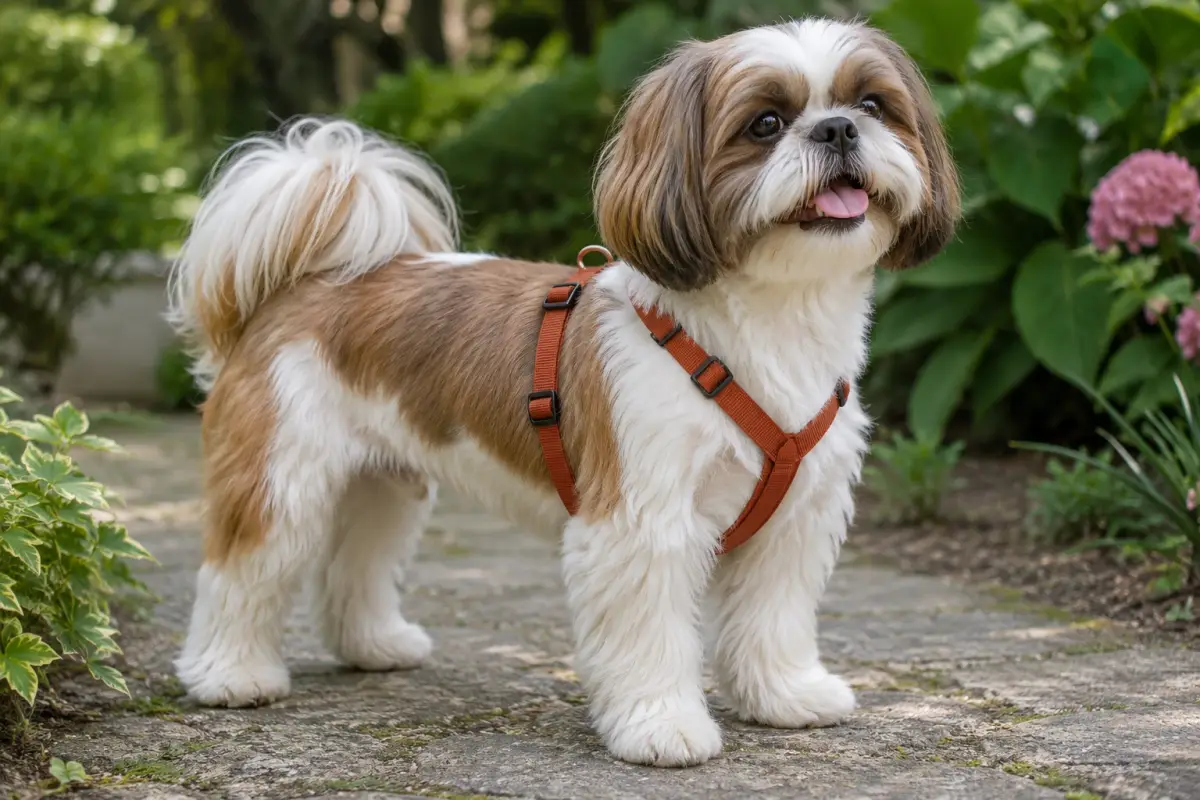
The best harness for a Shih Tzu keeps pressure off the neck, adjusts at both neck and chest, and stays light enough for a flat-faced dog that overheats easily. VCA lists the Shih Tzu as a brachycephalic breed and advises a harness that does not tug at the neck rather than a regular collar. A step-in or Y-front style is a good place to start; see our harnesses for Shih Tzus.
By Matt GarnettUpdated November 14, 20264 min read3 sources
Why the neck matters for a Shih Tzu
VCA lists the Shih Tzu among brachycephalic, or flat-faced, breeds, which can have narrowed airways that make breathing harder. For dogs with this airway syndrome, VCA advises a harness that does not tug at the neck area and says a regular collar is not recommended because it can apply undue pressure to the neck.
In practice that means the leash clips to a harness on every walk. A light collar can stay on for ID tags, but it should never be the thing your dog pulls against. Even a Shih Tzu with no breathing trouble benefits, because small dogs lunge toward things and a harness spreads the jolt across the chest.
What matters most in the fit
Take two measurements, as the AKC advises: around the neck where it meets the shoulders, and around the widest part of the chest behind the front legs. Use a cloth tape, or a piece of string held against a ruler. Choose the size from those numbers and the maker's chart, not from weight alone.
Start a little loose and tighten gradually. The AKC says to check that the dog can move its shoulders and legs naturally, that the harness does not slide over the head when the dog backs up, and that nothing rubs. Adjustment at both neck and chest matters on a small dog with a long coat, because the hair can hide a gap until the harness slips.
Step-in or over-the-head
A Shih Tzu has a flat face and large eyes, and dragging a harness over that face is unpleasant for many dogs. The AKC notes that step-in harnesses avoid going over the head and are harder to escape when they fit properly, so they are a practical choice for a dog that dislikes handling around its face. Browse step-in dog harnesses to compare styles.
Vest styles spread pressure widely and are easy to clip, but the AKC notes mesh is breathable while neoprene can retain heat. For a heat-sensitive breed, breathable fabric matters. A simple adjustable pet harness or a harness with leash in a light strap design is the type to look for, and a fully padded winter vest belongs in cold weather only.
Long coat, mats and grooming
Straps rub a long coat into tangles, most often behind the front legs and under the chest. Brush the coat before every fitting, choose smooth webbing without rough stitching, and take the harness off at home so the hair can settle. Thick or fluffy coats may need tighter adjustment to stop slipping, according to the AKC, so press down through the hair to check the body underneath.
Recheck the fit after every grooming appointment, as the AKC advises. A Shih Tzu in a puppy cut needs a smaller setting than the same dog in full coat, and a harness left loose after a trim is the one most likely to be backed out of. Look under the straps for rubbing, hair loss or sore skin, and ask your vet if redness does not settle.
Heat, breathing and walks
VCA says signs of airway syndrome are often worse in hot or humid weather, and advises avoiding hot conditions and keeping affected dogs in air conditioning in summer. The AKC lists short-snouted breeds among the dogs that need extra caution in warm weather, and overweight dogs among those at higher risk of heatstroke.
Walk in the cooler hours, keep the pace slow, and carry water. Heavy panting, drooling, bright red gums, or noisy breathing mean stop and cool your dog with tepid water. Pale or bluish gums, collapse, or a temperature of 104 degrees F or more mean a vet right away, even if your dog seems to recover.
What to avoid, and how to care for it
Avoid attaching a leash to a collar, straps that cross the front of the throat, heavy padded vests in summer, and sizing by weight alone. Avoid leaving a harness on all day, and avoid retractable leads that let a small dog hit the end at speed. If you want a leash that clips straight to a chest strap, a dog leash with chest strap is one design of that kind.
Hand-wash or use a laundry bag and air dry. Replace the harness when stitching frays or a buckle cracks. For the wider choice read our guide to harnesses for small dogs, see how to put on a dog harness, and browse all harnesses for Shih Tzus.
This page is general information, not veterinary advice, and it cannot replace an examination by the vet who knows your pet.
Common questions
Should a Shih Tzu wear a collar or a harness?
A harness for walking. VCA lists the Shih Tzu as brachycephalic and advises a harness that does not tug at the neck instead of a regular collar. A light collar can still carry ID tags.
What size harness does a Shih Tzu need?
Measure the neck where it meets the shoulders and the widest part of the chest, then follow the maker's chart. Press down through the coat to check the fit against the body, since long hair hides gaps.
Is a step-in harness better for a Shih Tzu?
Often, yes. The AKC says step-in designs avoid going over the head and are harder to escape when they fit well, which spares a flat face and eyes. Make sure the shoulders can still move freely.
Does a Shih Tzu need a no-pull harness?
Usually not for a dog this small. If yours pulls, browse our no-pull dog harnesses, but make sure no strap tightens across the throat, and practise loose-leash walking with rewards.
Sources we checked
This guide is general information, not veterinary advice. If your pet is unwell or injured, contact your veterinarian.


