Buying guides
Best Toys for French Bulldogs: What Actually Matters
The best toys for a French Bulldog are sized so they cannot be swallowed, durable enough not to break into pieces, and suited to short, calm play, because this flat-faced breed overheats easily. Check size and construction first, then the type of play. Start with our French Bulldog toys and use the checks below.
By Matt GarnettUpdated November 13, 20264 min read2 sources
Size and shape come first
The American Kennel Club advises picking balls and toys an appropriate size for your dog so they cannot be swallowed, and to inspect toys and discard any that look less durable. For a French Bulldog, whose muzzle is short and wide, that means avoiding small balls and anything that could slide to the back of the throat. A toy should be clearly bigger than the dog's mouth can close around.
Shape matters as well. Flat, wide or ring-shaped toys are easier for a short-muzzled dog to pick up than a slim stick or a small round ball that rolls away from the mouth. Check the packaging dimensions against your dog rather than trusting a size label like small, and compare against a puppy, who will outgrow a toy size within months.
Durable chews versus soft toys
AKC's toy guide separates toys by how long they last. Synthetic chews are usually long-lasting, and malleable rubber toys should have a hole at each end to avoid suction that can trap a dog's tongue. It also warns that very hard bones or antlers can be a problem for puppies and older dogs with compromised teeth. A bite-resistant molar stick puppy ball is an example of a firm chew type, so check how it flexes before you hand it over.
Soft toys suit gentle chewers. AKC says plush preference varies by dog, and if a dog consistently destroys them, you may choose not to give them. A squeaky plush duck toy can be a comfort toy for a puppy that carries things around, but it should be taken away the moment it is ripped and stuffing is coming out, as AKC advises.
Squeakers, stuffing and tennis balls
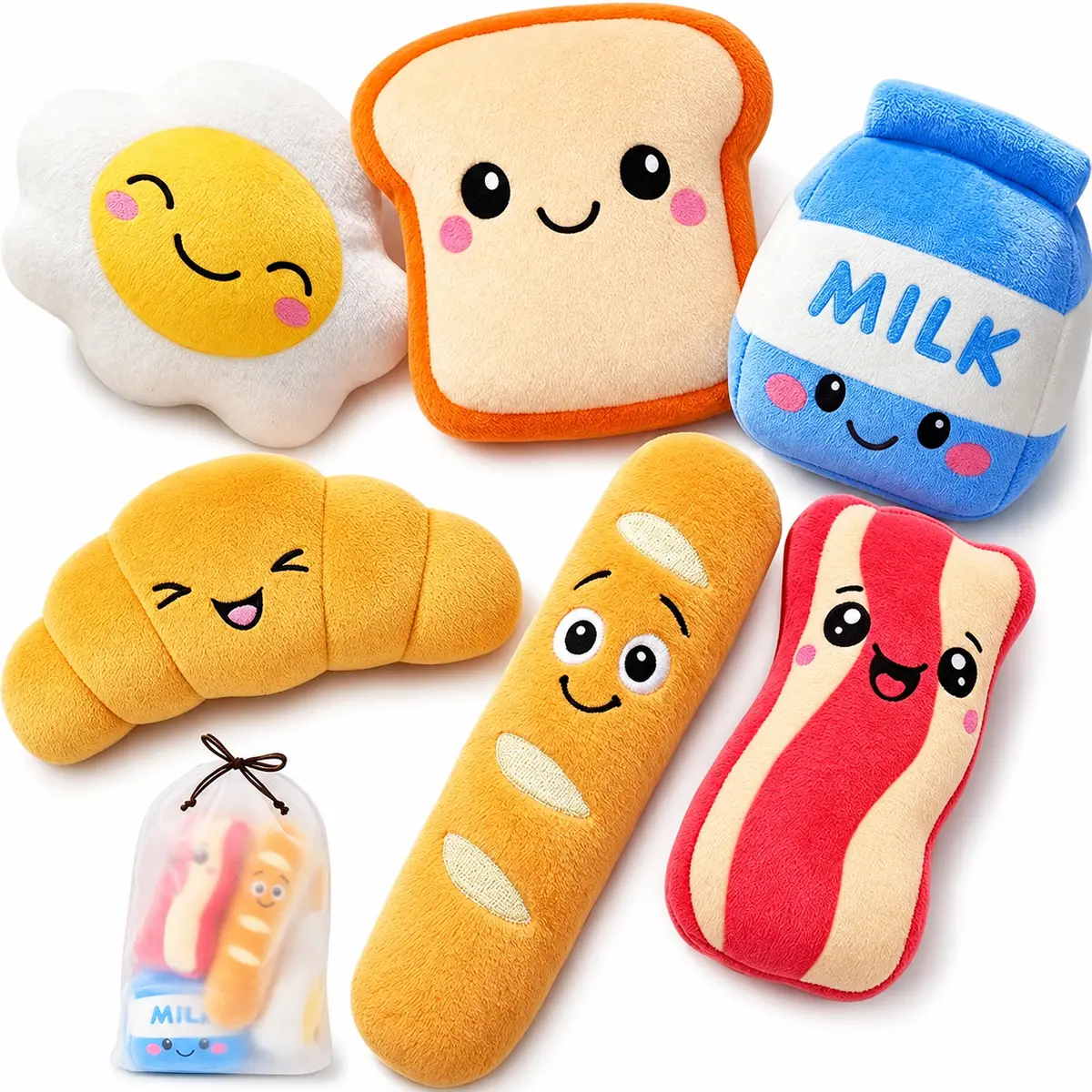
AKC warns that a squeaker removed from a plush toy may be swallowed and cause choking or an intestinal blockage, so a dog should not be allowed to take one out and chew it. For a dog that likes to dissect toys, a squeaky plush is a supervised toy only, and the whole toy should be discarded once the fabric is breached. A breakfast-themed squeaky toy set with a storage bag fits that kind of short, watched play, and the bag makes it easy to put toys away afterward.
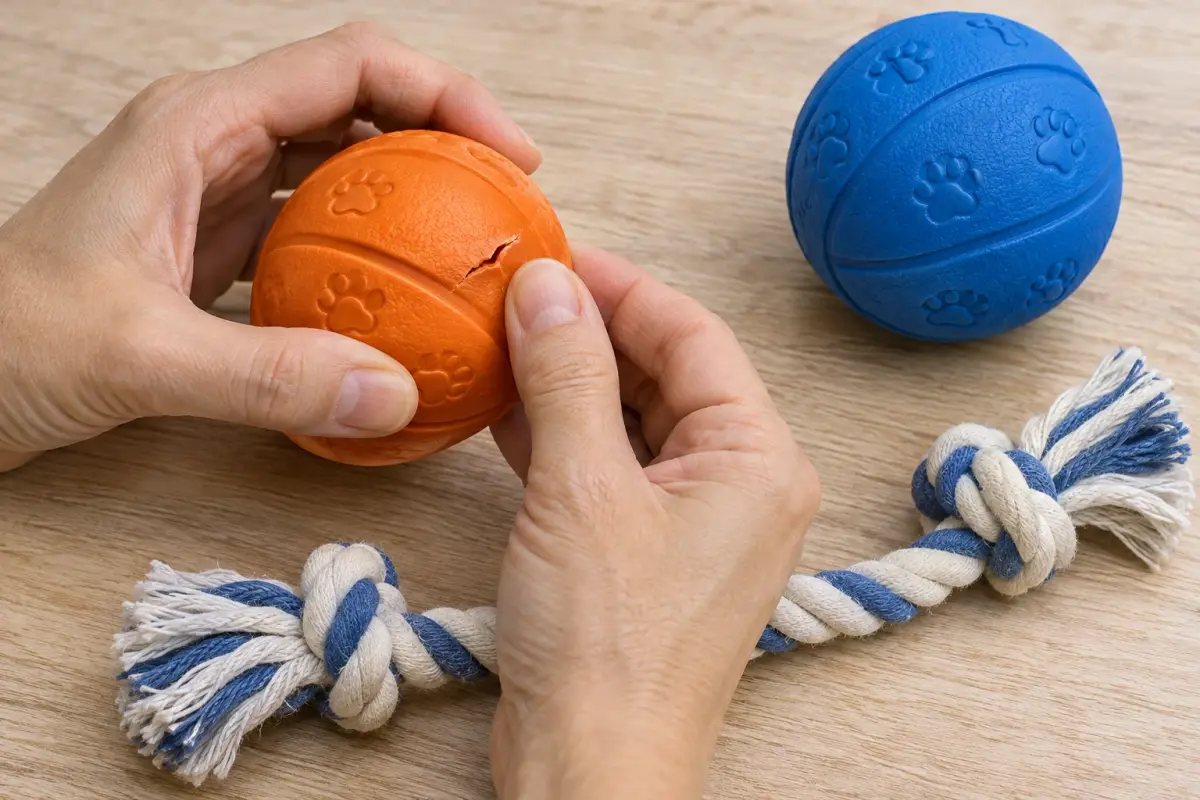
AKC also says tennis balls can wear tooth enamel and can be popped, with pieces swallowed, and recommends durable rubber balls instead. Rawhide is another one to watch because dogs can tear off large pieces that cause choking or blockage. When in doubt, ask your vet what suits your dog's teeth.
Play that respects a flat-faced dog's breathing
VCA Hospitals lists French Bulldogs among the flat-faced breeds prone to brachycephalic airway syndrome, with signs including noisy breathing, snorting, tiring easily and worse symptoms in hot or humid weather. Because affected dogs overheat more easily, VCA advises controlling exercise and avoiding hot or humid conditions, and keeping the dog lean to reduce strain on breathing.
For toys, that points toward short sessions of fetch indoors or in cool weather, calm chewing and puzzle-style play, rather than long games of chase in the heat. If your dog collapses, faints or has trouble breathing after play, VCA notes that is a sign of severe disease and needs prompt veterinary attention. Keep fresh water within reach after play; our guide to the best dog water bowls covers the options.
Supervision, rotation and replacement
No toy is risk-free, and supervision is the best backup. AKC advises using tug toys together with your dog and then putting them away, so the toy is not shredded or eaten when you are not watching. Keep two or three toys out and rotate them, which keeps interest high without a heap of small items on the floor.
Inspect toys weekly. Discard plush once it rips, retire any chew that is splintering or has pieces missing, and replace anything your dog can now fit entirely in its mouth as it grows. Older Frenchies with sensitive teeth often do better with softer, flexible chews.
Which toy suits which Frenchie
For a teething puppy, choose a medium-sized firm rubber chew and a soft plush for comfort, both used under supervision. For an adult that chews heavily, stick to durable rubber and avoid plush entirely. For a gentle, social dog, short tug games and a few soft toys are fine, played while you are there.
Whatever the choice, pair toys with a harness rather than a neck collar for walks, as VCA advises for flat-faced breeds. When you are ready to compare, browse dog toys for French Bulldogs with your dog's size and chewing style in mind.
Common questions
What size toy is safe for a French Bulldog?
AKC advises choosing balls and toys an appropriate size for your dog so they cannot be swallowed. A toy should be larger than the dog's mouth can close around, and any toy that breaks into pieces should be thrown away.
Are squeaky toys safe for French Bulldogs?
Only with supervision. AKC warns that a squeaker removed from a plush toy may be swallowed, causing choking or an intestinal blockage. Take the toy away once the fabric is ripped or the squeaker is exposed.
Are tennis balls okay for French Bulldogs?
AKC says tennis balls can wear tooth enamel and may be popped, with pieces swallowed, and suggests durable rubber balls instead. Choose a ball too big to swallow and replace it when it wears.
How much play is too much for a French Bulldog?
VCA says flat-faced breeds overheat easily and advises controlling exercise and avoiding hot or humid conditions. Keep sessions short and stop if your dog is noisy breathing or tiring, then ask your vet.
Should I give my Frenchie rawhide?
AKC warns dogs can tear off large pieces of rawhide, creating choking or blockage hazards. Many owners choose durable rubber chews instead; ask your vet which chews suit your dog's teeth.
Sources we checked
This guide is general information, not veterinary advice. If your pet is unwell or injured, contact your veterinarian.