Buying guides
Best Dog Water Bowl: How to Choose Material, Size and Style
The best dog water bowl is stainless steel or glazed ceramic, heavy or non-slip enough that it does not slide, and big enough to hold a full day's water with room to spare. As a rough guide, the AKC puts a dog's daily need at about an ounce of water per pound of body weight, so a 50-pound dog drinks around 50 ounces. Filtered, no-spill and outdoor bowls are add-ons, not substitutes for daily washing.
By Matt GarnettUpdated November 13, 20264 min read2 sources
What matters most: material, capacity and stability
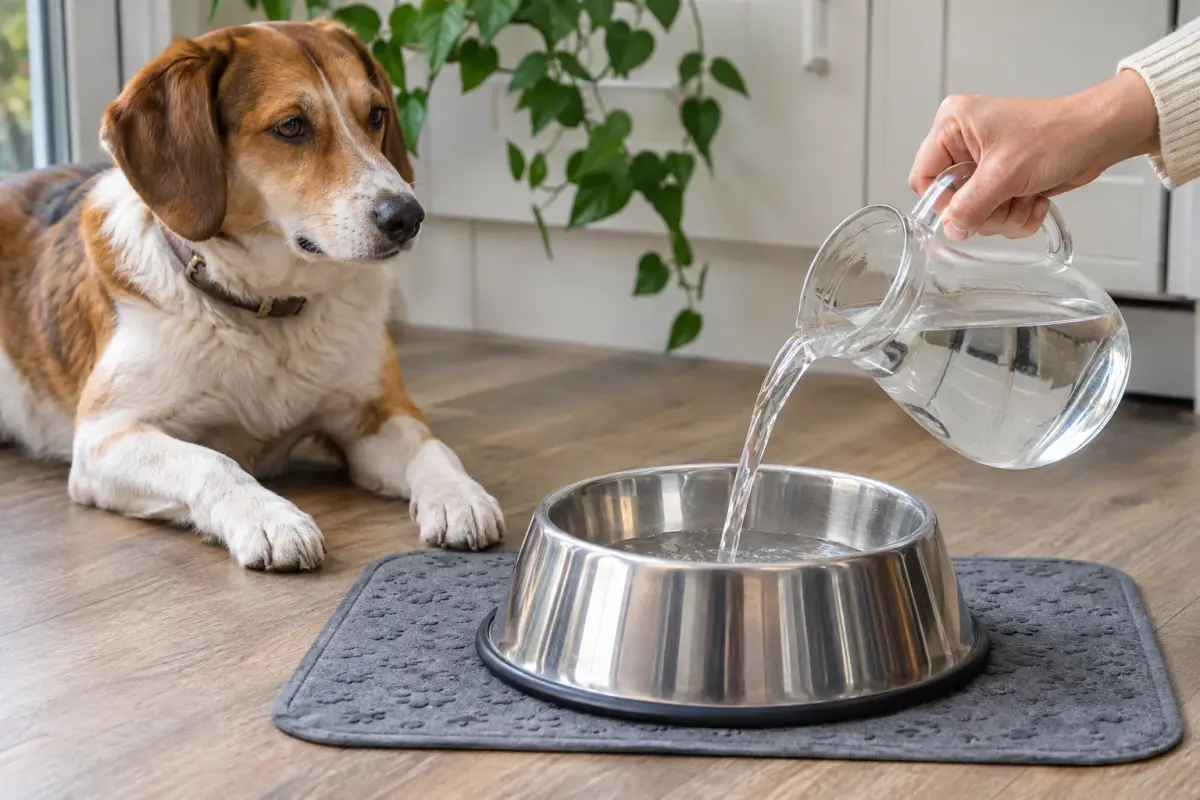
Material decides how clean the bowl stays. The AKC's bowl guidance favors stainless steel for durability and hygiene, notes that ceramic is easy to clean but can chip, and warns that plastic scratches, harbors bacteria and can irritate the chin of some dogs. A scratched or chipped bowl should be replaced, because grooves hold slime that washing does not remove.
Capacity is the second factor, and our guide to how much water a dog should drink goes deeper. The AKC's general guide is about an ounce of water per pound of body weight per day, varying with weather, activity and diet. Choose a bowl that holds at least that much, and more if you are out all day. Stability is the third: a rubber base or a heavy bowl stops a dog pushing the bowl across the floor and spilling it. Browse our dog water bowls with those three checks in mind.
The main types compared
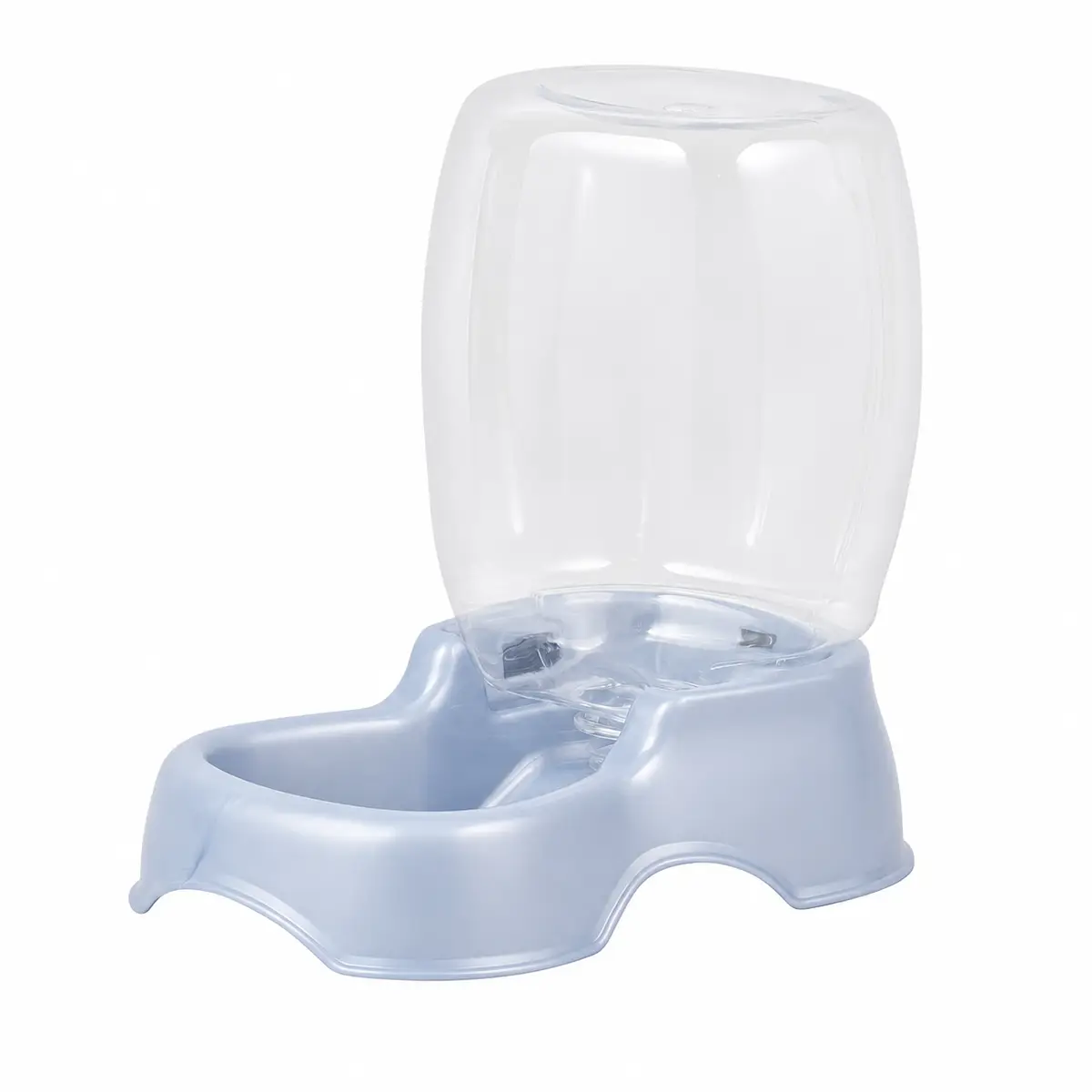
An open water bowl can use a steel, ceramic or plastic body; check its condition and exact cleaning instructions. Elevated dog bowls place the vessel on a stand. A gravity waterer uses a reservoir that releases water into a basin as space becomes available. That is a different mechanism from a 300 ml portable dog water bottle with a drinking sink, whose button releases water into its built-in cup for a drink on a walk.
No-spill bowls use a floating disc or an inward lip that limits splashing, which suits messy drinkers and dogs with beards or long ears. Filtered bowls and dog water fountains circulate water through a filter, which keeps it fresher and tempts some dogs to drink more. Outdoor bowls are larger, heavier and sometimes heated to stop freezing in winter.
Best bowl for each dog
For a large dog, choose a bowl of at least 2 quarts in stainless steel with a rubber base, or two bowls in different rooms. For small dogs and puppies, a shallow, stable bowl that is easy to reach works best; deep bowls make small dogs dip their whole face. For flat-faced breeds such as French Bulldogs, a wide, shallow bowl or a slightly tilted one is easier to drink from.
For messy drinkers, bearded breeds and dogs with long ears, a no-spill water bowl or a narrow-topped bowl keeps the floor drier. For travel and hikes, a collapsible silicone bowl or a bottle with a built-in trough is practical. For outdoor dogs or yards, a large, heavy bowl in the shade, emptied and refilled daily, is the minimum, with a heated bowl in freezing weather.
What to avoid
Avoid thin plastic bowls, especially for dogs that chew or have had chin acne. Avoid bowls with painted interiors or decorative glazes not labeled food safe. Avoid leaving water in the sun, where it warms quickly and grows algae, and avoid copper or galvanized buckets for daily use, since metals can leach into water left standing.
Never restrict water unless your vet has told you to; the AKC warns this can cause dangerous dehydration. Watch for changes in drinking. A dog that suddenly drinks far more than usual, or stops drinking, may be unwell, and the AKC's guidance on excessive thirst is to have a vet check a clear change from your dog's normal pattern.
How to size a water bowl
Work out your dog's daily water need at roughly an ounce per pound, then choose a bowl that holds at least that much. A 20-pound dog needs around 20 ounces, so a 1-quart bowl, which holds 32 ounces, gives a margin. A 70-pound dog needs around 70 ounces, so a 3-quart bowl, or two smaller bowls, is safer, especially in summer.
Height matters for some dogs. A bowl should sit roughly level with the bottom of the chest for tall or senior dogs who find bending uncomfortable. Ask your vet before raising the bowls of large, deep-chested breeds, because raised feeders have been discussed in relation to bloat risk, and your vet can weigh that for your dog.
Cleaning and how long bowls last
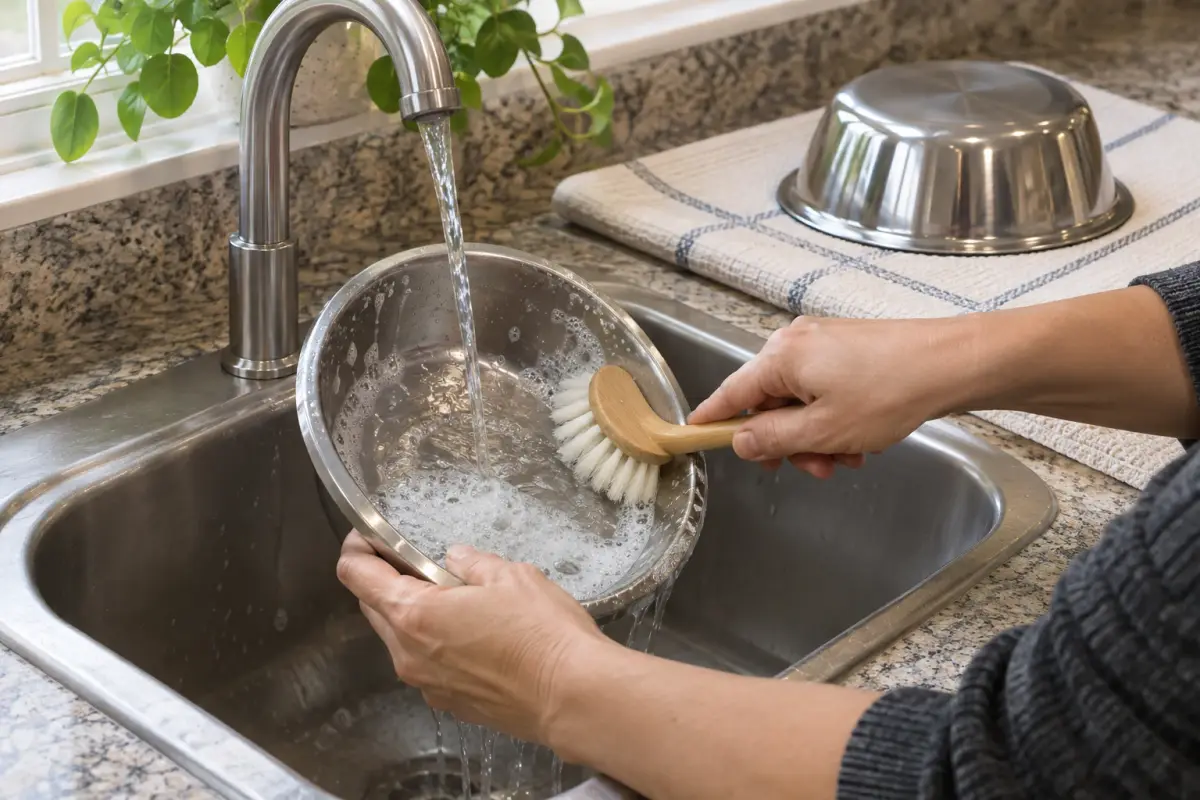
Empty, rinse and refill water bowls every day, and wash them with hot soapy water or in the dishwasher at least a few times a week. A slippery film on the inside is biofilm, a layer of bacteria, and it is the clearest sign a bowl needs scrubbing. Filtered bowls and gravity waterers need their reservoirs washed weekly and filters changed on schedule.
Stainless steel bowls last for many years. Replace ceramic bowls when they chip or craze, and plastic bowls as soon as they scratch. Keep a second set so one is always clean, which makes daily washing an easy swap rather than a chore. Compare options in our dog water bowls.
Water-container bodies and refill layouts
| Format | Physical arrangement | Verify on the exact item |
|---|---|---|
| Open bowl | A vessel with an open drinking surface | Capacity,material and cleaning instructions |
| Raised bowl | A vessel supported above the floor | Stand height and insert fit |
| Gravity reservoir | Stored water feeds a basin | Actual refill mechanism and cleaning access |
| Floating plate or rim | A plate or inward edge above the water | Removable parts and drinking opening |
| Fountain | A pump circulates water | US input,filter and cleaning access |
| Portable bottle | A carried bottle with a drinking cup | Cup operation and closure |
Common questions
What is the best water bowl for a large dog?
A stainless steel bowl of at least 2 to 3 quarts with a rubber base, or two bowls in different rooms. Large dogs drink roughly an ounce per pound daily, so capacity matters more than style.
Are filtered dog water bowls worth it?
They keep water fresher between washes and may encourage some dogs to drink more, but they still need daily refills, weekly cleaning and regular filter changes.
What is the best outdoor water bowl for dogs?
A large, heavy stainless steel bowl or a tip-proof bucket kept in the shade, refilled daily. In freezing weather, use a heated bowl made for outdoor use with a chew-protected cord.
What is the best water bowl for a French Bulldog?
A wide, shallow stainless steel or ceramic bowl, or one tilted slightly, so a flat face can reach the water without pressing into the rim. A non-slip base helps too.
Sources we checked
This guide is general information, not veterinary advice. If your pet is unwell or injured, contact your veterinarian.