Buying guides
Best Dog Crate Water Bowls: How to Choose One That Works
The best dog crate water bowl stays put when your dog moves, holds enough water for the time between breaks, and takes up little floor space. Hanging bowls that clip to wire and fixed anti-tip bowls fit that brief better than a loose bowl, which spills into the bedding. The AKC says water can be offered in the open crate, so see our crate water bowls for the main styles.
By Matt GarnettUpdated November 14, 20264 min read3 sources
Why a crate needs its own kind of bowl
A loose bowl on a crate floor is easy to tip, and the spill soaks bedding in a space your dog cannot leave. The AKC notes that water can be offered in the open crate, including during naps, so a bowl that stays upright is worth choosing instead of improvising with a kitchen bowl.
Space matters too. The AKC says a crate should be large enough for the dog to stand, turn and stretch out. A bowl that sprawls across the floor eats into that room, which is why mounted bowls and compact designs are popular in crates. Browse our dog crates if you are still choosing the crate itself, or read the best dog crate guide.
The main types compared
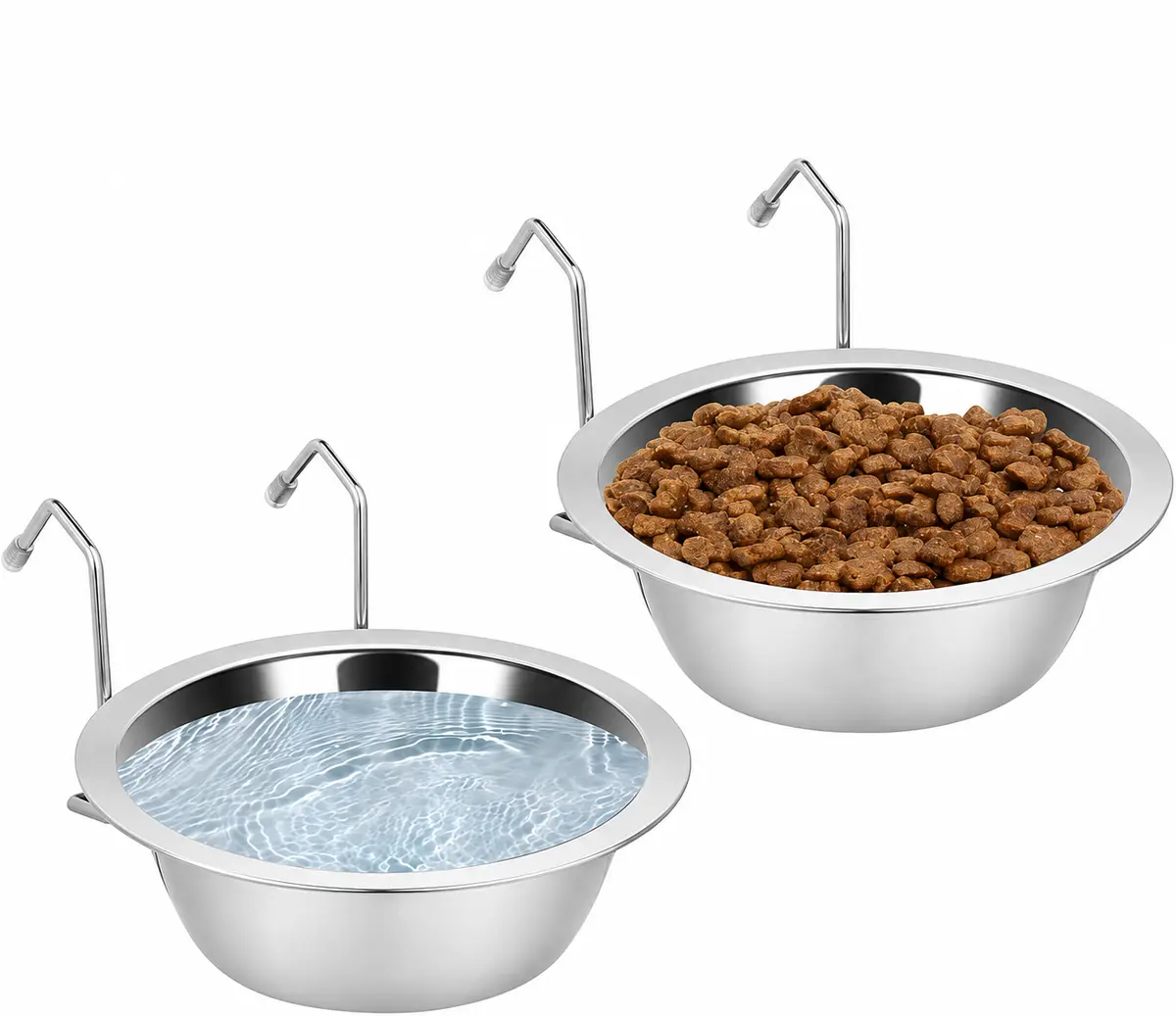
Hanging bowls clip or hook onto the wire of a crate door or side, which lifts them off the floor and keeps them out of the bedding. A pair of small stainless hanging kennel bowls is one version, and a hanging water cup is another. Check the product page for exactly how each one attaches before you buy.
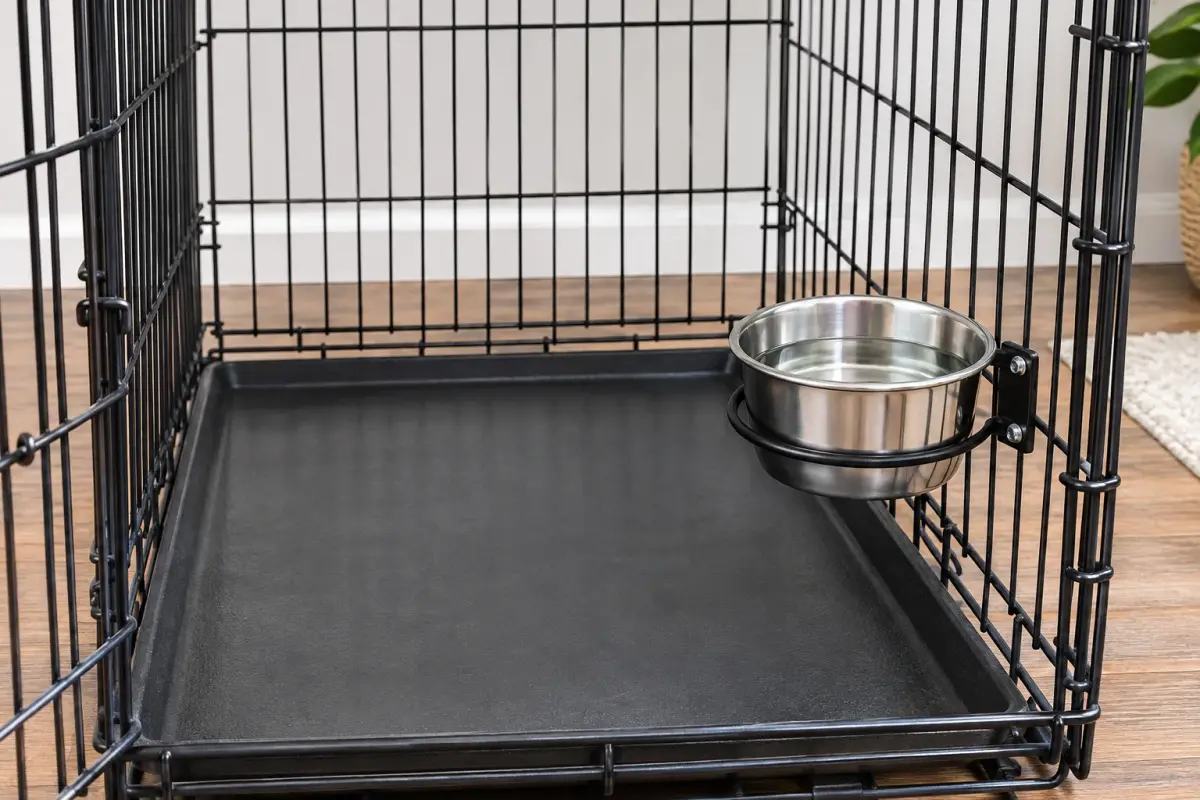
Check where the bowl attaches. A hanging stainless steel bowl mounts on the crate bars and leaves the floor clear. Before filling it, check that the mount fits your bar spacing and that your dog can comfortably reach the rim while standing. A floor-mounted bowl needs a compatible base. If you choose a dispenser with a reservoir, check that water flows into the drinking area after each refill.
Size and capacity
The AKC advises choosing a bowl that holds enough water for your dog, and if you cannot refill often, one that holds a full day's supply. That has to be balanced against crate space, so a small bowl you refill at every break often works better than a large one that crowds the floor.
Match the bowl to the dog too. The AKC says narrow muzzles fit smaller bowls, while dogs with large faces need a wide opening, and long-eared dogs may do better with a narrow-mouthed bowl. A tiny hanging bowl may frustrate a large dog that needs a wide, deep reach to drink comfortably.
Material and cleaning
The AKC calls stainless steel the most durable choice, easy to clean and dishwasher-safe, though lightweight bowls can be tipped by an active dog, which is why mounted or locking designs matter. Ceramic is heavy but can chip or break, which makes it a poor fit for a crate. Plastic scratches easily, and the AKC warns that plastic that is not food-safe may contain harmful chemicals.
Refresh and clean the water bowl daily, as the AKC advises, so drool and debris stay out of the water, and replace any bowl that is chipped or damaged. Choose a design with few parts and smooth edges, because anything that is awkward to unclip and wash tends not to get washed.
Safety in the crate
A dog in a crate cannot move away from a hazard, so check each fitting. Make sure the clip cannot be pulled loose and chewed, that no edge is sharp, and that nothing dangles where a paw, lip or tag could catch. The AKC advises removing the collar whenever the dog is in the crate, because collars can become a danger if they get stuck in the bars.
Water access does not replace breaks. VCA says never to leave a puppy in its crate longer than it can control its bowels or bladder, and gives about 3 hours for a 2-month-old, 4 hours at 3 months and 5 hours at 4 months. Plan outings around those limits, whatever bowl you use.
What to avoid, and how to care for it
Avoid heavy ceramic bowls in a wire crate, flimsy clips that a determined chewer can pull off, and plastic that is not labeled food-safe. Avoid mounting a bowl so low that it can be dragged into the bedding, or so high that a small dog must strain to reach it.
Wash daily, check the mounting before every crate session, and replace the bowl when it dents, chips or loosens. For the wider choice read our guide to dog water bowls, browse no-spill dog water bowls, or return to the crate water bowls collection.
This page is general information, not veterinary advice, and it cannot replace an examination by the vet who knows your pet.
Crate water-container attachment
| Format | How it sits | Verify before purchase |
|---|---|---|
| Hanging cup | Hooks or clips attach above the floor | Exact attachment and wire compatibility |
| Mounted removable bowl | A bowl sits in a fixed bracket | Bracket fitting and bowl removal |
| Floor-locking bowl | A base locks at floor level if specified | The actual locking arrangement |
| Reservoir dispenser | Stored water feeds a drinking area | Reservoir access,fixing and cleaning |
Common questions
Should a dog have water in its crate?
The AKC says water can be offered in the open crate, including with a puppy at naptime. Your vet or trainer can advise on overnight or house-training routines for your particular dog.
What is the best type of water bowl for a wire crate?
A bowl that clips to the wire or locks in place beats a loose one, because it cannot be tipped. Hanging and fixed stainless bowls are the common choices, and dispensers suit longer crate stays.
How big should a crate water bowl be?
Big enough to hold the water your dog needs between refills, but small enough not to crowd the crate. The AKC says the crate must still let your dog stand, turn and stretch out.
Are hanging crate bowls safe?
They can be if they attach securely, have no sharp edges and cannot be chewed loose. Check the fitting before each use, and remove your dog's collar in the crate, as the AKC advises.
Sources we checked
This guide is general information, not veterinary advice. If your pet is unwell or injured, contact your veterinarian.