Buying guides
Best Filtered Dog Water Bowls: What a Filter Does and Does Not Do
The best filtered dog water bowl is one that is easy to take apart and wash, made of stainless steel or ceramic, with a filter you will actually replace on schedule. A pet filter catches hair and debris, but it may not remove contaminants the way a faucet or countertop filter does. See our filtered dog water bowls, then use this guide to decide.
By Matt GarnettUpdated November 14, 20264 min read2 sources
What a filter in a dog water bowl actually does
Most filtered bowls are really small dispensers or fountains with a filter cartridge in the water path. The American Kennel Club says pet fountains still remove food particles, hair and other larger debris, but they might not remove contaminants the way under-sink, faucet-mounted or countertop filters will. So treat the filter as a way to keep the water cleaner between refills, not as a water treatment system.
If you are worried about your tap water, that is a question for your local water utility and your vet, not a reason to buy a bowl. A filter also needs regular replacement. The AKC says you will have to change the filter regularly, so follow the maker's schedule and set a reminder, because a spent filter does nothing useful.
Filtered bowl types compared
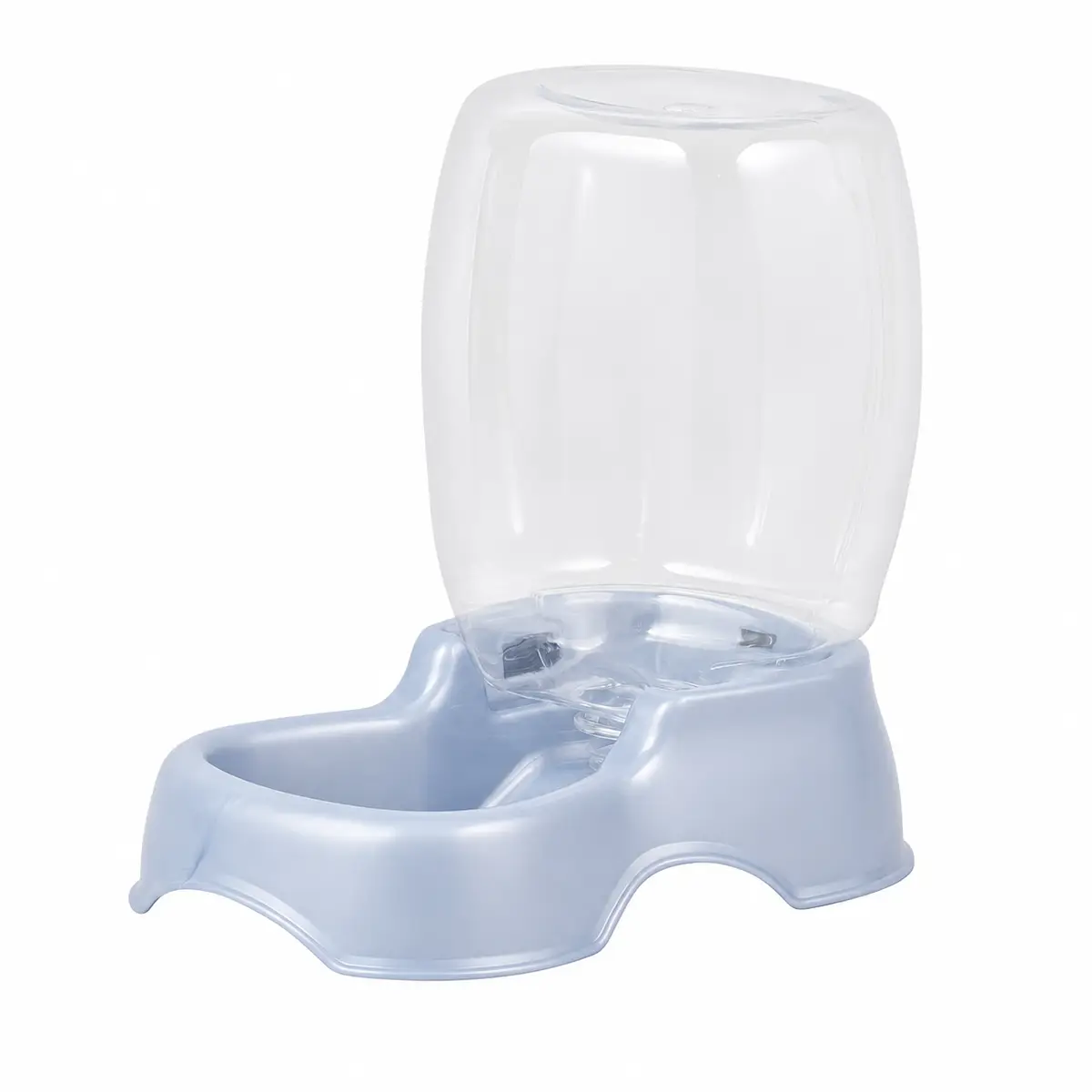
A gravity-fed dispenser holds a reservoir that refills a basin as your dog drinks, and some add a filter cartridge. It is silent and simple, which suits noise-sensitive dogs. A multi-layer filtration pet water dispenser is an example of the filtered, reservoir style, and a basic automatic pet water bowl shows the same refill idea without the extra parts.
A pump fountain circulates the water through the filter and gives a moving stream. The AKC notes that dogs who like cool, circulating water may enjoy one, and that it helps keep water cooler, but it also says there is no evidence dogs in general prefer running water. The pump hums, which can put off fearful dogs, so introduce it gradually with treats and praise, and keep an old bowl as a backup.
Cleaning matters more than the filter
The AKC says water bowls should ideally be washed daily with hot soapy water, because bacteria stick to wet surfaces and form a slimy biofilm of bacteria, yeast and debris. Breaking up that biofilm is the main reason to wash. A filter does not replace this step, and a filtered bowl that is never scrubbed can hold more film than a plain bowl that is washed every day.
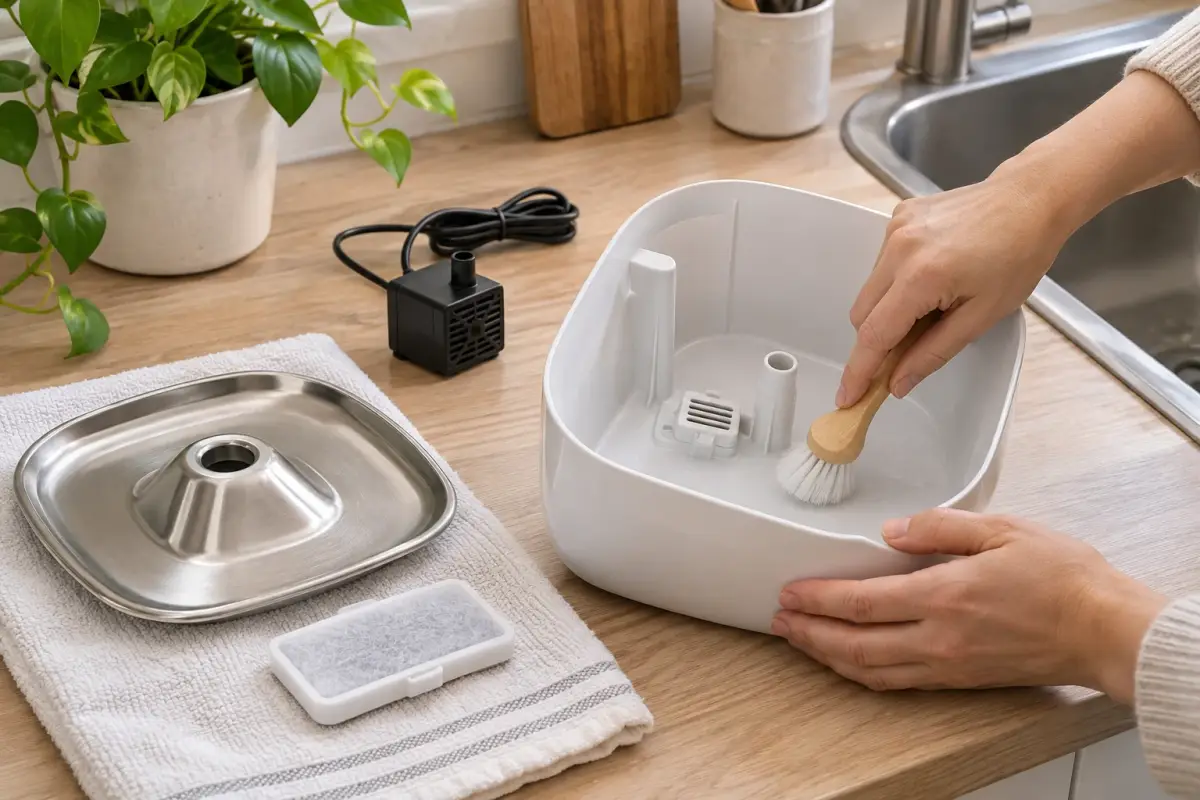
That is why design matters. The AKC says fountains are harder to clean because of their complex construction, so look for a model with few parts that is easy to assemble, and dishwasher-safe pieces if you want them. For hand-washing, a weekly soak in diluted bleach for about 10 minutes followed by a thorough rinse is an option, and the AKC suggests checking that a bowl is dishwasher-safe before using one.
Material: stainless steel, ceramic or plastic
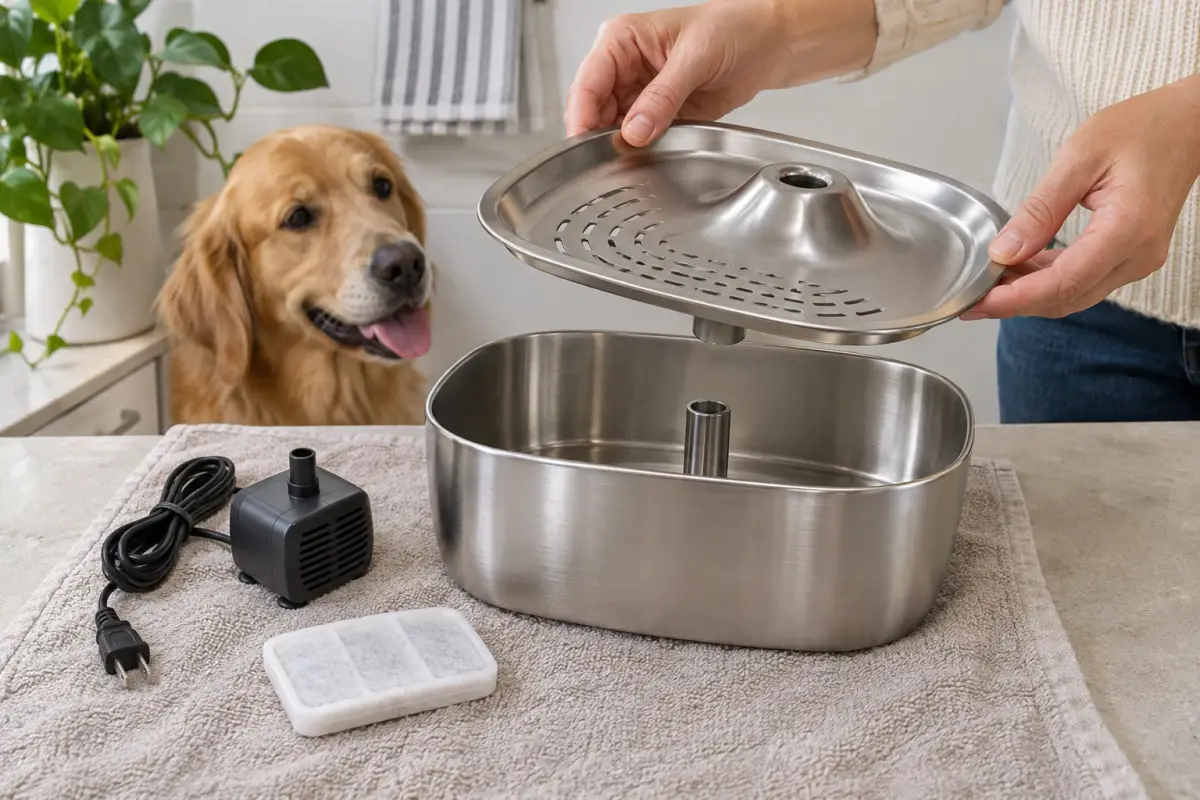
Stainless steel is the most hygienic option and is very tough, according to the AKC. Its non-porous surface does not hang on to odors and bacteria the way plastic does, and it usually goes in the dishwasher. Ceramic is a non-toxic, attractive choice, but it is heavier, not always dishwasher-safe, and chips or cracks can hide bacteria.
Plastic is lightweight and economical, but the AKC says research suggests it can accumulate bacteria more readily and can cause skin reactions in some dogs. If your dog gets chin irritation or the bowl smells even after washing, ask your vet and consider switching material. For a wider look at bowl materials, our dog water bowl guide compares sizes and styles.
Best filtered bowl for each situation
For a home with several dogs, a larger reservoir means fewer refills and more water points, which the AKC notes matters more with multiple dogs. For a dog that ignores a plain bowl, a fountain may be worth trying, but there is no guarantee it will help. Our guide to water fountains for dogs goes through who benefits and who does not.
For a noise-sensitive or fearful dog, choose a gravity-fed or quiet model and avoid a loud pump. For a small dog, make sure the basin is low enough to reach comfortably. If your dog suddenly drinks far more or far less than usual, skip the gadgets and call your vet, because a change in drinking is something to get checked.
What to avoid and how to keep it running
Avoid a bowl with many tiny parts, a filter you cannot easily find replacements for, and any model that leaves water sitting stagnant in a hard-to-reach reservoir. Avoid putting it in direct sun, where water warms quickly. Never rely on the filter as a reason to skip the daily wash, and do not leave a dry pump running.
Each day, empty, rinse and refill the bowl, and wash every part that touches water. Replace the filter on the maker's schedule, and take the pump apart for a deeper clean when you do. If a filtered bowl is more upkeep than you want, a heavy stainless bowl from our dog water bowls range with fresh water several times a day is a perfectly good alternative.
Reservoir refill and pumped circulation
| System | How water moves | Parts to verify |
|---|---|---|
| Gravity dispenser | Reservoir replenishes a basin | Reservoir,refill opening and outlet |
| Filter-equipped reservoir | A cartridge added to a reservoir system | Actual cartridge and replacement access |
| Pump fountain | A pump circulates water through a system | Pump,power model and filter path |
| Plain bowl backup | An open water surface without a mechanism | Usable size and stable placement |
Common questions
Are filtered dog water bowls worth it?
They can keep hair and debris out of the water, but they may not remove contaminants the way a faucet or countertop filter does. Daily washing matters more, so choose one that is easy to clean.
How often should I change the filter in a dog water bowl?
Follow the manufacturer's schedule, since intervals vary by model. The AKC says you must change filters regularly, so set a reminder, and replace it sooner if the water smells or the flow slows.
Is a filtered bowl better than a plain stainless steel bowl?
Not necessarily. A plain stainless steel bowl washed daily is hygienic and simple. A filtered bowl adds circulation and a filter, which some dogs like, but it also adds parts that need cleaning.
Can a dog water fountain make my dog drink more?
Some dogs enjoy cool, moving water, but there is no evidence dogs in general prefer it. If your dog is drinking much more or less than normal, see your vet rather than relying on a gadget.
Sources we checked
This guide is general information, not veterinary advice. If your pet is unwell or injured, contact your veterinarian.