Care & how-to
How Much Water Should a Dog Drink?
Most adult dogs drink about one ounce of water per pound of body weight each day, so a 30 lb dog needs roughly 30 ounces, just under four cups. Weaned puppies need about half an ounce to an ounce per pound, and more on active days. Heat, exercise and dry food raise the amount. A clear, lasting change from your dog's normal is worth a vet check.
By Matt GarnettUpdated November 13, 20264 min read3 sources
Daily water needs for adult dogs
The AKC's rule of thumb is one ounce of water per pound of body weight per day. That works out to about 10 ounces, a little over a cup, for a 10 lb dog; about 4 cups for a 30 lb dog; about 6 cups for a 50 lb dog; and about 9 to 10 cups for a 75 lb dog. These are averages for an adult dog at rest on a mild day, not exact targets.
Many things push the number up or down. Dogs eating mostly wet food drink noticeably less, because the food itself is around three-quarters water, while dogs on dry kibble drink more. Exercise, hot weather, heavy panting, pregnancy and nursing all increase needs. A lazy day in a cool house reduces them.
Choose a vessel from our dog water bowls that lets you monitor the amount offered; a measuring jug still provides the measurement.
How much water a puppy should drink
Puppies are more active, grow quickly and dehydrate faster than adults. The AKC suggests a weaned puppy drinks about half an ounce to one ounce of water per pound daily, so a 20 lb puppy would drink somewhere around 10 to 20 ounces, more after play. Very young puppies being weaned take water in small amounts often, about half a cup every couple of hours.
Keep fresh water available throughout the day. During potty training, many owners pick up the water bowl about two to three hours before bedtime so the puppy is not full when it goes in its crate, but only do this with a healthy puppy and ask your vet if you are unsure. Never restrict water for a puppy that is unwell or in hot weather.
How to measure what your dog drinks
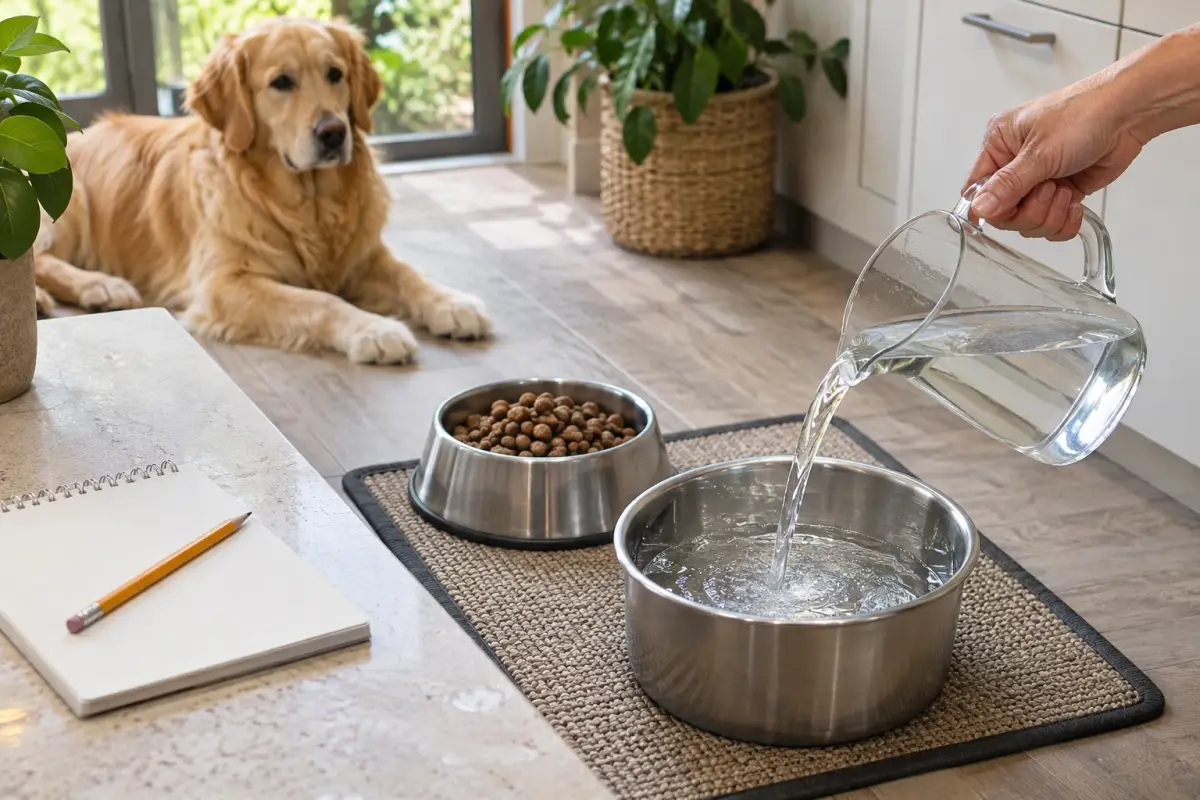
If you want to know your dog's real intake, use a measuring jug. Fill the bowl with a known amount in the morning, top up from the jug through the day and note how much you added, then measure what is left the next morning. Subtract, and you have a 24-hour total. Do this for a few days to get a fair average, since one hot or busy day skews it.
Account for spills and other water sources, such as drinks from puddles, the toilet or a second bowl. In a multi-dog home it is hard to measure one dog's intake, so if you are concerned about one dog, your vet may suggest separating them briefly to get a clearer picture.
When drinking too much or too little is a concern
A sudden or lasting rise in drinking is one of the more common early signs of illness. The AKC notes that vets generally become concerned when a dog drinks around double its usual amount, and lists diabetes, Cushing's disease and kidney disease among the most common causes. Book a vet visit if your dog drinks noticeably more for more than a day or two, pees more, or has accidents.
Drinking too little matters too. A dog that will not drink for most of a day, or shows dry, sticky gums, sunken eyes and low energy, may be dehydrated. If that comes with vomiting, diarrhea, weakness or after time in the heat, contact your vet promptly. Never take water away from a dog that is drinking more without your vet's advice.
Keeping water appealing
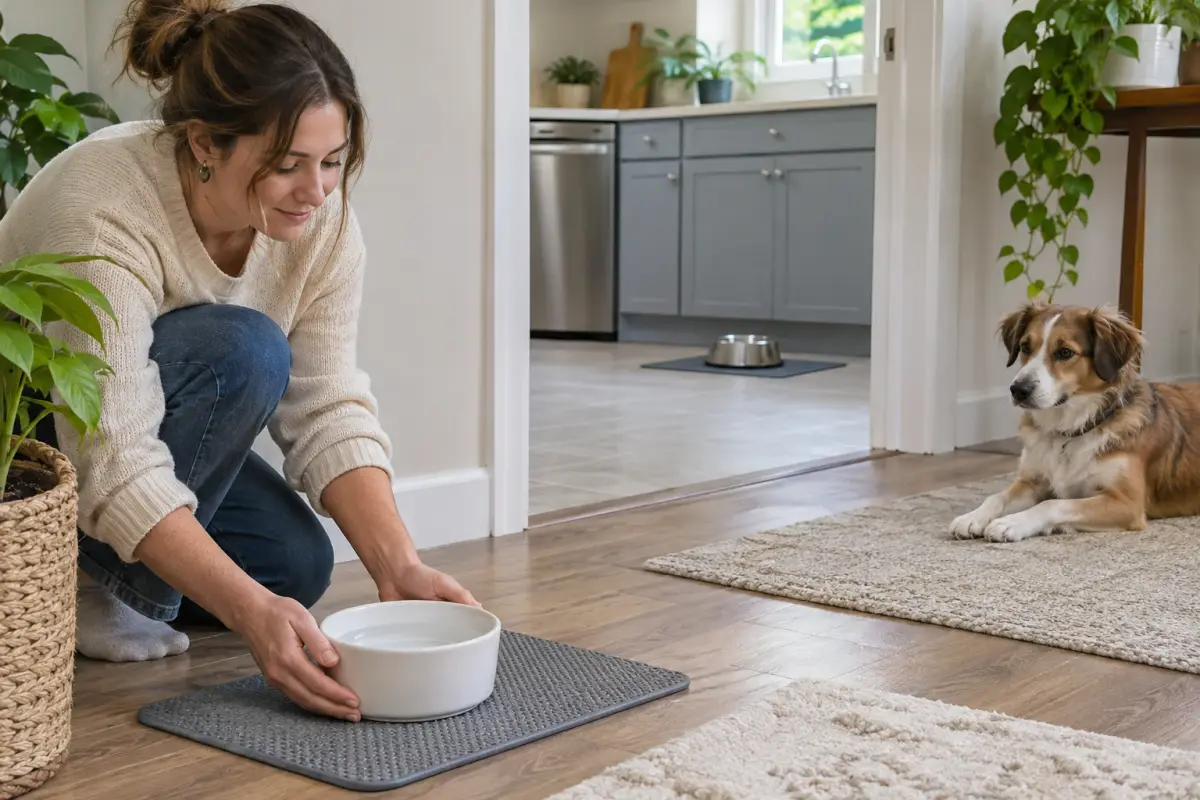
Wash the bowl every day with hot, soapy water and refill it with fresh water, because drool and food residue make it slimy and less inviting. Stainless steel or ceramic bowls are easier to keep clean than scratched plastic. Put water in more than one spot in a large home, and bring a portable bowl on walks and trips.
Some dogs drink more from a moving source such as a pet fountain, from a wider bowl that does not touch their whiskers, or when the water is cool. Low-sodium broth with no onion or garlic, or ice cubes on hot days, can tempt a reluctant drinker. If your dog persistently drinks very little despite these changes, mention it at your next vet visit.
For water away from home, compare travel dog bowls separately from the water-bowl buying guide. A new bowl does not replace a vet check for a lasting change in thirst.
This page is general information, not veterinary advice, and it cannot replace an examination by the vet who knows your pet.
Common questions
How much water should a 50 lb dog drink a day?
Roughly 50 ounces, or a little over six cups, on a normal day. It may be more in hot weather, after exercise or on a dry-food diet, and less if your dog eats mostly wet food.
Should dogs have water available all day?
Yes, healthy dogs should have access to fresh water at all times. The main exception is a short evening cut-off during puppy potty training, which should only be used with a healthy puppy.
Do dogs on wet food need to drink water?
Yes, but they usually drink less because wet food is mostly water. Keep a clean bowl available; your dog will take what it needs on top of the moisture in its meals.
Sources we checked
This guide is general information, not veterinary advice. If your pet is unwell or injured, contact your veterinarian.