






Care & how-to
Dog Enrichment: What It Is and Activities to Try
Dog enrichment means giving your dog regular chances to do the things dogs are built to do: sniff, forage, chew, chase, dig, solve problems and spend time with people and other dogs. It is not one toy, it is a mix of small activities through the week. Done well, it prevents boredom behaviors such as chewing furniture and barking, and gives dogs a calmer, more satisfying day. Most enrichment costs little or nothing.
By Matt GarnettUpdated November 9, 20264 min read4 sources
What enrichment is, and why dogs need it
Enrichment is anything that adds choice, challenge or natural behavior to your dog's day. The AKC points out that most dogs get what they need without working for it, and that many breeds were developed for jobs they no longer do. Without an outlet, those instincts find their own, often on your shoes or your yard.
Think of enrichment in types: food and foraging, scent, chewing, physical play, social time, training and new experiences. A good week includes a bit of most of them, and our dog enrichment toys cover several of these types. The ASPCA notes that exercise and mental activity reduce the boredom that leads to destructive chewing, so enrichment is prevention as well as fun.
Food and foraging enrichment
Feed some meals from a puzzle toy or slow feeder instead of a bowl. Scatter kibble in the grass for your dog to find, as the AKC suggests, or across a snuffle mat, one of our snuffle mats. Stuff a hollow rubber toy with your dog's usual wet food or kibble softened with water, then freeze it so it lasts longer on a busy day.
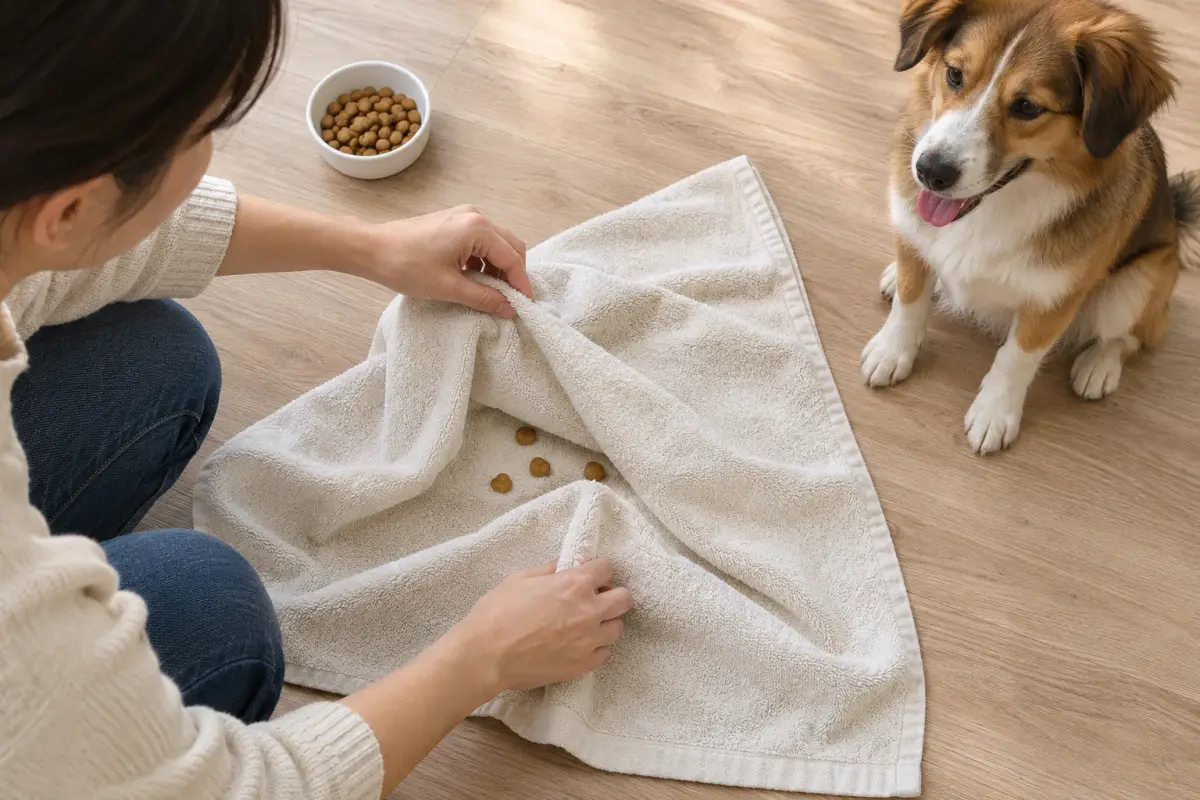
Make food games harder over time. A rolled-up towel with kibble inside, a muffin tin with balls in the cups, or an empty box with treats dropped in are all quick DIY options from the AKC. Count every treat as part of your dog's daily food, so enrichment does not turn into weight gain.
Scent and sniffing enrichment
Let your dog sniff on walks. The AKC recommends varying routes and letting your dog stop to investigate, and a slow sniff walk of twenty minutes can be more tiring than a brisk one. Visit new places when you can: a different park, a trail or a pet-friendly store gives your dog a whole new set of smells.
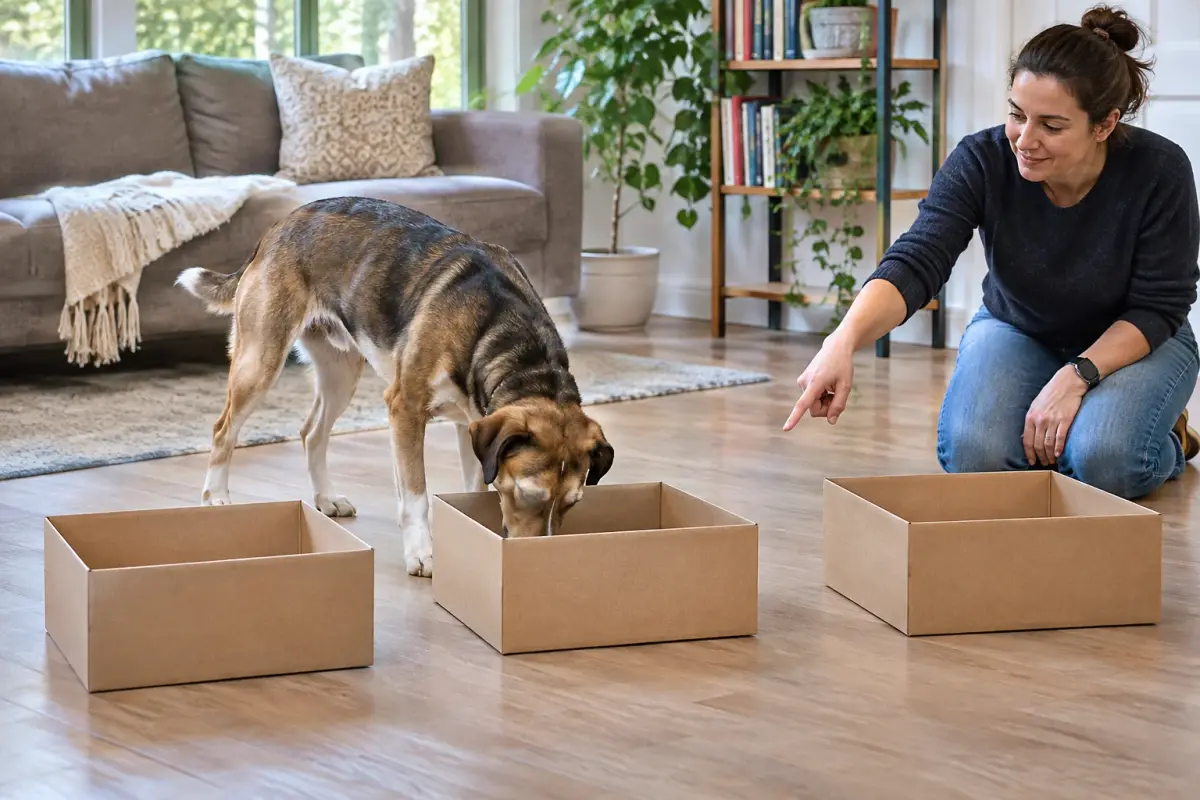
Indoors, play hide-and-find with treats in boxes or cups, or hide a favorite toy for your dog to search out. As your dog improves, have someone else hide the treats while you are both out of the room. Scent games suit every age, including senior dogs who can no longer manage long walks.
Chewing, play and physical enrichment
Chewing is a normal, calming behavior for dogs. Provide safe chew toys that suit your dog's size and chewing strength, rotate them every couple of days to keep them interesting, as the ASPCA suggests, and supervise any edible chew. Avoid very hard items that can break teeth.
For physical enrichment, try fetch with a flying disc, tug with a drop cue, flirt-pole style chase games, a digging box for terriers, a shallow wading pool in summer, or a dog sport such as agility, scent work or treibball. The AKC lists all of these as ways to give dogs a job. Choose what suits your dog's age and joints.
A simple weekly enrichment plan, and safety
Pick one food activity a day, such as a puzzle breakfast or a frozen stuffed toy, plus one sniff walk and one short training or play session. Add a new place, a scent game or a social outing a couple of times a week. Keep a small box of rotated enrichment toys so something always feels new.
Supervise new toys, puzzles and cardboard, and throw away anything your dog breaks into swallowable pieces. If your dog seems uninterested in everything, sleeps far more than usual or has trouble moving, check in with your vet before increasing activity.
This page is general information, not veterinary advice, and it cannot replace an examination by the vet who knows your pet.
Common questions
What is enrichment for dogs?
Enrichment is anything that lets your dog use natural behaviors such as sniffing, foraging, chewing, playing and problem solving. It includes puzzle feeders, scent games, sniff walks, training, safe chews and social time.
What are easy DIY dog enrichment ideas?
Try kibble rolled in a towel, a muffin tin with balls covering treats, a cardboard box with treats inside, or a frozen stuffed toy. Supervise cardboard games so your dog does not swallow pieces.
How often should I give my dog enrichment?
Every day. A small food activity, a sniff walk and a short play or training session each day, plus something new a couple of times a week, keep most dogs content.
Sources we checked
This guide is general information, not veterinary advice. If your pet is unwell or injured, contact your veterinarian.


