Buying guides
Best Dog Enrichment Toys: What Actually Matters
The best enrichment toys for dogs are the ones that make your dog use their nose and brain: snuffle mats, treat-dispensing balls, puzzle toys and lick mats. Match the type to your dog's chewing habits, because a sniffing toy is a poor fit for a dog that destroys things. Start easy, supervise every session, and browse our dog enrichment toys once you know which type suits.
By Matt GarnettUpdated November 14, 20265 min read4 sources
What matters most in an enrichment toy
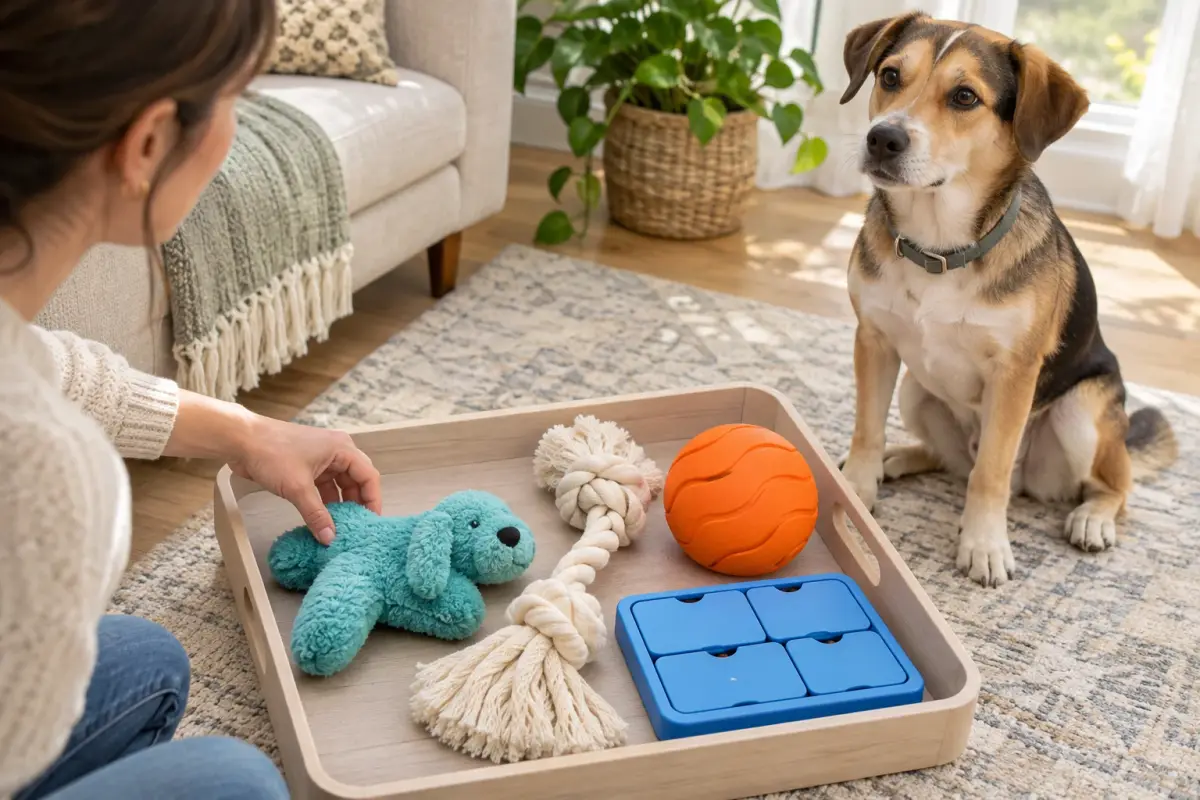
Enrichment toys work by turning a quick meal or a few treats into a small job. The AKC lists puzzle toys, treat dispensers, snuffle mats and slow feeder bowls as ways to keep a bored dog busy, and a bored dog tends to find its own entertainment, such as chewing shoes, digging or barking. The right toy gives your dog a challenge it can actually solve.
Four things decide the choice: how your dog chews, how motivated they are by food, how hard the puzzle is, and whether the toy is the right size. The AKC warns never to use balls too small for your dog, since they are a choking hazard. Every food puzzle should be used under supervision, and a toy that is not safe to leave with a determined chewer should be picked up when the session ends.
The main types compared
A snuffle mat is a pad of fabric strips where you hide treats for your dog to find, tapping into the instinct to sniff and forage. The AKC says it slows fast eaters and can relieve boredom. A plush snuffle toy works on the same principle in a different shape. See our snuffle mats and the snuffle mat guide for more.
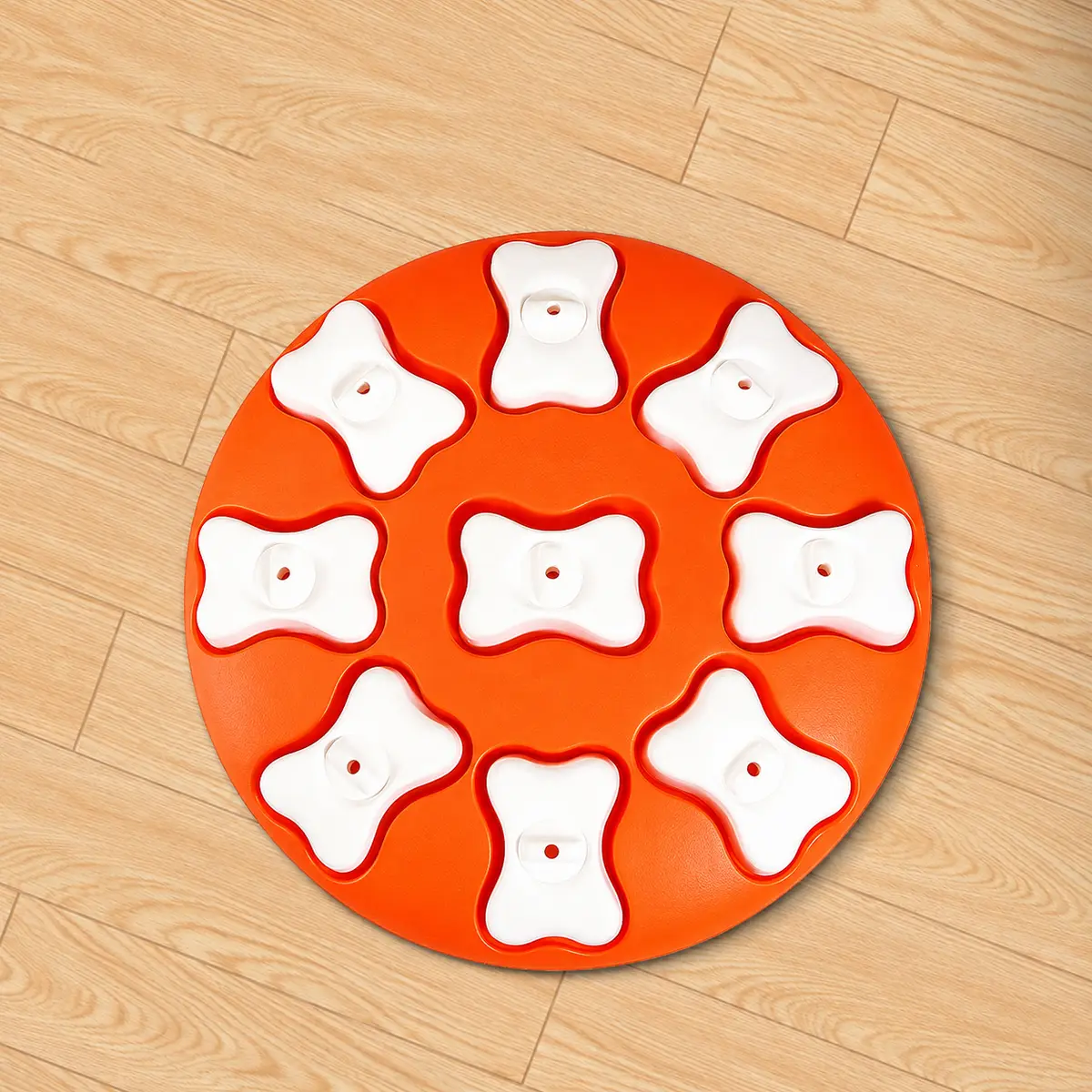
Puzzle toys include lift-the-flap toys that hide treats and balls the dog rolls to release food. A treat-dispensing ball turns a handful of kibble into a longer game, and a slide puzzle treat dispenser asks for more problem solving. Lick mats suit soft food: the AKC says wet food is better suited to a lick mat, and a lick mat is easy to spread and freeze. Browse dog puzzle toys if you want the widest choice.
Best type for each kind of dog
For a dog that gulps its food, a snuffle mat or slow feeder is the natural fit, and the AKC says snuffle mats suit seniors, high-energy and working dogs, and picky eaters. For a high-energy dog stuck indoors in bad weather, a treat ball or puzzle toy burns mental energy that a short walk cannot. A dog that is not motivated by treats may do better with a toy that holds its favorite kibble or a simple hide-and-seek game.
Heavy chewers are the exception. The AKC lists aggressive chewers and dogs that treat everything as a chew toy as poor fits for snuffle mats, and the ASPCA advises offering plenty of inedible chew bones plus puzzle toys filled with something tasty. For puppies, start with the easiest toy you can find, keep sessions short and stay close, because puppies chew on anything. Use sturdy, appropriately sized toys for a puppy and rotate them.
How to introduce a toy and raise the difficulty
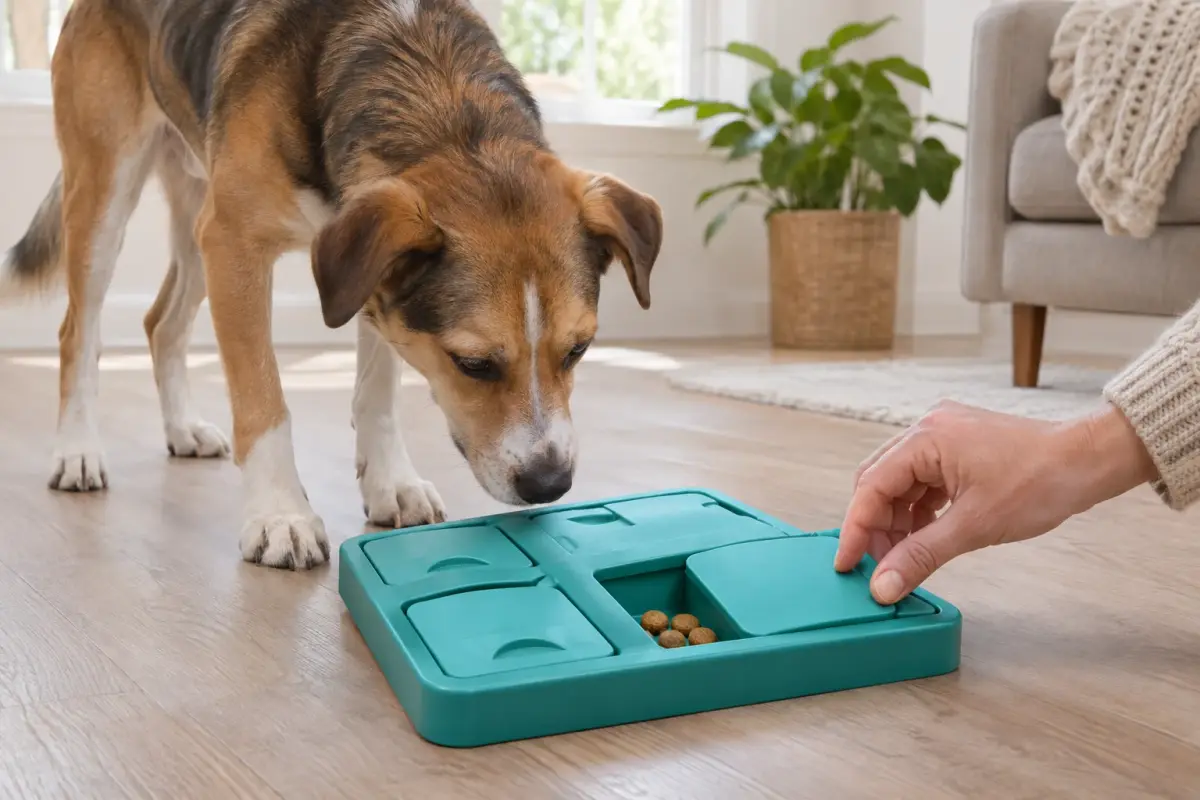
Start easy. With a snuffle mat, the AKC suggests placing a few treats on top so your dog can find them at once, having your dog wait while you fill it, and teaching a cue such as find it. With a muffin-tin game, leave the cups uncovered at first, then cover them. For a frustrated dog, use fewer pieces and lower the difficulty rather than pushing on.
Once your dog solves the first level quickly, make the game harder in small steps: more hiding places, a smaller reward, or a toy that needs more rolling. If your dog gives up or gets worked up, go back a step. Enrichment should feel like a win, so end every session with something your dog has found and enjoyed.
What to avoid
Avoid unsupervised use. The AKC says to always supervise your dog while snuffling and to separate dogs if you have more than one, since guarding can start over food. Pick the mat up after each use so your dog cannot destroy it once the treats are gone. The ASPCA also notes that dogs can choke on edible chews if they bite off and swallow large pieces.
Do not overfeed: the AKC suggests tracking how much treat or kibble you dispense. Use small, dry treats in a snuffle mat and keep wet food for lick mats, unless you will wash the mat after each use. Skip toys with loose parts your dog can swallow, and remember that enrichment does not replace exercise: the ASPCA recommends plenty of physical exercise as well.
Care, rotation and when to replace
The ASPCA advises rotating chew toys every couple of days, and the AKC says the same for enrichment toys, so a toy seems new again after a few days away. Keep a few in circulation and put the rest away. Dogs drool a lot while snuffling, so the AKC suggests regular cleaning and having more than one mat; check the care label, wash on a gentle cycle with pet-friendly detergent and air dry.
Replace anything frayed, cracked or chewed into pieces. If your dog destroys toys within minutes, switch to a tougher type and keep it for supervised sessions only. For more ideas see our dog enrichment activities guide, or return to the dog enrichment toys range. If chewing and restlessness get worse, or look like separation anxiety, talk to your vet or a trainer. This page is general information, not veterinary advice, and it cannot replace an examination by the vet who knows your pet.
Enrichment toy food-access mechanisms
| Format | Where food sits | What changes the task |
|---|---|---|
| Snuffle mat or toy | Within fabric folds | Fold depth and hiding spaces |
| Lid or slider puzzle | Beneath movable covers | Cover movement and openings |
| Treat ball | Inside a moving body | Rolling and dispensing holes |
| Lick mat | On a textured open surface | Surface pattern and food consistency |
Common questions
What are the best enrichment toys for dogs?
The right type depends on your dog. Snuffle mats suit fast eaters, puzzle toys and treat balls suit high-energy dogs, and lick mats suit soft food. Match the toy to your dog's chewing habits and supervise every session.
What are the best enrichment toys for puppies?
Choose the easiest, sturdiest, appropriately sized toys, such as a simple snuffle mat or a treat ball with a few treats, and keep sessions short. Supervise closely, because puppies chew on anything and can swallow pieces.
Are snuffle mats safe for dogs that chew?
The AKC lists aggressive chewers as a poor fit for snuffle mats, because they can destroy and swallow the fabric. Supervise the whole session, pick the mat up afterward, and choose a tougher chew for dogs that destroy things.
How often should I rotate my dog's enrichment toys?
The ASPCA suggests rotating chew toys every couple of days so they stay interesting. Keep a few out at a time and swap them, so each toy feels new again when it comes back.
Sources we checked
This guide is general information, not veterinary advice. If your pet is unwell or injured, contact your veterinarian.