Care & how-to
How to Secure a Dog in a Car
The safest way to secure a dog in a car is to keep the dog in the back seat, either in a crate that cannot slide around or in a harness attached to a secured seat belt. A loose dog, a dog on a lap or a dog with its head out the window can be hurt in a sudden stop and can distract the driver. Practice the setup in the parked car first.
By Matt GarnettUpdated November 13, 20265 min read4 sources
The two setups that work
The ASPCA calls a crate or carrier the safest option for a dog in a moving car. It should be well ventilated, big enough for the dog to stand, sit, lie down and turn around, and secured so it will not shift during a sudden stop. If you skip the crate, the ASPCA says to keep your dog in the back seat in a harness attached to a secured seat belt.
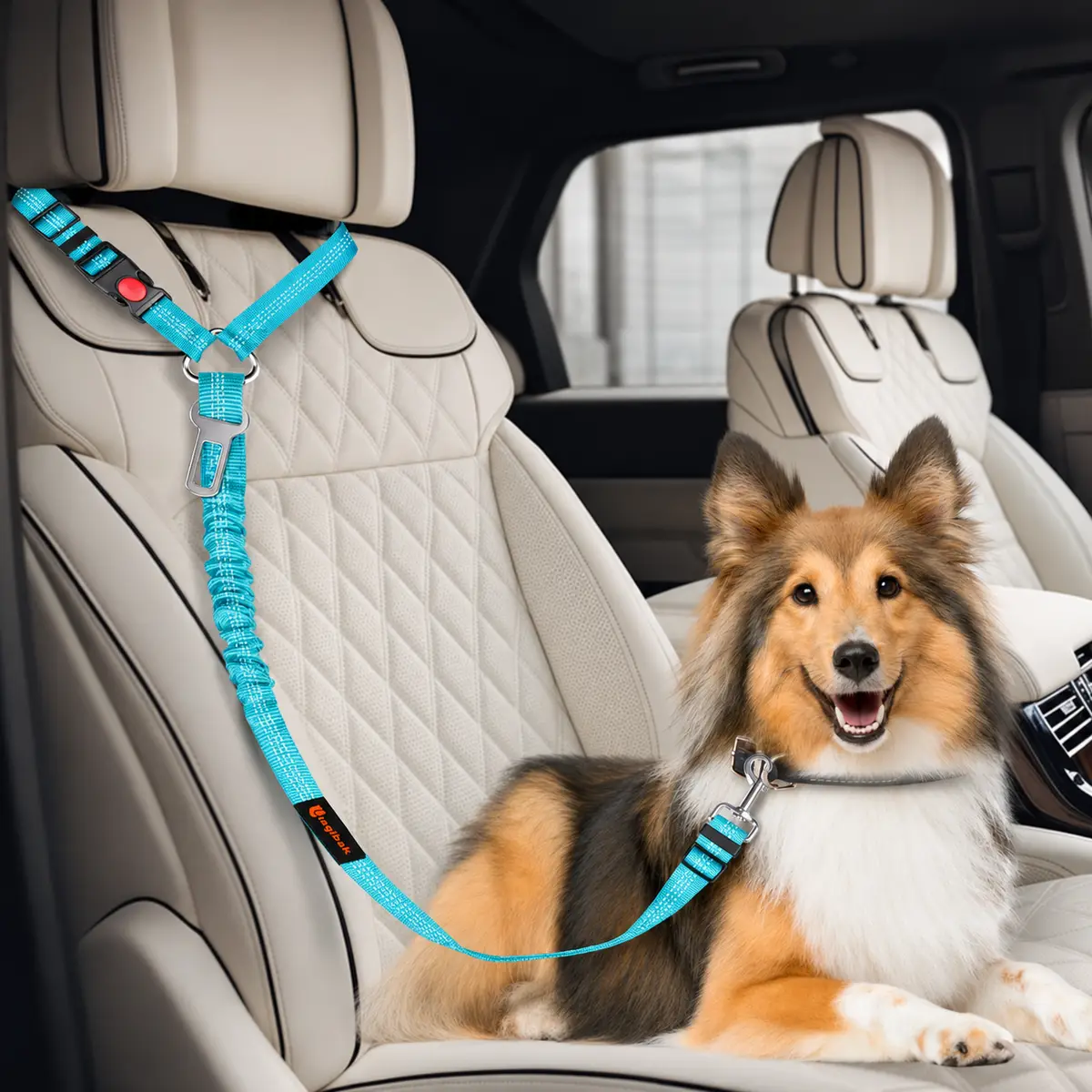
VCA Animal Hospitals splits the advice by size. Small dogs travel in a carrier, while large dogs ride in a back-seat dog seat belt harness, or in a crate or cage secured on the back seat or in the rear compartment of a van or SUV. If a harness is your plan, browse dog seat belts and car harnesses and compare how each one connects to the buckle, as with this pet car seat belt or this set of car seat belts for pets.
Step 1: Fit the restraint before the trip
Step 1: Put the harness or crate in place at home, not on the morning of a long drive. A harness should be snug enough that your dog cannot back out of it, but it should not rub under the front legs or restrict breathing. Check the straps again after your dog has walked around in it for a few minutes, because fit often loosens.
The ASPCA describes the seat belt attaching to a harness rather than a collar, so keep the collar for ID. VCA also says the collar should be snug enough that it cannot slip over your dog's head, and suggests a temporary tag with your destination phone number. Carry a leash within reach, because you will want it clipped on before any door opens.
Step 2: Choose the spot in the car
Step 2: Put your dog in the back seat. The ASPCA says to keep dogs in the back and never let them ride with their head out the window. For a dog that gets queasy, the AKC suggests the middle of the back seat, where the dog faces forward instead of watching the blur out of the side windows.
Crates need the same care. A crate on the back seat or in the cargo area of an SUV or van should be wedged or strapped so it cannot slide forward when you brake. Leave the dog some airflow and keep cargo from stacking on or beside the crate, since a heavy bag can shift just as easily as the crate can.
Step 3: Practice in the parked car
Step 3: Introduce the restraint gradually. The AKC advises letting the dog get used to the crate or harness during training, before the first real drive. Begin with the car parked, reward your dog for getting in and wearing the setup, then turn the engine on and off without moving, pairing each new sound or action with a treat.
Then take very short drives, such as to the end of the driveway and back, and lengthen them slowly. If your dog stops eating treats, whines or looks tense, go back to the previous step. For puppies or nervous riders, our guides to dog car anxiety and dog car sickness cover what to do when the ride itself is the problem.
Step 4: Doors, windows and stops
Step 4: Clip the leash on before you open a car door, every time. VCA points out that even calm dogs may bolt in an unfamiliar place. Open windows only far enough that your dog's head cannot fit through, and set the child locks on power windows so your dog cannot press the switch.
Never leave your dog alone in a parked car. The ASPCA warns that heatstroke can develop quickly in a hot car even with the windows open, and that a cold car can chill a dog too. Plan stops where someone can stay with the dog, offer water, and give your dog a short walk on leash. Our road trip guide covers planning the whole route.
What to avoid, and when to ask your vet
Skip the lap, the front seat and the loose back seat, and do not leave a crate door unlatched. A loose dog can be thrown against the seats, the windows or another passenger in a sudden stop, and a dog that moves around freely can crowd the driver. If your dog chews through straps or squirms out of a harness, switch to a crate rather than tightening everything to the last notch.
If your dog drools, vomits, trembles or refuses to get in the car, talk to your vet before the next trip. Nausea, ear problems and anxiety need different help, and only a vet can decide whether medicine makes sense. For a full comparison of seats, belts and harnesses, see the best dog car seat guide, or return to our dog seat belts and car harnesses collection.
This page is general information, not veterinary advice, and it cannot replace an examination by the vet who knows your pet.
Common questions
Is it safe for a dog to ride in the front seat?
The ASPCA says to keep dogs in the back seat. A front-seat dog is close to the driver and can get in the way of the controls or the line of sight, so the back seat with a crate or a harness attached to a seat belt is the better choice.
Can I attach a dog seat belt to my dog's collar?
The ASPCA describes attaching the seat belt to a harness, not a collar. Keep the collar on for ID tags, and clip the seat belt connector to a well-fitting harness that your dog cannot slip out of.
Is a crate or a harness better for a car?
Both can work. The ASPCA calls a crate or carrier the safest option when it is secured so it cannot shift, while a harness attached to a secured seat belt is its alternative. Small dogs usually suit a carrier, and large dogs a harness or a crate in the cargo area.
Can my dog ride with its head out the window?
No. The ASPCA advises against letting dogs ride with their head out the window, and VCA suggests opening windows only far enough that the head cannot fit through. Use child locks on power windows so your dog cannot lower them.
Sources we checked
This guide is general information, not veterinary advice. If your pet is unwell or injured, contact your veterinarian.