Buying guides
Do Dogs Need a Seatbelt? Safety and State Laws
Yes. Dogs should be restrained in the car, either in a harness clipped to a secured seat belt or in a crate that cannot slide. In a crash, an unrestrained dog becomes a projectile that can hurt itself and the people around it, and a loose dog can distract the driver. State laws differ, so check the rules where you drive.
By Matt GarnettUpdated November 13, 20264 min read3 sources
Why a dog needs to be restrained
AAA says restraints are needed both for safety and to reduce distraction. Its article points out that in a crash any unrestrained passenger, human or animal, becomes a projectile, and it gives the example of a 30 pound dog in a 60 mph crash, which would need about 1,800 pounds of restraining force to hold. Holding a dog in your arms is therefore not a practical restraint.
A loose dog is also a distraction. A dog that climbs into the front seat, sits on a lap or wanders around the back can pull your eyes off the road at the wrong moment. If you want a ready-made restraint, browse our dog seat belts and car harnesses, then read on to compare them with a crate.
What the law says about dogs in cars
There is no single national answer, because rules differ by state. AAA's summary shows the range. Rhode Island requires dogs to be secured with a crate, a harness or a dog seat belt, while New Jersey can fine drivers for carrying an animal in a cruel or inhumane way, which can cover an unsecured pet. Several states, including Connecticut, Maine and Massachusetts, address dogs in open truck beds or on drivers' laps, and New York has no specific pet restraint law.
Even where no rule names dogs, a police officer may cite you under distracted driving or animal cruelty laws if a loose pet interferes with driving. Laws change, so check your own state's current statutes or ask your state motor vehicle agency before a long drive, especially if you will cross state lines.
Seat belt, harness or crate: which setup
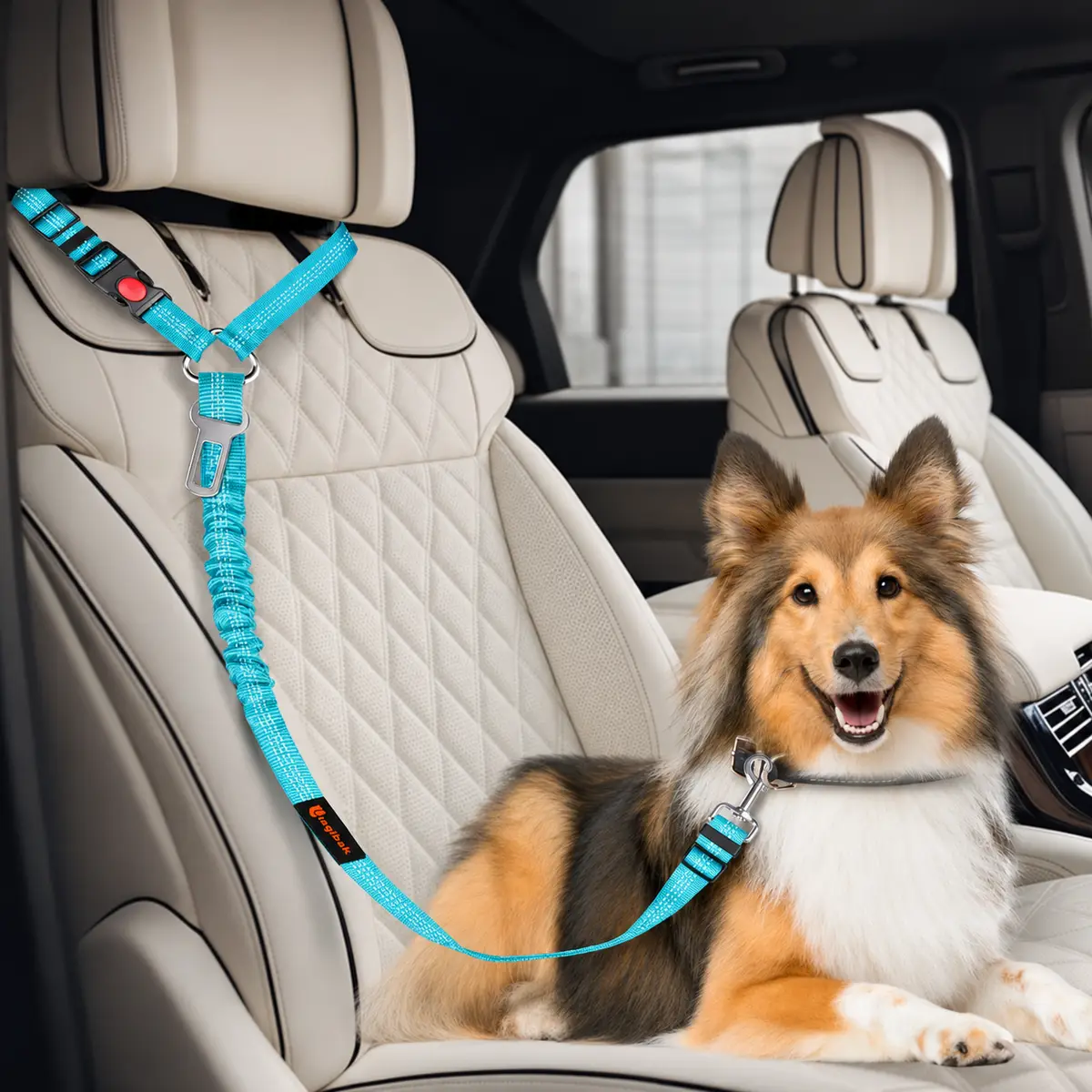
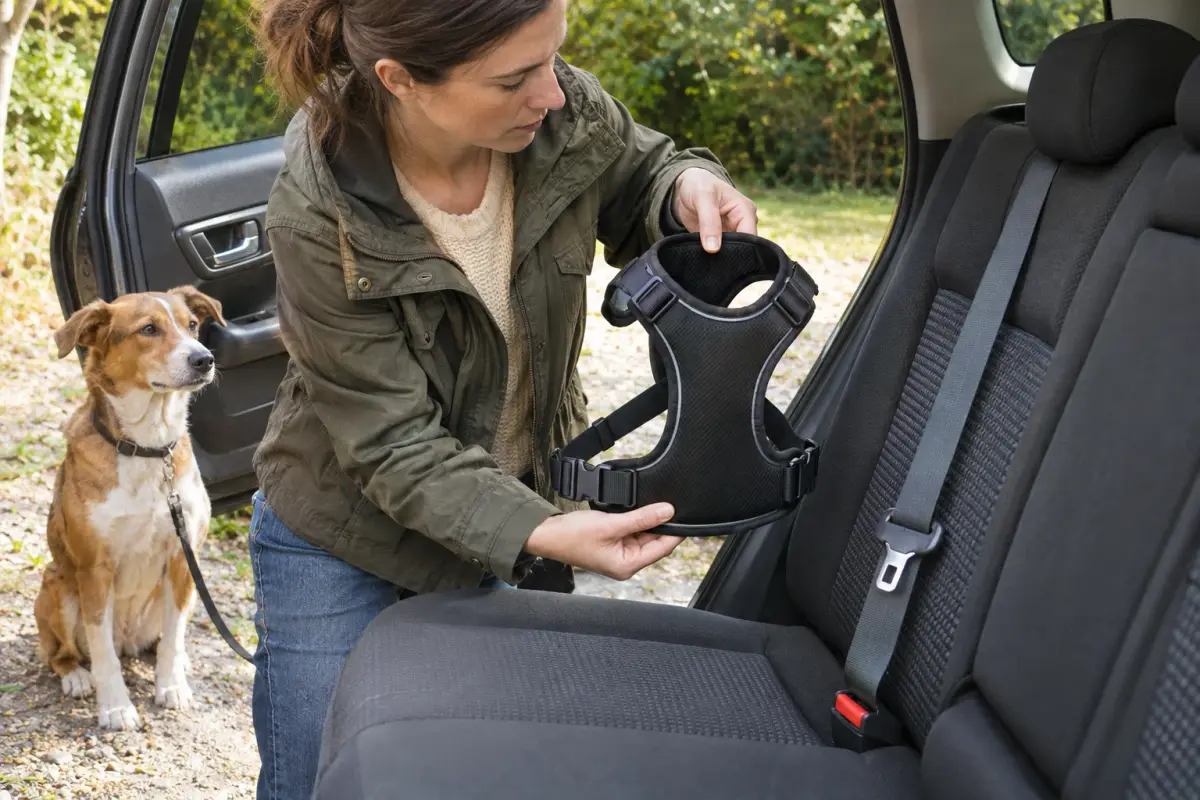
The ASPCA calls a crate or carrier the safest option, as long as it is well ventilated, big enough for the dog to stand, sit, lie down and turn around, and secured so it will not shift during a sudden stop. Without a crate, it says to keep your dog in the back seat in a harness attached to a secured seat belt, and that is the idea behind a dog seat belt such as this pet car seat belt or these car seat belts for pets.
Choose by dog and car. Small dogs often suit a carrier or booster-style seat, while a big dog may be easier to secure in a crate in the cargo area. Our step-by-step guide to securing a dog in a car covers fitting each setup, and the best dog car seat guide compares seats for small and medium dogs.
Not every harness is built for a car
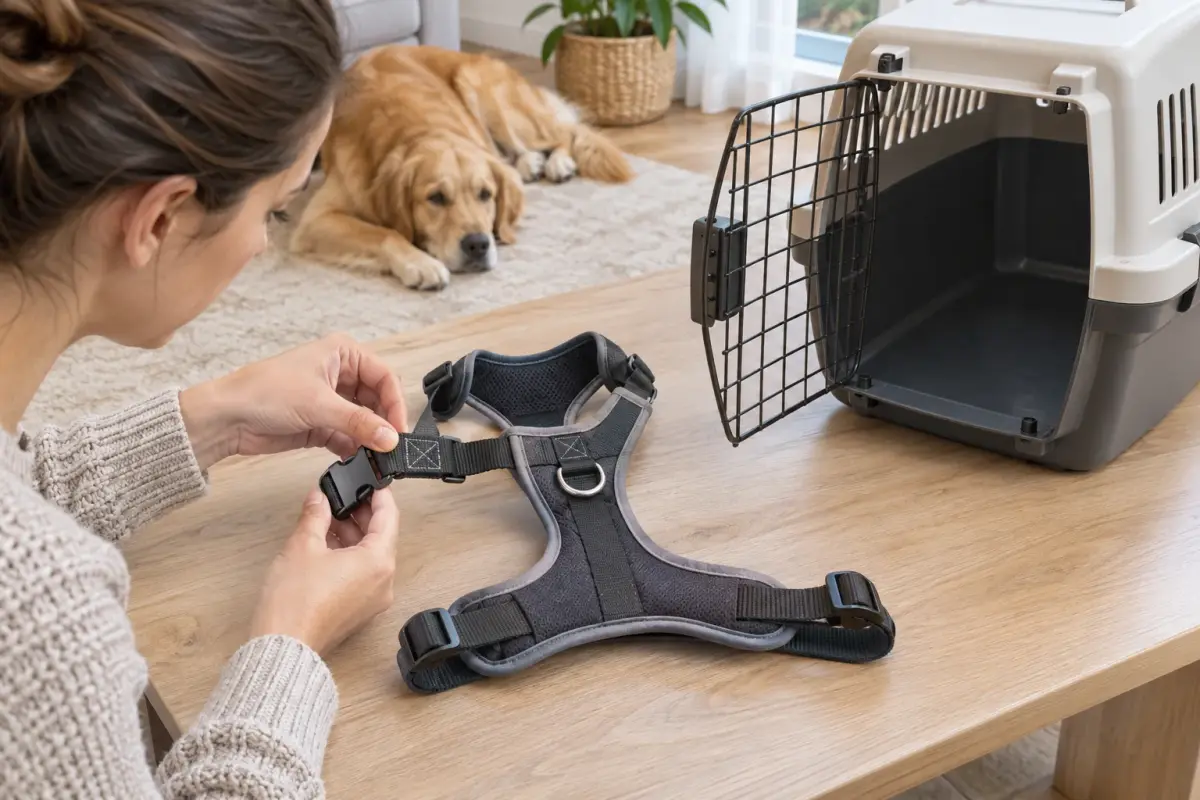
Marketing language is not proof. Ask any maker for independent crash-test results, and treat claims such as crash tested with caution unless a method and a result are published. AAA's article notes that the Center for Pet Safety runs a certification program for harnesses and carriers, which is one place to look for independent evidence.
Check the fit as well. A restraint that is too loose lets the dog travel farther in a stop, and one that rubs or restricts breathing will make your dog hate the car. Introduce the harness at home first, then on short drives, and replace any strap that is frayed or any buckle that no longer clicks firmly.
Setups to avoid
Do not ride with a dog on your lap, in the front seat or in an open truck bed. The ASPCA says to keep dogs in the back seat, and AAA notes several states require a crate or cage for dogs in truck beds. Skip attaching the belt to a collar, since the ASPCA describes the seat belt attaching to a harness.
Also avoid letting a dog ride with its head out of the window, which the ASPCA advises against. Use child locks on power windows, and never leave your dog alone in a parked car, because the ASPCA warns heatstroke can develop quickly even with the windows cracked.
When to ask your vet
If your dog drools, vomits or trembles whenever it is restrained in the car, talk to your vet. Nausea, ear trouble and anxiety all need different help, and only a vet can decide whether medicine is appropriate. Our guides to dog car sickness and dog car anxiety explain what to try first.
For more choices once you have decided what you need, return to our dog seat belts and car harnesses collection.
This page is general information, not veterinary advice, and it cannot replace an examination by the vet who knows your pet.
Common questions
Is it illegal for a dog to ride loose in a car?
It depends on the state. Rhode Island requires dogs to be secured, while other states address truck beds or laps, and some rely on distracted driving or animal cruelty rules. Check your state's current law, and remember a loose dog is risky even where it is legal.
Can a dog sit on my lap while I drive?
It is a bad idea. AAA says holding a pet in your arms is not a practical restraint, and the dog can distract you or get in the way of the controls. Some states can cite drivers for it under distracted driving laws.
Are dog seat belts safe?
A seat belt connector paired with a well-fitted harness is the ASPCA's alternative to a crate, but products vary. Ask for independent crash-test results, check the fit, and replace worn straps. A secured crate is the option the ASPCA calls safest.
Where should a dog sit in the car?
The back seat. The ASPCA says to keep your dog in the back, restrained in a crate or in a harness attached to a secured seat belt. A dog that gets queasy may do better in the middle, facing forward.
Sources we checked
This guide is general information, not veterinary advice. If your pet is unwell or injured, contact your veterinarian.