






Care & how-to
How to Play With a Kitten
To play with a kitten, use a wand or dangle toy and move it like prey so your kitten can stalk, chase and pounce, and keep your hands out of the game. Aim for several short sessions a day, supervise anything with string, and finish with the kitten catching the toy. Our cat toys cover the main types.
By Matt GarnettUpdated November 13, 20264 min read2 sources
Play is how a kitten learns
Kittens do not play only for fun. Chasing, stalking and pouncing is practice for hunting, and it builds coordination and confidence. A kitten with enough play also settles better at night, because the energy has somewhere to go. VCA describes kitten play as investigative as well, so expect your kitten to sniff, paw and bat at everything new.
The most important rule is who starts the game. VCA advises that you choose the toys and begin the sessions, and that you avoid using your hands or feet as playthings. A moving hand is a target, and a bite that seems harmless from a tiny kitten hurts far more when it is grown. If you want the same advice for adult cats, see our guide to how to play with a cat.
The toys that work best
Match the toy to hunting behavior. VCA lists small stuffed mice, crinkle balls, ping pong balls and motorized chase toys among the toys that suit kittens, and wand or fishing-rod toys keep your hands well away from the claws. A small fleece or crinkle toy that can be batted and carried is the second type to have, and a kitten seesaw toy is one self-play option for moments when you are busy.
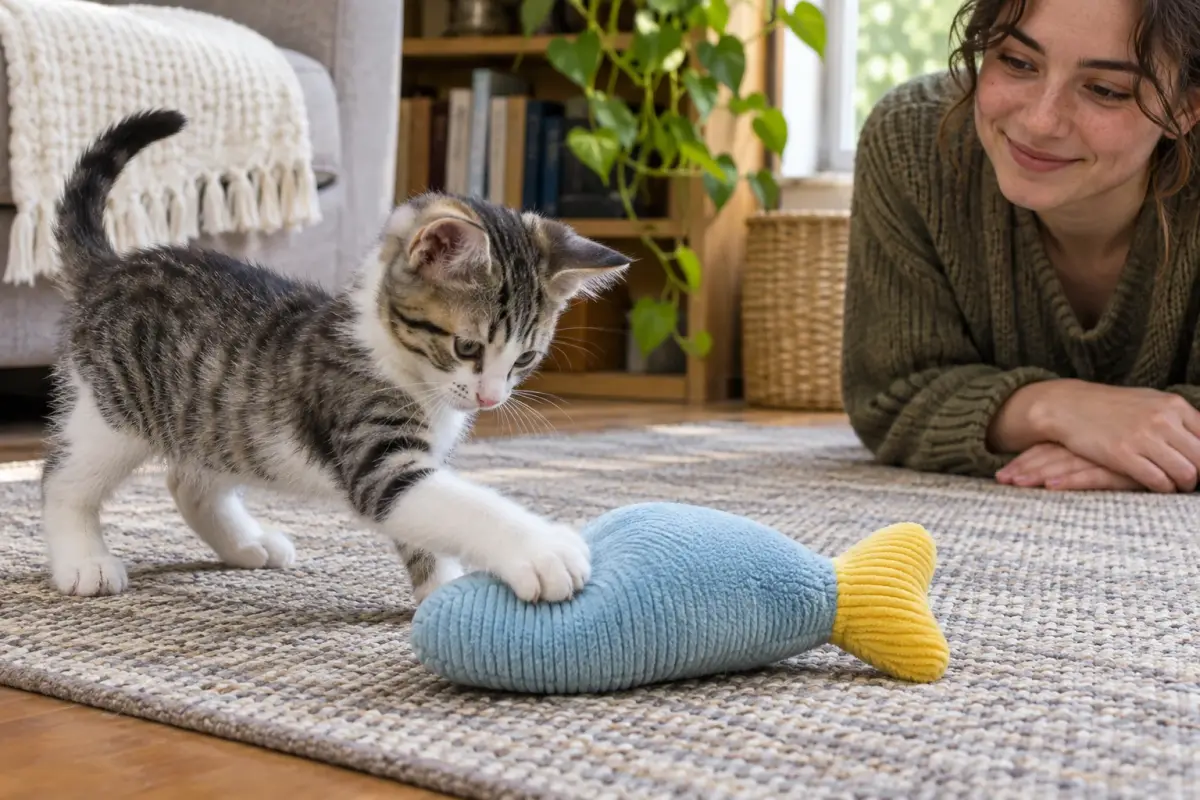
A soft kicker toy gives a kitten something to grab with its front paws and bunny-kick with its back legs, which is how kittens wrestle prey. A crinkle fish kicker toy is one example of the type; check that nothing on it can be chewed off. You can see more types in our cat toys, and our guide to kitten toys explains what to look for.
How to run a play session
Step 1: pick a time when your kitten is awake and a little hungry for action, such as before a meal. Step 2: move the wand along the floor like a bug, away from the kitten, then let it hide behind a cushion and twitch. Fast, jerky, small movements work better than waving it in the air. Step 3: let the kitten stalk, wiggle and pounce.
Step 4: let your kitten catch the toy often, because a hunt that never ends in a catch is frustrating. Step 5: slow the movements as the kitten tires, then finish with a small meal or treat, which copies the hunt, catch and eat cycle. VCA suggests aiming for several 10-minute sessions a day. Stop sooner if your kitten loses interest or starts panting.
Safety: string, small parts and supervision
The biggest danger is swallowing. VCA warns that string, yarn, rubber bands, hair bands and feathers can be dangerous if swallowed, with string capable of causing severe intestinal damage, and says to keep wand toys put away when you are not there to supervise. Avoid toys small enough to swallow, and check every toy before and after play for loose threads, eyes or bells.
For boxes and bags, VCA suggests paper rather than plastic. Keep four or five toys out at a time and swap them every few days, so they stay interesting. If your kitten swallowed string or is vomiting, not eating or straining after play, call your vet or an emergency clinic right away. Do not pull on a string that is hanging out of the mouth or rear end.
Biting, rough play and when to settle
If your kitten bites or claws your hands, stop the game calmly and walk away rather than shouting or pushing it away, then bring out a toy. VCA says that if the kitten starts the session, you should ignore it or interrupt it with a distraction. Hitting or flicking a kitten teaches it to be fearful, not gentle. Our guide to why kittens bite goes into more detail.
Before you leave a kitten alone, make sure it has had enough play and attention, then keep it in a cat-proofed area with bedding and a litter box. Scratching is normal after play, so offer a post near where the kitten sleeps; see our cat scratchers. Call your vet if your kitten seems lethargic, will not play or is limping, since a sudden change can be a sign of illness.
This page is general information, not veterinary advice, and it cannot replace an examination by the vet who knows your pet.
Common questions
How long should I play with my kitten each day?
VCA suggests several play sessions a day of around 10 minutes each. Kittens tire quickly, so shorter bursts are fine. End a session when your kitten loses interest or slows down, ideally after it has caught the toy.
Is it okay to play with a kitten using my hands?
It is better not to. A hand becomes a target, and kittens that learn to bite and claw hands can cause real injuries as they grow. Use a wand, a small toy or a kicker toy to keep your hands out of the game.
What are safe toys for a kitten?
Wand toys used with supervision, small stuffed mice, crinkle balls and fleece toys are common choices. Avoid string, yarn, rubber bands and anything small enough to swallow, and check toys for loose parts regularly.
Why does my kitten attack my feet?
Feet moving under blankets look like prey to a kitten that needs an outlet for hunting energy. Stop moving, redirect it to a toy and schedule play sessions before bed and at dawn so the energy is spent earlier.
Sources we checked
This guide is general information, not veterinary advice. If your pet is unwell or injured, contact your veterinarian.


