






Care & how-to
How Long Does It Take for Chicken Eggs to Hatch?
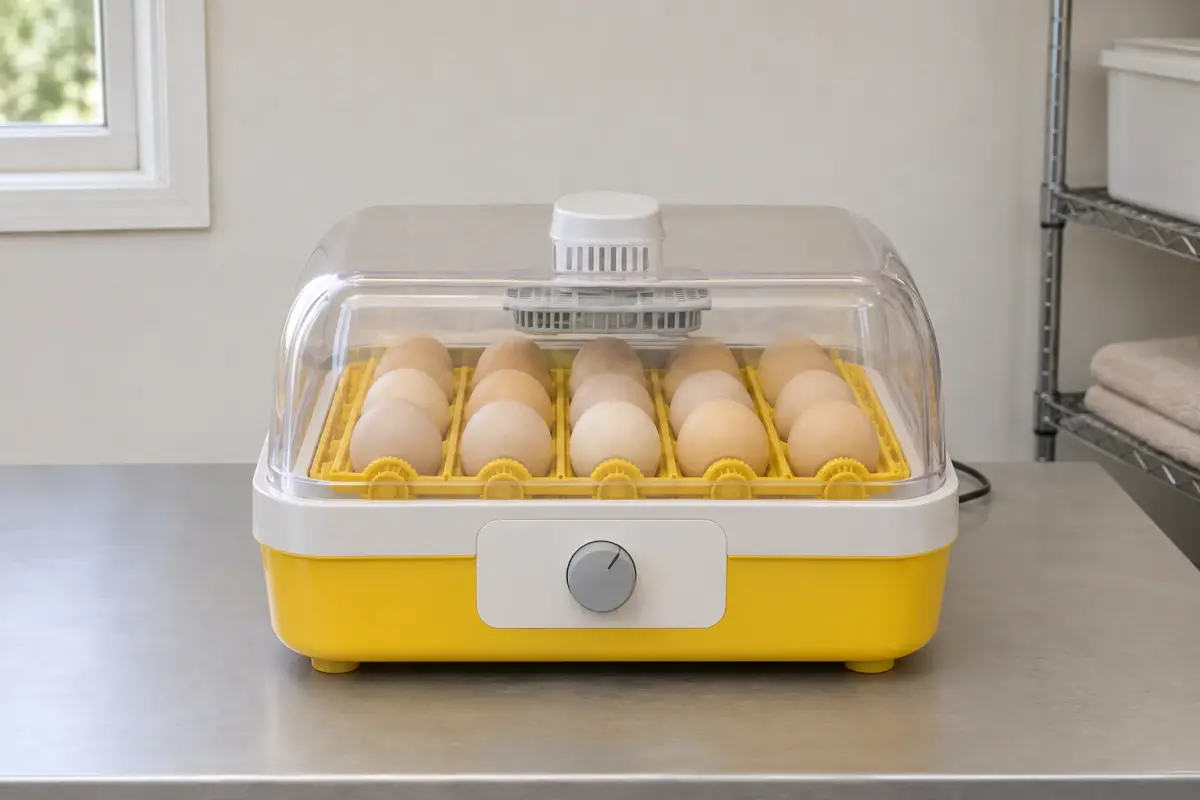
Chicken eggs take 21 days to hatch once incubation starts, and most chicks emerge on day 21 or within a day of it. University extension services agree on that number but not on every incubator setting, so this guide gives the timeline, the temperature and humidity targets to cross-check, when to candle, and what to do when eggs run late. Planning the flock too? See our chicken runs.
By Matt GarnettUpdated November 13, 20265 min read4 sources
The 21-day timeline, day by day
Missouri Extension puts the normal incubation period for chickens at 21 days to 21 days and 6 hours, and notes that the exact moment can shift with incubator temperature, egg size, fertility and the vigor of the embryo. University of Illinois Extension gives the same 21 days, plus a counting rule: eggs set in the morning make that day 1, and eggs set in the afternoon make it day 0.
The inside of the egg changes on a predictable schedule. Per Missouri Extension, the embryo moves into position to break the shell around day 14, the beak turns toward the air cell on day 17, the yolk begins to be drawn into the body on day 19, and the yolk sac is fully inside by day 20. Hatching begins on day 21. Illinois Extension says the critical danger periods are the first 3 to 5 days and days 18 and 19.
Temperature and humidity: what extension services recommend
The sources do not all print the same numbers, and that is normal because incubators differ. Mississippi State Extension recommends 100 degrees F in a forced-air incubator and 102 degrees F in a still-air model. Missouri Extension suggests about 99.5 degrees F for forced-air and 100 to 102 degrees F for still-air. Start with your incubator maker's manual, then check its display against a separate, reliable thermometer.
Small errors have real effects. Missouri Extension reports that a half-degree change in average temperature moves the hatch by about 5.4 hours, and Mississippi State notes that a forced-air incubator running warm tends to hatch early while one running cool hatches late, with fewer chicks either way. Humidity targets vary too: Mississippi State suggests 58 to 60 percent relative humidity until three days before hatching, then 65 percent or more, while Missouri Extension suggests 60 to 65 percent through day 18 and 70 percent for the last three days. The pattern is the same: moderate first, higher for the hatch.
Turning, candling and lockdown
Mississippi State says to turn eggs at least 4 to 6 times a day, and Missouri Extension recommends at least three turns with an odd total such as 5, 7 or 9. Illinois Extension says to stop turning on day 18, which is the start of lockdown, and Mississippi State agrees that the last three days are turn-free so the chick can settle into hatching position.
Candling means shining a bright light through the egg. The Merck Veterinary Manual suggests candling at least once, typically at 7 to 10 days, when fertile eggs look dark apart from the air cell and show blood vessels, while infertile eggs show only a faint yolk shadow. Illinois Extension says to keep each egg out of the incubator no longer than 5 to 10 minutes. Missouri Extension adds that a blood ring means the embryo died in the first three days.
During lockdown, days 18 to 21, Missouri Extension says to open the incubator only long enough to top up the water pan, and never to remove early chicks, because the chill and lost humidity can harm those still hatching.
Preparing eggs before you set them
Missouri Extension advises choosing eggs that are normal in size, shape, color and shell texture, discarding cracked, dirty or thin-shelled ones, and setting them within three to four days of laying. Fertile eggs should not be stored more than two weeks, at 45 to 55 degrees F; a household refrigerator, at 40 to 45 degrees F, is too cold.
The same publication says not to wash hatching eggs, because washing removes the protective cuticle, and that once incubation has started the eggs should never be allowed to cool completely again.
When eggs are late, stuck or never hatch
Not every egg hatches, even in careful hands. Missouri Extension says about 2 in 10 eggs normally fail, mostly in the first and last weeks. If day 21 passes with no pips, Illinois Extension says to leave unhatched eggs until the 23rd or 24th day, since a low average temperature delays hatching. Missouri adds that chicks hatching more than 24 hours after the hatch begins are often weak.
Do not crack a shell to help. Illinois Extension warns that a chick that cannot escape on its own is weak and will likely not survive, and that complete pipping takes about two to four hours. Missouri Extension links chicks stuck to the membranes to humidity that was too low, and chicks too weak to emerge to humidity that was too high.
After the hatch: what the chicks need next
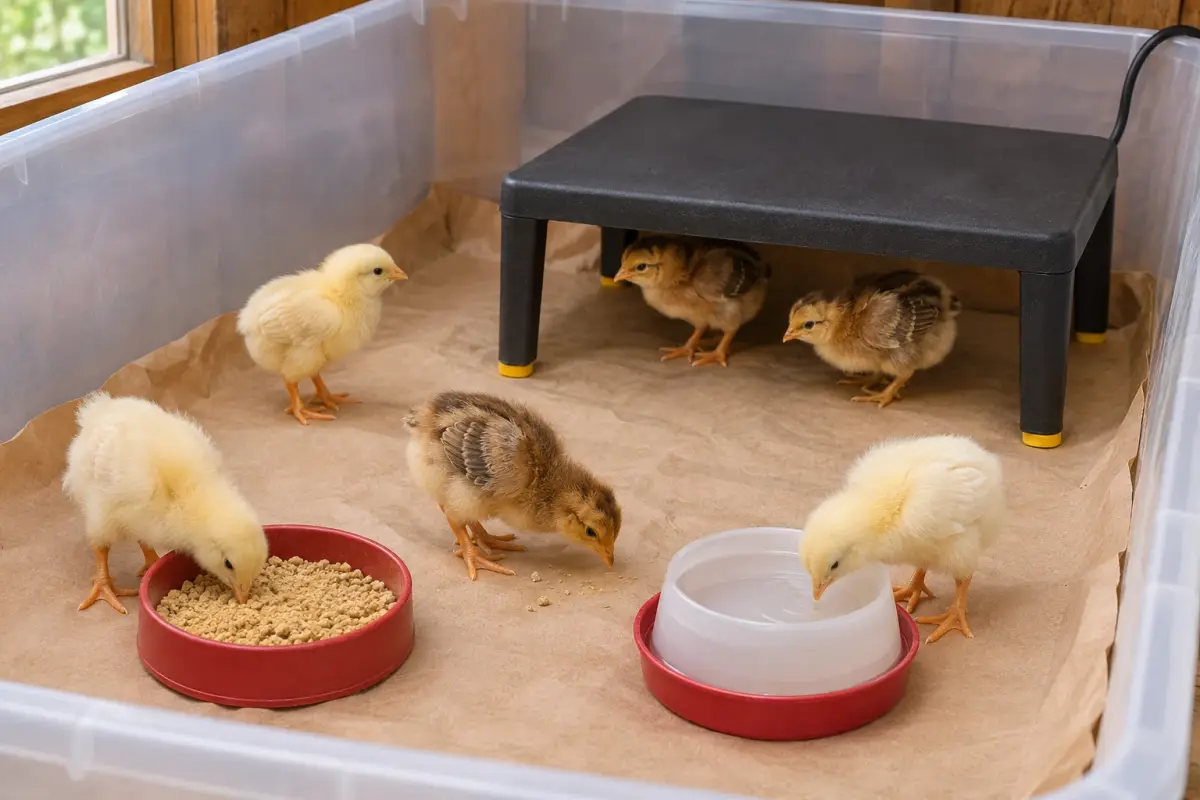
Missouri Extension says chicks should stay in the incubator about 12 hours until dry and fluffy, then move to a brooder with a heat source. Our guide to chicken heat lamps covers brooder temperatures and fire safety, and telling male and female chicks apart helps you plan the flock. Call a veterinarian who treats poultry if a chick is lethargic, struggling to breathe or not eating.
Plan the grown-up housing while you wait. Once the birds are fully feathered they will need a secure outdoor space, and a combinable wooden chicken run with perches is one type that can grow with a small flock, while a large covered chicken run suits a bigger one. Browse all chicken runs, compare chicken coops, or read how to choose a chicken run. This page is general information, not veterinary advice, and it cannot replace advice from a veterinarian who treats poultry.
Common questions
How many days does it take a chicken egg to hatch?
Chicken eggs hatch in 21 days of incubation. Missouri and Illinois Extension both give that figure, and Missouri notes it can run to 21 days and 6 hours depending on temperature, egg size and embryo vigor.
How do I know if a chicken egg is fertile?
Candle it. Per the Merck Veterinary Manual, a fertile egg looks dark except at the air cell and shows blood vessels, while an infertile egg shows only a slight yolk shadow with no vessels or structures inside.
How long should I wait for eggs that have not hatched?
Illinois Extension says to leave unhatched eggs until the 23rd or 24th day, because a slightly low incubator temperature delays hatching. After that, eggs that have not pipped are unlikely to hatch.
When should I stop turning chicken eggs?
Stop turning at the start of lockdown. Illinois Extension says to stop on day 18, and Mississippi State Extension says not to turn in the last three days, so the chick can settle into hatching position.
Can I help a chick that is struggling to hatch?
Extension guidance says no. Illinois Extension notes that a chick unable to escape on its own is weak and likely will not survive, and opening the incubator during the hatch can chill the other chicks.
Sources we checked
This guide is general information, not veterinary advice. If your pet is unwell or injured, contact your veterinarian.


