






Care & how-to
Chicken Heat Lamps: When You Need One and How to Use It Safely
Baby chicks need a heat lamp or other brooder heat for their first weeks, but healthy adult hens usually do not. University of Minnesota Extension suggests supplemental coop heat only when temperatures fall below 35 degrees F. Any lamp is a fire risk: hang it from a chain, never by its cord, and keep it well clear of bedding.
By Matt GarnettUpdated November 13, 20265 min read3 sources
Chicks need heat, adult hens mostly need dry air
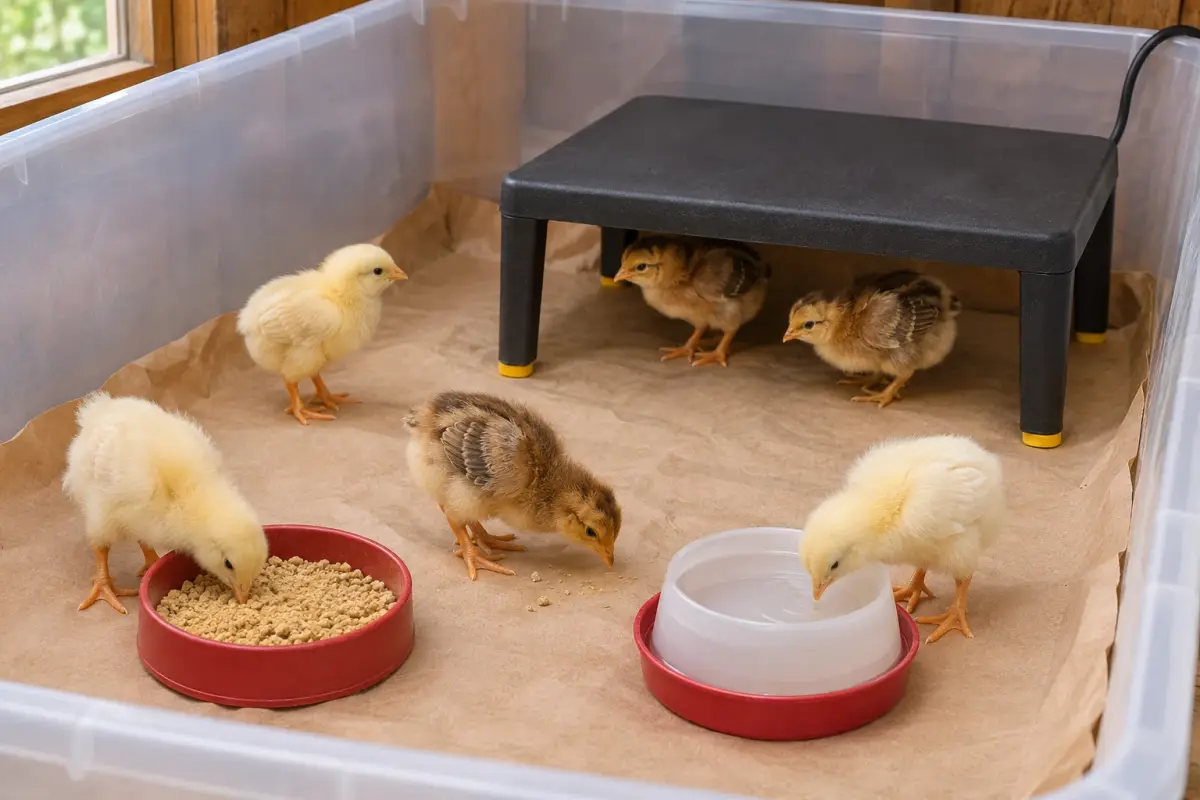
A newly hatched chick cannot regulate its own body temperature, so it depends on a brooder: a draft-free box or pen with a heat source the chicks can move toward and away from. A heat lamp is the traditional choice, and it works when it is set up carefully. Adult, fully feathered hens are a different case. University of Minnesota Extension notes that most poultry stay comfortable between 60 and 75 degrees F, and that a chicken's average body temperature is 106 degrees F. Compare the shelter requirements in our chicken coops before deciding how to provide heat.
That means the question depends on the bird's age. For chicks, plan the heat before the birds arrive. For adults, start by fixing moisture and drafts: Penn State Extension says poultry handle cold well if they stay dry, and that cool, humid conditions cause health problems. A coop with good airflow and dry bedding often does more for winter health than any heater.
Brooder temperatures, week by week
University of New Hampshire Extension recommends keeping the brooder at 90 to 95 degrees F for the first week, measured 2.5 inches above the litter directly under the hood. Lower the temperature by about 5 degrees F each week by raising the lamp. Set the brooder up and test it at least one day before the chicks arrive, so you are not adjusting it with chicks underneath.
The chicks tell you whether you got it right. According to the same page, chicks that huddle together under the lamp are too cold, chicks that move as far from the lamp as the pen allows are too warm, and chicks that crowd to one side are escaping a draft. Evenly spread, softly chirping and pecking chicks are comfortable. The brooder can be removed once the temperature beneath it reaches 65 to 70 degrees F, or matches the outside temperature.
Heat lamp fire safety
Heat lamps are one of the most common fire hazards around poultry, because a hot bulb sits above dry bedding in a space full of dust. UNH Extension says never to hang the lamp by its cord and to use a chain for strong, safe suspension, and to keep the lamp far enough from the bedding that it cannot ignite it. It also warns that water splashing on a hot bulb can shatter it, and recommends a hard-glass bulb where possible.
University of Minnesota Extension adds that you should use only approved heat lamps with a heat bulb, and that a caged bulb helps keep it from touching bedding if it falls. Keep wires away from birds, water and flammable litter, and never use an extension cord to power a coop except short term. Have a professional electrician install any permanent coop wiring.
Do adult chickens need a heat lamp in winter?
Usually not for hardy, healthy hens in a dry, ventilated coop. University of Minnesota Extension says to provide supplemental heat when coop temperatures fall below 35 degrees F, and notes that Plymouth Rock, Wyandotte, Ameraucana and Orpington breeds overwinter well while smaller breeds, or those with large combs and wattles, need extra care. Other extension services take a more cautious line on heating at all, so check what your own state recommends.
If you do add heat, the same source favors radiant heaters such as brooder plates, panels or hanging heaters, which warm the birds rather than the surrounding air, and says to use only heaters approved for chickens or livestock and to read the fire risk warnings. Place heat at the height of the nest boxes or the lower roost rung, and put a thermometer at each height. A thermostat can help control use and cost. A well-built, well-ventilated chicken coop makes winter easier than any bulb.
Better ways to keep a coop healthy in cold weather
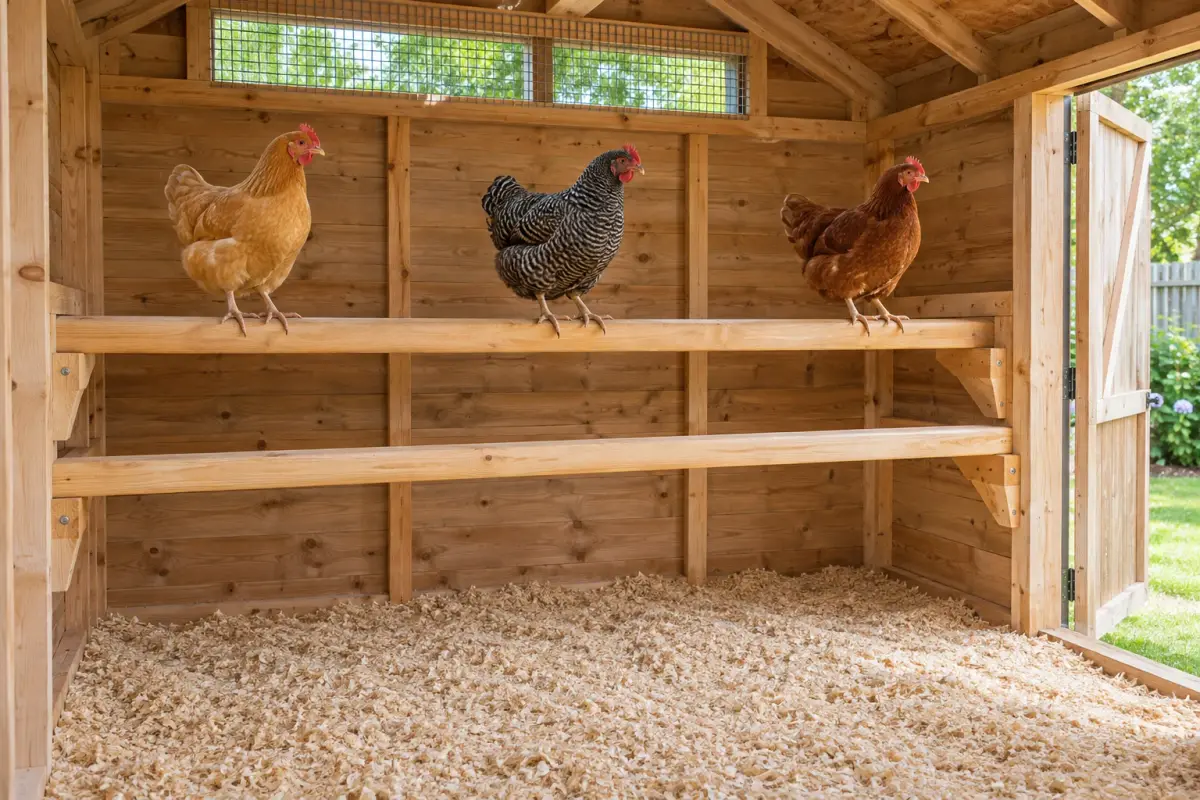
Ventilation and moisture are the winter basics. Minnesota Extension notes that chickens' manure is 70 percent water, so manage it under roosts and on the floor, and that airflow prevents moisture buildup and ammonia. Frostbite on combs, wattles and feet is caused by moisture and cold together, which is why airflow and manure control matter. Petroleum jelly can insulate combs but does not treat frostbite, so see a veterinarian for frostbite or infection. An attached chicken run is a separate outdoor space, so assess its shelter from winter weather separately.
Other measures are simple: wood roosts 9 inches per bird (metal and plastic hold cold), deep bedding of 4 to 6 inches, heated waterers or bases so water does not freeze, and extra feed, since intake may rise by up to 25 percent in cold weather. Compare designs in our chicken coops collection, including a wooden chicken coop, and read our guide to choosing a chicken coop. This page is general information, not veterinary advice, and it cannot replace advice from a veterinarian who treats poultry.
Common questions
How long do chicks need a heat lamp?
UNH Extension starts the brooder at 90 to 95 degrees F in week one and lowers it about 5 degrees each week, removing it once the temperature under it reaches 65 to 70 degrees F or matches the outside temperature.
Are heat lamps safe in a chicken coop?
They carry real fire risk. Extension guidance says to hang a lamp from a chain, never its cord, keep it well clear of bedding, use an approved heat bulb and consider a caged bulb in case it falls.
At what temperature do chickens need heat?
University of Minnesota Extension suggests supplemental heat when coop temperatures fall below 35 degrees F. Healthy, dry, fully feathered hens often cope without it, and some other extension services advise against heating the coop at all.
What is safer than a heat lamp for adult hens?
Minnesota Extension points to radiant heaters such as panels or brooder plates approved for chickens or livestock, placed at nest-box or lower-roost height. They warm the birds rather than the air. Follow the installation and fire warnings.
How do I know if my chicks are too cold?
Per UNH Extension, chicks that huddle together under the lamp are too cold. If they crowd to one side they may be escaping a draft, and if they move as far from the lamp as possible they are too warm.
Sources we checked
This guide is general information, not veterinary advice. If your pet is unwell or injured, contact your veterinarian.


