Buying guides
Do Cats Need Chew Toys? Kittens, Teething and Safe Picks
Most adult cats do not need chew toys the way dogs do, because cats are not natural chewers. Teething kittens, roughly 3 to 7 months old, do benefit from soft chew toys, and so do adult cats that chew cords, plants or fabric. Choose toys soft enough to dent with a fingernail, avoid very hard nylon and anything that breaks into pieces, and supervise.
By Matt GarnettUpdated November 9, 20263 min read4 sources
Do adult cats need chew toys?
Cats evolved to catch and shear prey rather than gnaw for long periods, so most adult cats show little interest in chew toys. A cat that has wand play, toys to bat and pounce on, scratching posts and a good diet is not missing anything without them.
Some adults do chew, though. Cornell Feline Health Center describes fabric chewing and sucking, which is more common in Siamese and Burmese cats, and houseplant chewing in indoor cats with little access to greens. For these cats, a safe chew outlet is useful.
Do kittens need teething toys?
Yes, they help. VCA explains that kittens swap 26 baby teeth for 30 adult teeth: incisors from about 3 months, canines around 5 months and premolars and molars between 4 and 7 months. During this time kittens often bite hands more, wear down their toys and may leave a little red staining on a chew toy, which VCA says is usually normal.
VCA recommends plenty of appropriate chew items, soft mouse-like toys, toys with some give that you can dent with a fingernail, and frozen toys or treats to soothe sore gums. It also notes chewing may continue for months after the adult teeth arrive.
What makes a safe chew toy for a cat
Look for soft rubber or silicone chew toys made for cats, dental chew toys with nubs, fabric toys with tightly sewn seams, and catnip-filled kickers. Cornell suggests cat-safe rubber toys scented with fish oil for fabric chewers. Size matters: a toy should be too large to swallow but small enough to hold.
VCA advises avoiding extremely hard toys such as nylon, which can fracture teeth, and throwing away anything breaking apart or missing pieces. Cornell warns against toys with small parts or string-like strands that can be swallowed.
Redirecting chewing away from hands and cords
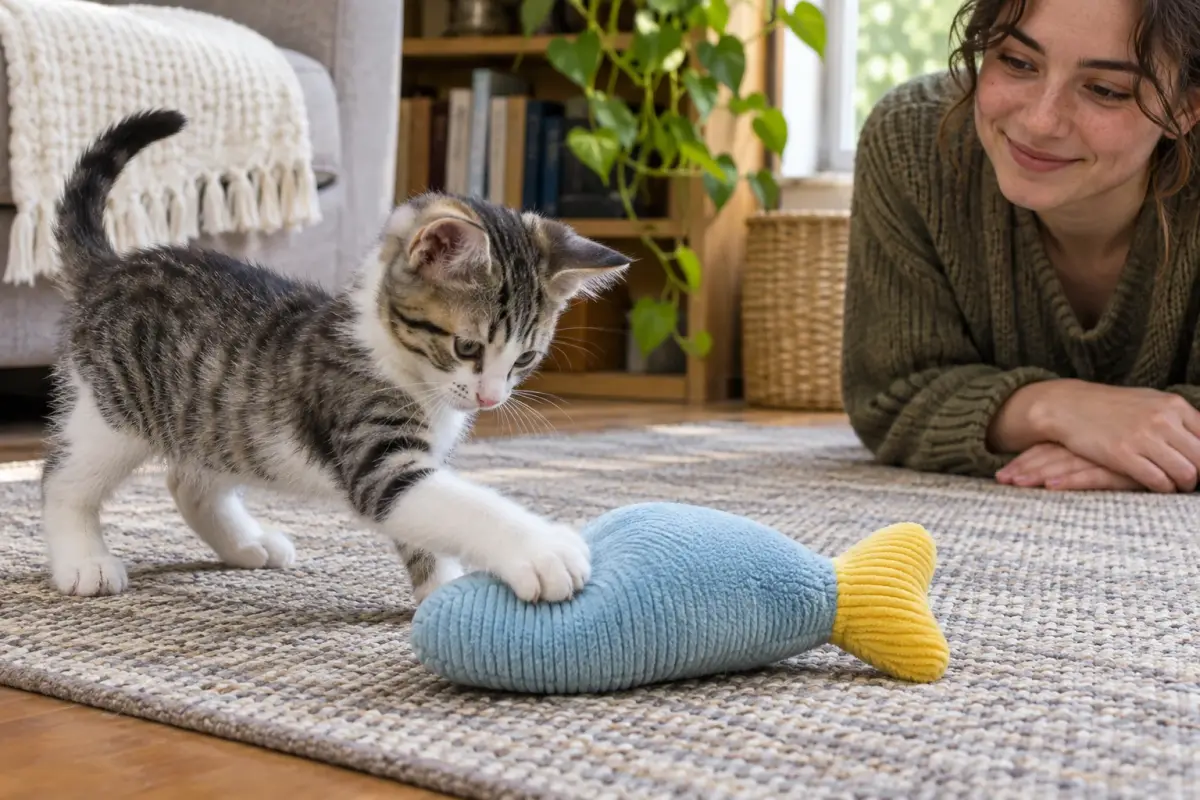
When a kitten mouths your hands, stop moving, then offer a chew toy or kick toy and praise it for using that instead. VCA notes that chewing hands or feet should never be encouraged, and that it is better to redirect than to try to stop all chewing.
Cords are the real danger. VCA warns that cats can bite through cord insulation, causing burns to the mouth or electrical shock that can damage the lungs or heart. Hide cords behind furniture, use cord covers and unplug chargers when not in use.
Plants, fabric and other chewing
For plant chewers, Cornell suggests offering cat grass, oat grass or catnip and keeping toxic plants out of reach entirely. Lilies are extremely dangerous to cats, and many common houseplants are toxic, so check any plant with your vet or the ASPCA's plant list.
For fabric chewers, Cornell recommends putting valuable and risky items away, adding enrichment such as food puzzles and play, and offering safe alternatives. Swallowed fabric can cause life-threatening blockages, and a vet can help if the habit is severe.
When to call your vet
Call your vet if your cat has swallowed part of a toy, string or fabric, or bitten a cord, or if it vomits repeatedly, stops eating or strains to pass stool. If you see string coming from its mouth or rear, do not pull it.
Also see your vet if a kitten still has baby teeth alongside adult ones after about 7 months, if your cat drools, paws at its mouth, has bad breath or chews on one side. A sudden new chewing habit in an adult cat can reflect dental pain or other medical problems.
This page is general information, not veterinary advice, and it cannot replace an examination by the vet who knows your pet.
Common questions
What can I give my teething kitten to chew on?
Offer soft rubber or fabric toys you can dent with a fingernail, soft mouse-shaped toys and chilled or frozen cat-safe toys. Avoid hard nylon, small parts and anything that is breaking apart.
Why does my cat chew on plastic?
Some cats like the texture or smell of plastic bags and wrappers, and some chew from boredom. Put plastic away, offer safe chew toys and play, and ask your vet if the habit is strong or sudden.
Are dental chew toys good for cats?
They may help some cats with mild cleaning and give a chewing outlet, but they do not replace dental checkups. Ask your vet about tooth brushing and dental care suited to your cat.
Sources we checked
This guide is general information, not veterinary advice. If your pet is unwell or injured, contact your veterinarian.