






Care & how-to
Chickens and Dogs: Plan for Safe Separation
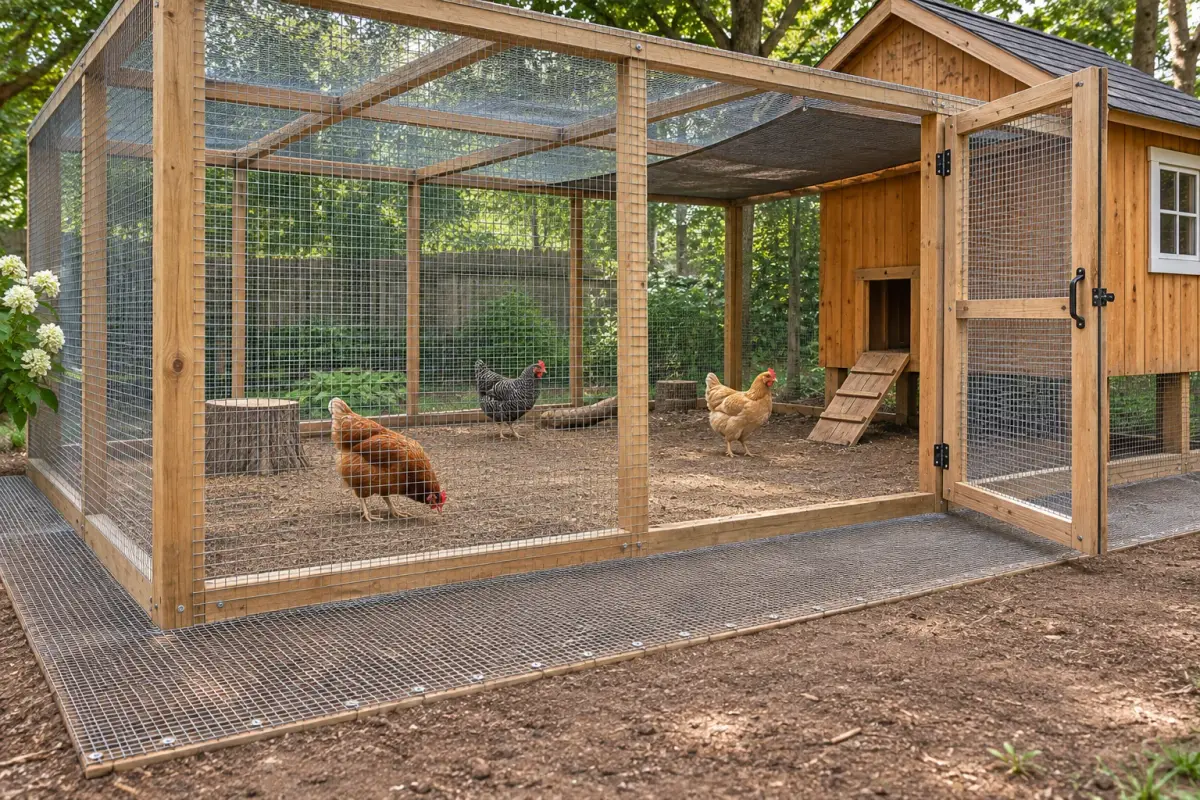
Keeping chickens and dogs on the same property requires secure boundaries and careful management. A dog can chase or injure poultry even if it is affectionate with people, and training does not guarantee safe free access. Begin with separation, practice useful cues away from birds, and obtain professional help before any closer introduction. If a chicken is attacked or injured, protect the bird and contact a poultry veterinarian promptly.
By Matt GarnettUpdated November 11, 20264 min read3 sources
Make physical separation the starting point
Poultry extension identifies domestic dogs among flock predators and explains that individual experience, breed tendencies, and other dogs can affect chasing. Familiarity with a family does not establish that a dog will behave safely around running birds. Build the daily routine around a boundary that prevents access rather than a hope that curiosity will fade.
Inspect doors, latches, fencing, and the places where people carry feed or collect eggs. Plan how one person can move through without leaving both groups together. Keep the dog in a separate secure area during poultry chores if the arrangement would otherwise depend on holding a door while managing several animals.
Practice useful dog skills away from the flock
AKC’s barn-dog guidance highlights recall, stay, leave it, leash manners, and going to a designated resting place. These skills help an owner manage movement and distractions. Start in a setting where the dog can respond without the excitement of nearby chickens and reward the behavior you want.
Use the Dog Training collection and the puppy leash training guide to plan suitable equipment and basic practice. A cue learned in a quiet room still needs careful work around distractions. It should support a secure setup rather than become the only thing preventing an attack.
Keep early observation controlled and calm
The AKC article recommends a leash in new barn settings because it preserves control around unfamiliar animals. Combine that control with a secure poultry barrier and enough distance for calm observation. Do not put a dog and chicken together at close range to discover what happens, or hold a bird where the dog can reach it.
End the situation and increase separation if the dog becomes difficult to redirect or the birds are distressed. A qualified reward-based trainer can help assess the dog’s response and design an appropriate plan. Some households will need permanent separation, which is a practical management outcome rather than a failed promise of friendship.
Do not treat a breed label as a guarantee
Poultry extension distinguishes dogs that may guard a flock from dogs that chase it, but it also describes individual and social influences. A livestock guardian background does not automatically prepare an untrained pet for unsupervised poultry access. Likewise, one calm meeting does not prove that behavior will stay the same during excitement or group activity.
Discuss working guardian arrangements with someone experienced in both the particular dogs and poultry management. Keep puppies and newly acquired dogs under an appropriate plan rather than assigning them responsibility for birds immediately. The flock still needs secure shelter and protection from hazards a dog cannot reliably manage.
Prepare for mistakes and respond to injury
Agree on household rules before friends, children, or temporary helpers join the routine. Make it clear who secures the dog before the run is opened and who checks the latch afterward. An arrival at the door, escaped bird, or dropped feed bucket should not remove the only protection between the animals.
If chasing or an attack occurs, separate the animals without putting yourself in danger and contact a poultry veterinarian about injuries. Do not assume a bird is unharmed because feathers conceal the skin or it is still standing. Seek urgent advice for bleeding, weakness, collapse, breathing difficulty, or an obvious wound.
Choose a layout you can maintain every day
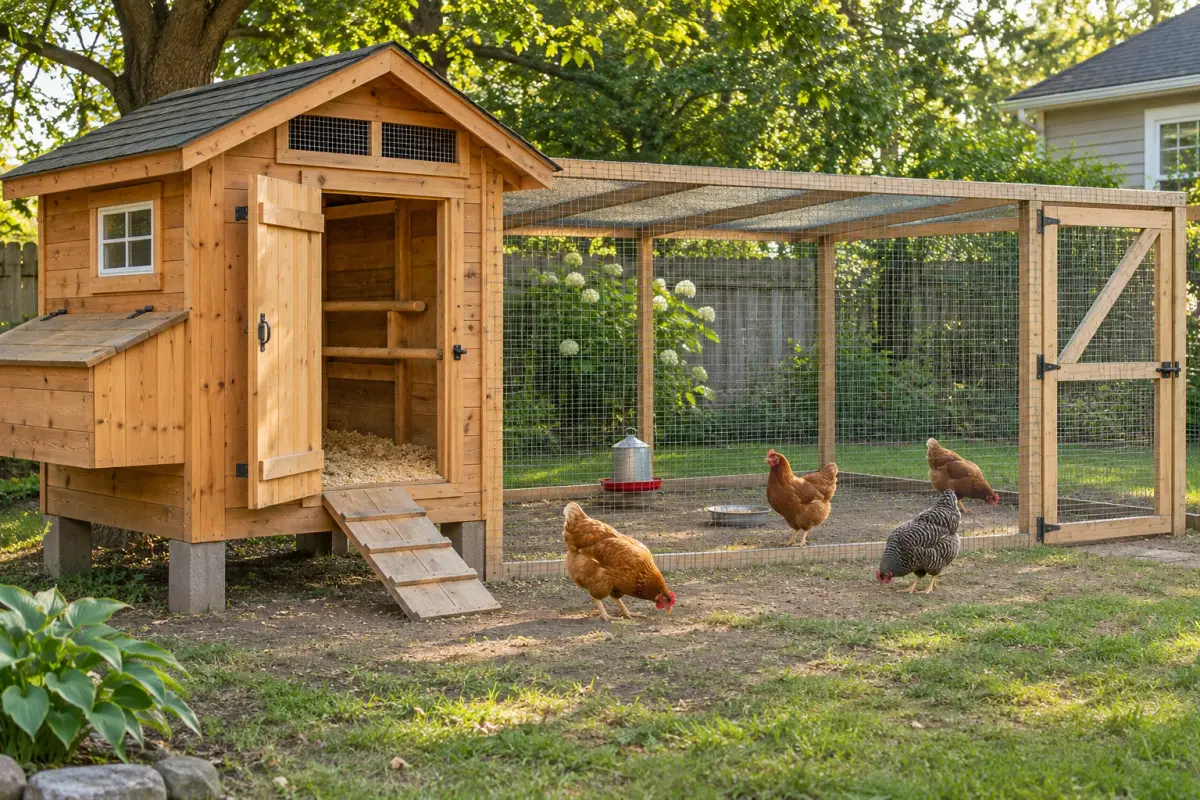
Poultry extension emphasizes exclusion as a central way to prevent predation. Review the Chicken Coops and Chicken Runs collections for secure closures, practical access, and a layout that helps keep a dog outside the bird area. Check the whole enclosure rather than relying on its name or appearance.
Continue inspecting boundaries and revisiting household routines as the dog grows, birds change, or another dog joins the property. Record any close call and fix the access problem before repeating the situation. Ask a trainer and poultry professional for help when the current arrangement is difficult to manage consistently.
This page is general information, not veterinary advice, and it cannot replace an examination by the vet who knows your pet.
Common questions
Can dogs and chickens live on the same property?
They can be managed on the same property when boundaries and daily routines protect the birds. Whether a particular dog can ever be closer requires individual assessment; secure separation may remain necessary.
Will a friendly dog automatically be safe with chickens?
No. Friendly behavior toward people does not establish safe behavior around poultry. Dogs can respond differently to running or flapping birds, and one quiet encounter does not guarantee later safety.
Which dog cues are useful around a chicken area?
Recall, stay, leave it, leash manners, and going to a designated place can help manage movement. Practice away from birds first and use the skills alongside secure boundaries and supervision.
What should I do after a dog attacks a chicken?
Separate the animals safely, protect the bird from further injury, and contact a poultry veterinarian promptly. Bleeding, weakness, breathing difficulty, collapse, or an obvious wound needs urgent advice rather than casual observation.
Sources we checked
This guide is general information, not veterinary advice. If your pet is unwell or injured, contact your veterinarian.


