






Buying guides
Chicken Coop Ideas: Layouts That Work for a Backyard Flock
The best chicken coop ideas start with three questions: how many hens you keep, how easily you can clean the coop, and what hunts in your area. Extension guides give laying hens roughly 1.5 to 3 square feet each inside and 8 to 10 in the run, so the layout you pick has to fit that space and keep predators out. Here is how the main designs compare. You can also browse our chicken coops as you read.
By Matt GarnettUpdated November 13, 20265 min read3 sources
Raised hen house with an attached run
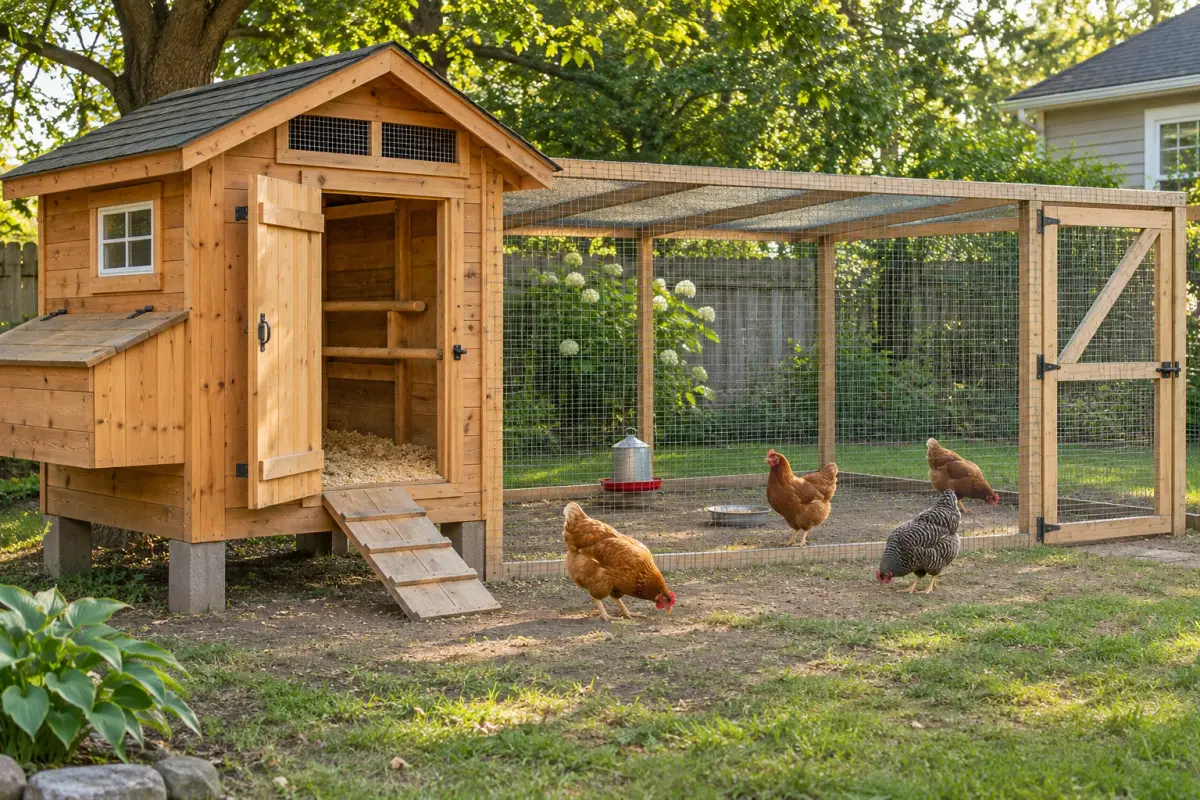
The most popular idea for a small yard is a raised house on legs with the run underneath or beside it. Oregon State Extension advises lifting the coop at least 1 foot off the ground on a solid floor, which keeps the floor drier and makes it harder for animals to reach from below. A ramp up to a pop door gives the hens an easy way in at dusk, and the space under the house doubles as shaded run area.
This layout suits a flock of two to six hens and a family that wants to check eggs from outside through a hinged nest-box lid. Look for a floor that pulls out or a large rear door, because the weekly clean is the chore that decides whether you keep up with it. A compact wooden design, such as a wooden chicken coop, shows what this style looks like in practice.
Walk-in coops for larger flocks
A walk-in coop is tall enough for you to stand inside, which turns cleaning, collecting eggs and catching a sick hen into much easier jobs. It suits flocks of eight or more, or anyone with a bad back. The trade-off is a larger footprint and more materials, so check local zoning and any setback rules before you choose one.
Big flat-roofed designs such as the 10x13 foot flat top chicken coop show the format. Hang doors so they open outward, as Oregon State Extension suggests, and slope the floor slightly so it drains when you hose it out. Add passive vents under the eaves rather than a fan, which most backyard coops do not need.
Mobile coops and tractors
A mobile coop, often called a tractor, moves across the lawn so the flock gets fresh ground and the droppings spread out instead of building up in one run. It suits small flocks and gardeners who want help with weeds and bugs. The idea only works if you move it regularly and keep the design light enough to shift without effort.
Mobile designs need the same protection as fixed ones, because predators do not care that the coop has wheels. Check that the floor, the latches and every wire seam are secure, and close the hens in at night. Extension guidance on locking doors at dusk applies no matter which layout you choose.
Predator-proofing whichever idea you pick
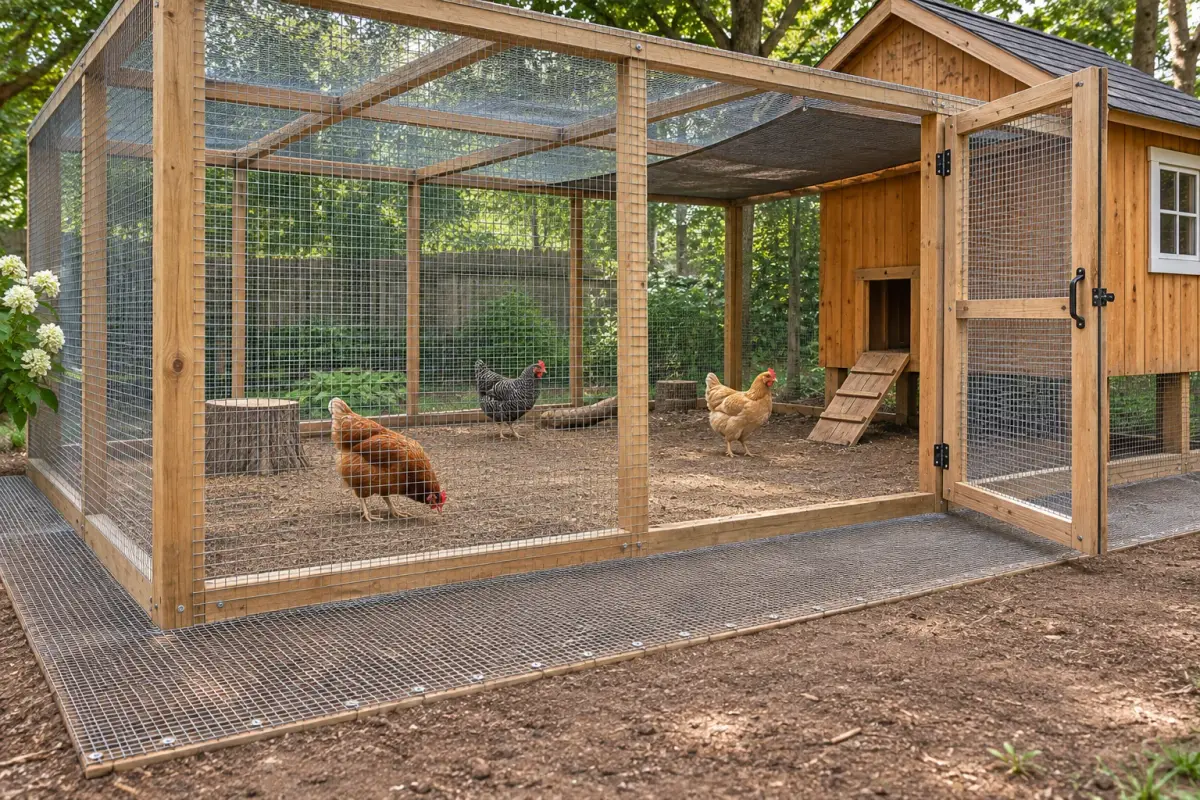
Penn State and Oregon State both point to the same fixes: bury fencing 6 to 12 inches deep, or lay it outward along the ground, to stop diggers, and cover the run with mesh or netting against hawks and owls. Poultry Extension notes that least weasels can squeeze through holes as small as 1/4 inch and typically get through chicken wire, so a welded wire or hardware cloth with small openings is the safer choice for windows and vents.
Close and lock every door at night, keep food out of the run, and keep large shrubs away from the coop where predators can hide. For a deeper look at fixing weak points, read our guide to a predator-proof chicken coop, and see how big a coop should be before you buy or build.
Choosing the idea that fits your yard
Start with flock size and your cleaning habits. For two to four hens in a small yard, a raised house with a run is simple and tidy. For six or more, or if you want to stand inside, go walk-in. If your lawn is large and you like to move things around, a mobile coop is worth considering.
Then think about weather. In a cold climate, you need good ventilation without drafts across the roost, and in a hot one you need shade and airflow. Our chicken coop buying guide compares the types in more detail, and you can pair a coop with a chicken run to give the flock more room. If a hen looks unwell, lethargic or stops eating, call a veterinarian who treats poultry.
This page is general information, not veterinary advice, and it cannot replace advice from a veterinarian who treats poultry.
Common questions
What is the best design for a small chicken coop?
For two to six hens, a raised hen house with an attached run is a practical design. It keeps the floor off the damp ground, gives shaded run space underneath and makes cleaning simple if it has a large rear door.
How big should a coop be for 6 chickens?
Penn State Extension lists 1.5 to 2 square feet per bird indoors and 8 to 10 in the run, which is about 9 to 12 square feet inside for six hens. Oregon State suggests closer to 3 per bird, so more room is better.
Can I use chicken wire on a coop?
Poultry Extension notes that weasels can pass through holes as small as 1/4 inch and typically get through chicken wire. Welded wire or hardware cloth is the safer choice for windows, vents and any run that holds birds overnight.
Does a chicken coop need to be off the ground?
Oregon State Extension advises raising the coop at least 1 foot off the ground with a solid floor. That keeps the floor drier, discourages rodents and makes it harder for predators to dig or reach in from below.
Sources we checked
This guide is general information, not veterinary advice. If your pet is unwell or injured, contact your veterinarian.


