






Breeds
Presa Canario vs Cane Corso: Two Guardian Mastiffs Compared
The Cane Corso and the Presa Canario are both large, powerful guardian mastiffs, and neither is a dog for a first-time owner. The Cane Corso is an Italian bodyguard breed, a little taller and leaner, and ranks 14th in AKC popularity. The Presa Canario is a heavier, more massively headed cattle and farm guardian from the Canary Islands, which the UKC describes as wary of strangers and aggressive with other dogs. Both need expert training and socialization.
By Matt GarnettUpdated November 14, 20265 min read4 sources
Side by side
Size: the AKC lists Cane Corso males at 25 to 27.5 inches and females at 23.5 to 26, with weight proportionate to height. For the Presa Canario, the AKC lists 22 to 26 inches and 84 to 110 pounds, and the UKC standard gives males 100 to 125 pounds and females 85 to 100. Lifespan: AKC gives 9 to 12 years for the Corso and 9 to 11 for the Presa. Coat: both short; the Presa's is a harsh single coat, the Corso's a coarse double coat.
Recognition: the Cane Corso is a full AKC breed; the UKC recognized the Presa in 2003, and the AKC profiles it without a popularity ranking. Energy: VCA rates the Corso high (see toys for Cane Corsos), and the Presa was bred for working cattle. Temperament: both are devoted to family and protective; the UKC says Presas are aggressive with other dogs. Training: both need confident, consistent handling. Best for: experienced owners with secure space, not homes that host many visitors or other dogs.
Origins and purpose
The AKC traces the Cane Corso back to ancient Roman times and notes that its name roughly translates as bodyguard dog. VCA describes a powerful Italian breed developed for guarding, hunting and farm work, and the AKC calls it smart, trainable, assertive and a peerless protector. It has become one of America's most popular large breeds.
The Presa Canario comes from the Canary Islands, where, per the UKC, its ancestors arrived with Spanish conquistadors and worked alongside local cattle dogs from the 1400s. They guarded farms, caught and held cattle, and killed wild or stray dogs. The breed declined in the 1940s and was revived from the 1970s. The AKC says it is especially suited to guarding and was traditionally used for herding cattle.
Build and appearance
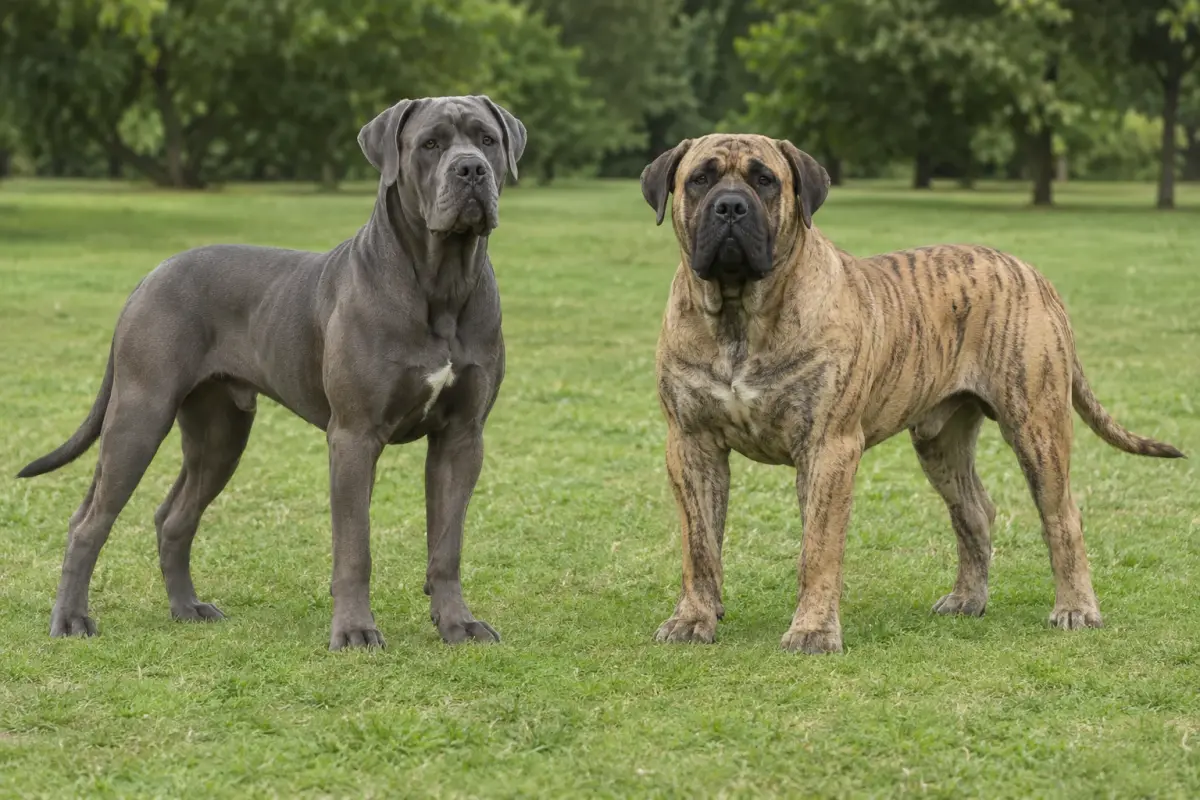
The Presa is the heavier, more massive dog for its height. The UKC describes a moderately large, powerfully built guard dog with a massive, cube-shaped head, thick elastic skin and a broad, deep chest. Its coat comes in any shade of fawn, black or brindle, and the face must carry a black mask. A mature male of 100 to 125 pounds can stand only 23 to 26 inches tall.
The Cane Corso is taller and more athletic-looking. VCA describes a strong, athletic build designed for power and endurance, a broad head with a pronounced muzzle, and a short, coarse double coat in black, gray, fawn or brindle. Side by side, a Corso tends to look leggier and a Presa broader and blockier.
Temperament: what owners must manage
VCA describes Cane Corsos as loyal and protective of family and territory, often calm indoors but highly alert to anything unfamiliar. It warns that without consistent training they may become overprotective and aggressive toward strangers or pets, and that early socialization is essential. VCA rates them as best for experienced, confident owners and says they may be selective with other animals.
The UKC describes the Presa as extremely affectionate, docile and well-behaved with its owner and family, but wary of strangers and aggressive with other dogs. That is the breed's guardian purpose speaking, not a fault in an individual. With either breed, plan on structured puppy classes, a trainer experienced with guardian breeds, controlled introductions, and secure fencing and leashing in public.
Exercise and daily care
VCA says Cane Corsos need regular daily exercise, including walks, structured activities and training sessions, or they may become restless or destructive. Presas, bred to work cattle and patrol farms, also need daily walks and a job for the mind, such as obedience, scent work or structured play. Neither does well left in a yard with nothing to do.
Grooming is simple: weekly brushing, occasional baths, regular nail trims and dental care. VCA notes routine ear cleaning matters for the Corso because of infection risk. Both are big, strong dogs, so budget for a heavy-duty crate, a large orthopedic bed and food costs that suit a 100-pound animal, and teach loose-leash walking early while the puppy is still small.
Both are powerful dogs, so a well-fitted harness for large dogs gives better control on walks.
Health and which to choose
VCA lists hip and elbow dysplasia, patellar luxation, bloat (gastric dilatation-volvulus), eyelid problems including entropion and ectropion, demodectic mange, epilepsy, hypothyroidism and heart disease among Cane Corso concerns, and advises weight management and controlled exercise during rapid growth. For the Presa, ask breeders for hip and elbow screening on both parents. Ask your vet about the signs of bloat, which is an emergency, and about safe exercise for a growing giant puppy.
Choose a Cane Corso if you are an experienced large-breed owner who wants a trainable, athletic guardian and family companion. A Presa Canario suits only very experienced owners in a home with no other dogs and few visitors, ready to manage a powerful dog's guarding instinct for life. Check local ordinances, leases and insurance before bringing home either breed. Weighing other big guardian breeds? Compare the Cane Corso and Mastiff, Cane Corso and Rottweiler and Cane Corso and Doberman, or see what to feed a Cane Corso.
This page is general information, not veterinary advice, and it cannot replace an examination by the vet who knows your pet.
Common questions
Which is bigger, a Cane Corso or a Presa Canario?
The Corso is usually taller, at up to 27.5 inches per the AKC, while the Presa is heavier for its height. The UKC gives male Presas 100 to 125 pounds at 23 to 26 inches.
Is the Presa Canario recognized by the AKC?
The AKC publishes a Presa Canario breed profile but gives it no popularity ranking, unlike fully recognized breeds. The United Kennel Club recognized the Perro de Presa Canario on January 1, 2003.
Are Cane Corsos good family dogs?
They can be, in experienced hands. VCA says Corsos bond strongly with family and are generally good with children under supervision, but they need consistent training and socialization to avoid overprotectiveness with strangers or pets.
Are Presa Canarios good with other dogs?
Often not. The UKC breed standard describes the Presa as wary of strangers and aggressive with other dogs. Plan to keep a Presa as the only dog, or to manage every meeting carefully.
Sources we checked
This guide is general information, not veterinary advice. If your pet is unwell or injured, contact your veterinarian.


