






Breeds
English Mastiff vs Cane Corso: Size, Energy and Care
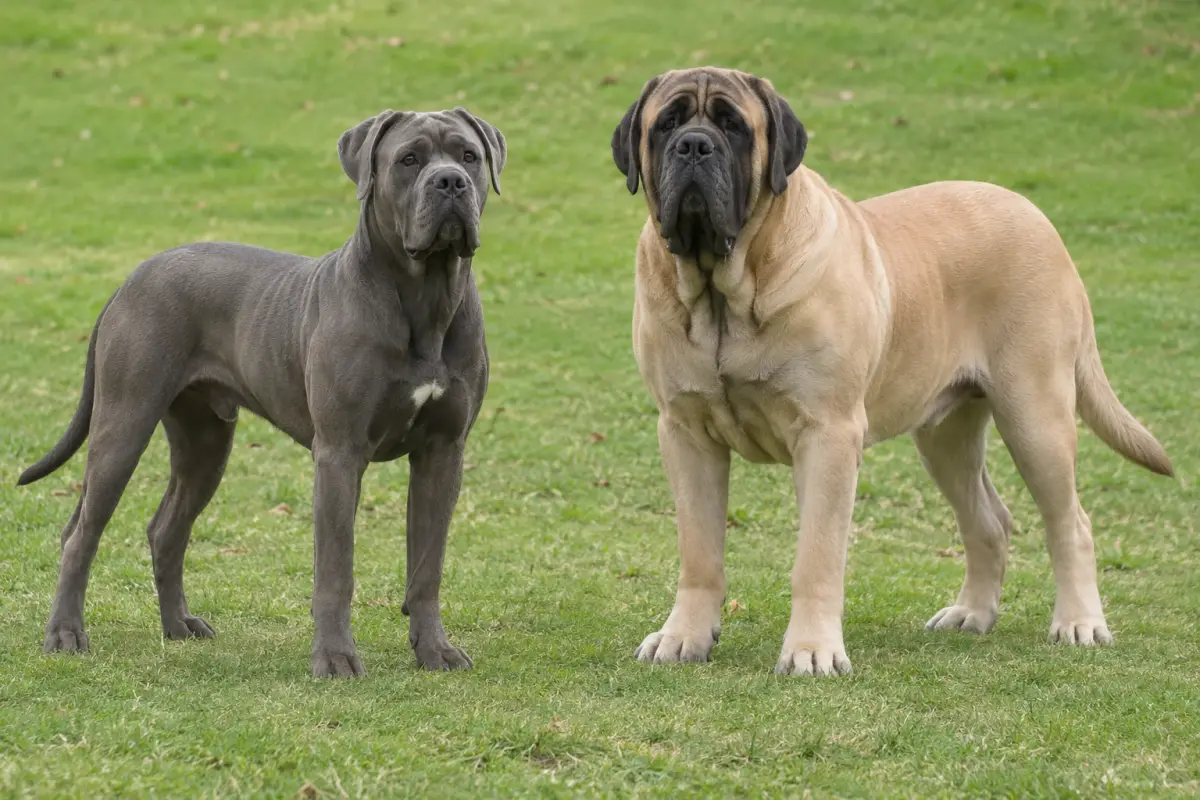
The English Mastiff, which the AKC simply calls the Mastiff, is a true giant: males of 160 to 230 pounds and 30 inches or more, calm, docile and low-energy. The Cane Corso is smaller and far more athletic, at 23.5 to 27.5 inches with weight proportionate to height, and needs much more exercise and confident training. Both are devoted family guardians. The Mastiff is the gentler housemate; the Corso the more active, assertive protector.
By Matt GarnettUpdated November 10, 20264 min read4 sources
Side by side
Size: the AKC lists Mastiff males at 30 inches and up and 160 to 230 pounds, females at 27.5 inches and up and 120 to 170. Cane Corso males stand 25 to 27.5 inches and females 23.5 to 26, weight proportionate to height. Lifespan: AKC gives Mastiffs 6 to 10 years and Cane Corsos 9 to 12. Popularity: the Corso ranks 14th on the AKC list and the Mastiff 40th. Coat: both short; Mastiffs drool, per VCA.
Energy: VCA rates the Mastiff 1 out of 5 as a jogging partner, needing a moderate walk or short jog, and the Cane Corso high with daily exercise. Strangers: both are aloof or protective. Training: both can be stubborn and need firm, reward-based handling. Heat: both struggle with heat. Best for: Mastiffs suit calm homes with space for a giant; Corsos suit experienced, active owners.
Origins
The AKC says the Mastiff belongs to a canine clan as ancient as civilization, a massive, heavy-boned dog of courage and strength, docile and dignified but a formidable protector. VCA traces the mastiff family through hunting, battle and guarding, and notes the AKC recognized the Mastiff in 1885. After World War II nearly wiped out the breed in England, American dogs helped rebuild it.
The Cane Corso's lineage goes back to ancient Rome, according to the AKC, and its name roughly translates as bodyguard dog. VCA describes a powerful Italian breed developed for guarding, hunting and farm work, built athletic rather than massive. The AKC calls it smart, trainable, assertive and confident, a peerless protector.
Temperament
VCA describes the Mastiff as loyal and protective, gentle and generally good with children, though possibly overprotective of them around strangers. It tends to be aloof with strangers, is fairly friendly with strange dogs and good with other pets. It learns quickly but can be stubborn and rebels against force, and VCA calls it a calm, well-mannered housedog.
The Cane Corso is loyal and protective of family and territory, calm indoors but highly alert to the unfamiliar, says VCA. Without consistent training, it may become overprotective and aggressive toward strangers or pets, and VCA rates it best for experienced, confident owners. Early socialization and lifelong training matter more for the Corso than for the Mastiff.
Exercise, drool and daily care
The Mastiff needs only a moderate daily walk or short jog and prefers cool weather to warm, VCA says. Its short, coarse coat needs a weekly brush, and you should be prepared for drool: keep towels handy. The Cane Corso needs regular daily exercise with walks, structured activity and training, or it may become restless or destructive, and VCA notes it is sensitive to extreme heat.
Both are giants to live with. Budget for food, a heavy-duty crate, an orthopedic bed, a large vehicle and higher vet and medication costs, which rise with body weight. Teach loose-leash walking and polite greetings while puppies are still small, because a 150-pound dog that pulls or jumps is hard for anyone to manage.
Health and growth
For Mastiff puppies, VCA recommends a large-breed growth food that slows growth without changing final size and may reduce the incidence or severity of hip dysplasia. VCA lists hip and elbow dysplasia, patellar luxation, bloat, eyelid problems such as entropion and ectropion, demodectic mange, epilepsy, hypothyroidism and heart disease among Cane Corso concerns, and stresses weight management and controlled exercise during rapid growth.
VCA flags bloat as a risk in the deep-chested Cane Corso, so ask your vet to explain its warning signs, and treat any suspected bloat as an emergency in either breed. Ask breeders for hip and elbow screening, and ask your vet about safe exercise for a growing giant puppy and about lifespan expectations, especially with the Mastiff's shorter range.
Which to choose
Choose an English Mastiff if you want a gentle, calm, low-exercise giant that is happy to lounge with the family, and you can handle drool, a shorter lifespan and the costs of a 200-pound dog. Choose a Cane Corso if you want a more athletic, trainable guardian for an active household, and you have experience with assertive, protective breeds.
Either dog needs a secure yard, consistent rules from day one and early, positive socialization with visitors, children and other dogs. Check local ordinances, leases and insurance before bringing one home, since large guardian breeds are often restricted.
This page is general information, not veterinary advice, and it cannot replace an examination by the vet who knows your pet.
Common questions
Which is bigger, a Mastiff or a Cane Corso?
The Mastiff, by a wide margin. The AKC lists male Mastiffs at 160 to 230 pounds and 30 inches or more, while Cane Corso males stand 25 to 27.5 inches with weight proportionate to height.
Which is a better family dog, a Mastiff or a Cane Corso?
For most families, the Mastiff is easier. VCA calls it gentle, generally good with children and a calm housedog. The Cane Corso can be a devoted family dog but needs experienced handling and more exercise.
Do Cane Corsos drool like Mastiffs?
Mastiffs are the bigger droolers; VCA advises Mastiff owners to be prepared for drool. VCA does not flag drool for the Cane Corso, but any large-mouthed dog can drool after drinking or eating.
How long do Mastiffs and Cane Corsos live?
The AKC lists Mastiffs at 6 to 10 years and Cane Corsos at 9 to 12 years. Giant breeds age quickly, so regular vet checkups and weight control matter from early adulthood.
Sources we checked
This guide is general information, not veterinary advice. If your pet is unwell or injured, contact your veterinarian.


