






Buying guides
Best Crate for a German Shepherd: Size, Type and Strength
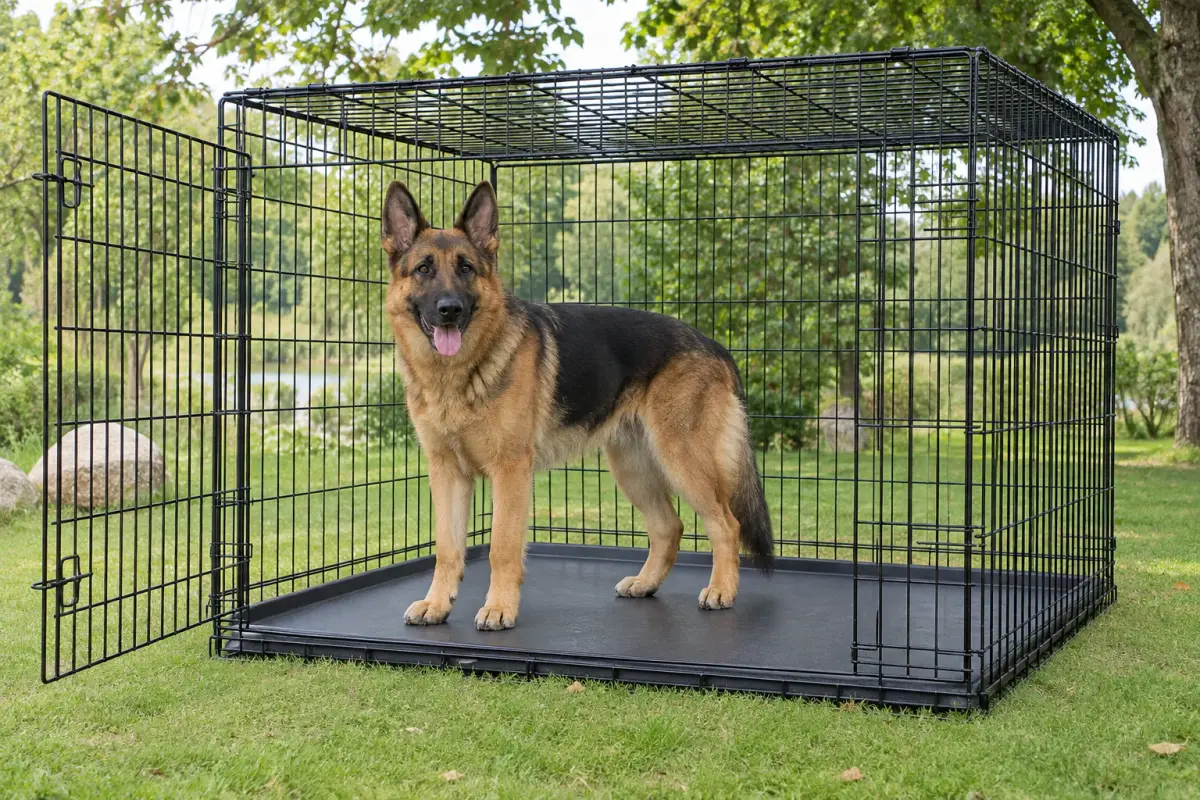
The best crate for a German Shepherd is a large, sturdy one that lets your dog stand, turn and lie out fully. Adults stand 22 to 26 inches at the shoulder and weigh 50 to 90 pounds, so size up and favor strong construction. See our crates for large dogs, or read on to pick the type and fit.
By Matt GarnettUpdated November 13, 20264 min read3 sources
What matters most: fit for a big, athletic dog
VCA Hospitals lists the German Shepherd at 22 to 26 inches tall and 50 to 90 pounds, and the AKC weight chart gives the same 50 to 90 pound range for males and females. That puts the breed in the large-crate range, and the larger males need the biggest standard sizes. The rule for fit is the same for every dog: VCA says the crate needs enough floor space for the dog to lie down and stretch, and enough height to stand without hitting its head.
Measure your own dog rather than trusting a label. Measure standing height to the top of the head and body length from nose to the base of the tail, then compare both with the crate's interior dimensions, not its outside dimensions. For a puppy, VCA notes that puppies may start in a smaller crate and move up as they grow, and a divider panel that shrinks a large crate is a way to avoid buying twice. See our dog crate size guide for more on measuring.
Why strength matters for this breed
VCA describes German Shepherds as a high-energy breed with limited tolerance for time alone, and says a dog that does not get enough exercise can develop behavior problems such as destructiveness. A crate is no fix for a bored dog, but an under-exercised young shepherd can push, paw and chew at a thin crate door in a way a small breed never could.
So look at the build: thick bars or panels, a latch the dog cannot nudge open, no gaps at the corners and a solid floor tray. Weak welds and light-gauge wire are the usual failure points. If your dog panics when confined, a stronger crate will not help; talk to your vet or a trainer about separation distress before you rely on any crate.
The main crate types compared
VCA's crate guide describes the common types. Collapsible wire crates fold flat and let you see the dog, but dogs can damage the bars or hurt their teeth chewing them, and VCA says they are not approved for airline travel or sturdy enough for car travel. Plastic crates are lighter and easy to clean, usable for airline travel, and offer moderate car protection, though they do not fold and they are harder to see through.
Metal box-style crates are sturdy and hard to escape, with bar spacing that lowers the risk of jaw injuries, though they are heavy and expensive. For home use, furniture-style crates look more like a cabinet or side table. A heavy-duty furniture-style kennel or a large wooden crate with a storage top suits a settled adult that sleeps in its crate. Our heavy-duty dog crate guide covers stronger options.
Best type for each situation
For a shepherd puppy, a large wire or metal crate with a divider panel lets the space grow with the dog. For a calm adult in a living room, a furniture-style crate such as a 39-inch end table crate for large dogs blends into the room, though check the interior size against your own dog's measurements first.
For a dog that escapes or chews, favor metal box-style construction. For regular car trips, VCA points to crash-tested crates, which are secure and sturdy but expensive and not collapsible. A dog that is only crated when you are out can use a roomier crate than one that sleeps in it at night.
What to avoid
Avoid undersized crates chosen to save money; a shepherd that cannot stand or turn around will be miserable and may injure itself. Avoid lightweight collapsible wire for an escape artist, and avoid any crate with a latch you can wiggle open with one finger.
Avoid long stretches of confinement. VCA states plainly that extended periods of confinement are not healthy, and that dogs need daily social interaction, exercise and training; the crate is a management tool for times your dog cannot be supervised or needs quiet rest.
Comfort and joint care
VCA calls joint disease a major concern in German Shepherds, especially during growth and aging, with hip and elbow dysplasia listed among the breed's health conditions. A hard crate floor is a poor place to spend long hours, so line the tray with a supportive, washable pad and replace it when it flattens. Ask your vet what suits your individual dog, particularly a puppy or a senior.
Place the crate in a room where the family spends time, away from drafts and direct heat. Wash the bedding often and wipe down the tray. Check bars, latches and the floor tray regularly for bending or cracks. When your dog needs a bigger space for the day, a roomy crate for large dogs or an exercise pen from our dog playpens range, which VCA lists as an alternative, can stand in.
Crate construction and storage compared
| Construction | Physical arrangement | Trade-off to inspect |
|---|---|---|
| Collapsible wire | Wire panels fold down | Bar condition and folded storage size |
| Plastic shell | Rigid enclosed body | Door opening and visibility |
| Metal box-style | Rigid metal structure | Overall weight and handling |
| Furniture-style | Crate built into cabinet-like furniture | Door access and usable inside space |
Common questions
What size crate does a German Shepherd need?
Adults stand 22 to 26 inches at the shoulder and weigh 50 to 90 pounds, so choose a large crate where your dog can stand, turn around and lie stretched out. Measure your own dog and compare with the interior dimensions.
Is a wire or plastic crate better for a German Shepherd?
Wire crates let air and sight through but can be damaged by chewing. Plastic crates are lighter and suit airline travel. For strong chewers or escape artists, a heavy-duty metal crate is the more secure choice.
Can a German Shepherd puppy use a large crate?
Yes, if the space is reduced with a divider panel. A crate that is too big for a young puppy can make house training harder. Move up in size as the puppy grows, and check with your vet about growth.
How long can a German Shepherd stay in a crate?
VCA says extended confinement is not healthy, and dogs need daily exercise, interaction and training. Use the crate for rest or when you cannot supervise, and ask your vet or trainer about time limits for your dog's age.
Sources we checked
This guide is general information, not veterinary advice. If your pet is unwell or injured, contact your veterinarian.


