






Buying guides
Best Dog Crates for Large Dogs: How to Choose Size and Strength
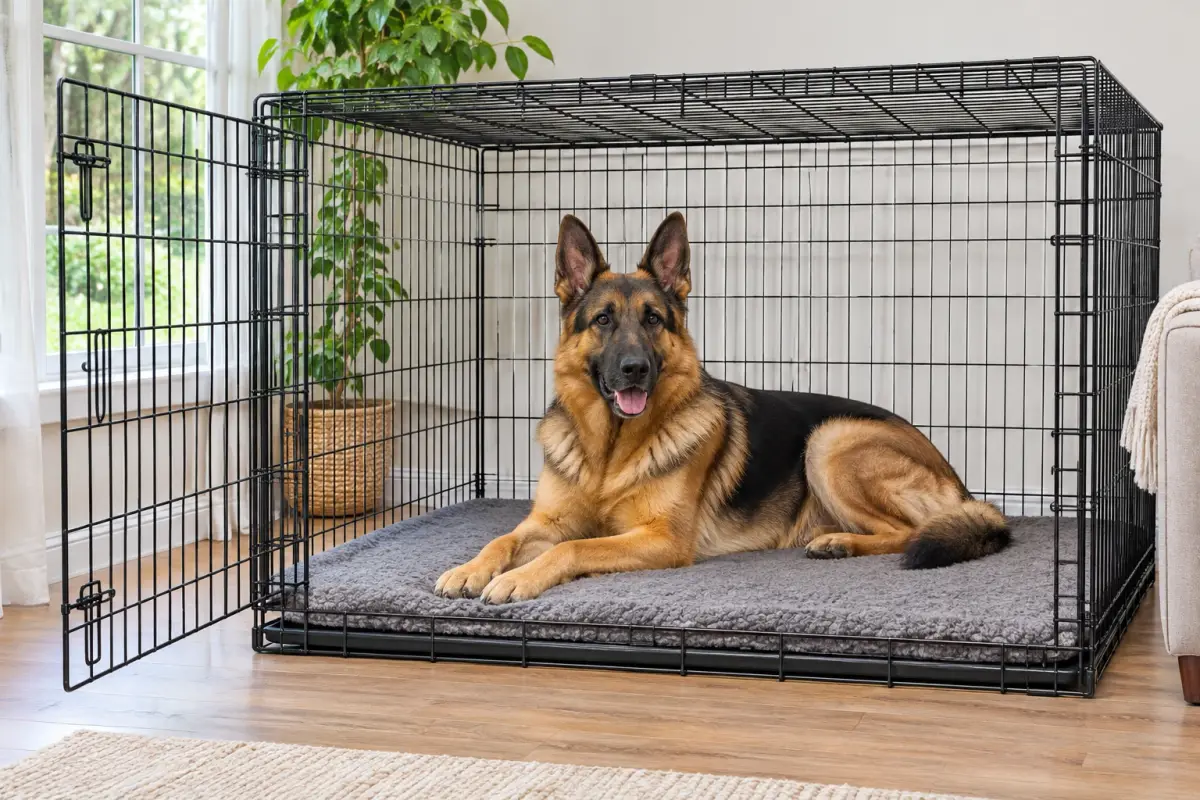
A large dog's crate should let it stand without ducking, turn around and lie flat on its side, and it must be strong enough for a big dog leaning on the door. The AKC's rule is just large enough to stand up, turn around and lie down comfortably. For most large breeds that means a 42, 48 or 54 inch crate, chosen by measurement rather than by weight.
By Matt GarnettUpdated November 14, 20264 min read3 sources
What matters most: the right size
Measure your dog standing, from nose to the base of the tail, and add 2 to 4 inches for length. Measure from the floor to the top of the head or ears, whichever is higher, while the dog sits, and add 2 to 4 inches for height. Most golden retrievers and Labradors fit a 42 inch crate; German shepherds and larger retrievers usually need 48; giant breeds 54 or more.
Bigger is not better for training. The AKC warns that a crate that is too big lets a puppy use one end as a bathroom, and suggests buying a crate for a large dog sized for adult size and using a divider while the puppy is small.
The main types compared
Wire crates fold flat, give good airflow and visibility, and often include a divider; they suit most large dogs at home. Plastic crates are enclosed and den-like, which some dogs prefer, and are the type most airlines require for cargo. Heavy-duty steel or aluminum crates with reinforced doors are built for dogs that bend wire or escape.
Furniture-style crates double as end tables but are usually not strong enough for determined chewers or diggers; our guide to dog crate furniture covers them in more detail. Soft-sided crates are light and portable but only suit calm, crate-trained dogs; a large dog can tear or push out of fabric.
Best type for each situation
For a large-breed puppy, a wire crate sized for its adult length with a divider you move back as it grows. For a calm adult, a wire crate or a furniture crate such as the wooden crate with a storage top or the large wooden cabinet crate. For an escape artist or dog with separation distress, a heavy-duty crate with double latches, together with help from your vet or a behavior professional, as a crate alone does not fix anxiety.
For car travel, the AKC recommends a crate or a crash-tested seat belt; a sturdy crate secured with strong anchor straps, not bungee cords, in the cargo area is the common setup. Measure your vehicle's cargo space before choosing, as 48 inch crates do not fit every SUV.
What to avoid
Avoid choosing by the weight on the box; a lanky 60 lb dog may need a bigger crate than a stocky 75 lb one. Avoid crates with gaps where a door can be pushed open at the corner, and single-latch doors on strong dogs.
Avoid leaving collars with tags or loose harnesses on dogs in wire crates, as they can catch. Avoid using the crate as punishment or for very long stretches; a dog that injures itself trying to escape, or shows panic, should be seen by your vet.
Making the crate comfortable
Add a durable, washable crate pad. For heavy chewers, the AKC's puppy-proofing advice is to remove a bed that gets destroyed and use a simple rug or nothing at all until chewing settles. Place the crate where the family spends time.
Introduce it gradually with meals and treats inside, door open at first. The AKC suggests giving a special chew toy each time to make the crate feel like a good place. Provide water for longer stays.
Care and lifespan
Wipe trays and bars with pet-safe cleaner weekly and wash the pad. Check welds, latches and the tray for cracks every few months.
A good wire crate lasts many years; replace it if bars bend or welds break, because a weakened crate is an escape and injury risk. Heavy-duty crates last longest of all, and our dog crates for large dogs are the place to compare them once you have your measurements.
This page is general information, not veterinary advice, and it cannot replace an examination by the vet who knows your pet.
Large-crate construction and room planning
| Construction | Body arrangement | What to check |
|---|---|---|
| Wire | Open metal panels,often folding | Inside dimensions,divider and latches |
| Plastic | A more enclosed rigid shell | Door opening and vents |
| Steel or aluminum | A heavier rigid structure | Actual material,locks and handling weight |
| Furniture-style | Crate space within cabinet-like furniture | Usable interior and furniture clearances |
| Soft-sided | Fabric over a support frame | Frame,zippers and fabric condition |
Common questions
What size crate does a large dog need?
Usually 42 to 54 inches long. Measure your dog nose to tail base and floor to top of head when sitting, add 2 to 4 inches to each, and choose a crate with interior dimensions to match.
What is the best crate for a German shepherd?
Most German shepherds need a 48 inch crate. A wire crate suits calm dogs; a heavy-duty crate suits strong chewers and escape artists. Check the door has secure latches.
What crate is best for a golden retriever?
Most golden retrievers fit a 42 inch crate, and larger males may need 48. For a puppy, buy the adult size and use a divider to keep the space small during house training.
Are heavy-duty crates necessary for large dogs?
Only for dogs that bend wire, break latches or escape. Many large dogs are fine in a sturdy wire crate. If a dog is frantic in any crate, ask your vet or a trainer for help.
Sources we checked
This guide is general information, not veterinary advice. If your pet is unwell or injured, contact your veterinarian.


