






Buying guides
Best Wire Dog Crates: How to Choose the Right Size and Style
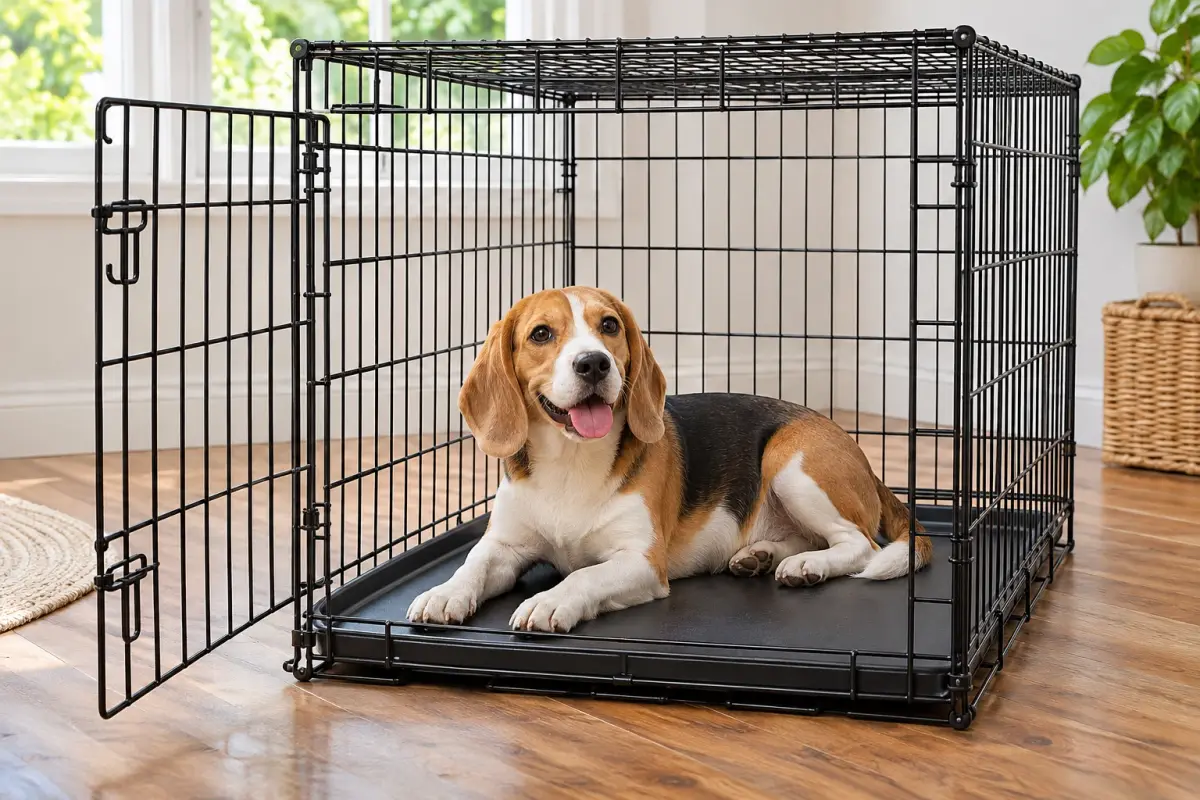
The best wire dog crate is sized to your dog, has a divider if you are buying for a growing puppy, closes with secure latches, and sits on a removable tray that is easy to clean. Measure your dog standing, add 3 to 4 inches to length and height, and then choose between one door and two. Browse our wire dog crates once you have those numbers.
By Matt GarnettUpdated November 14, 20265 min read3 sources
Why choose a wire crate
The AKC describes metal wire crates as the sturdiest you can buy, with good airflow and visibility, and it names them as the best choice for dogs that chew. The trade-off is looks: a bare wire crate is not the most attractive thing in a living room, though a fabric cover adds privacy. Many dogs also like to see what the family is doing, and the AKC notes that some dogs prefer a wire crate for exactly that reason.
Wire crates also fold flat for storage or the car, which is why they are the usual first crate for a puppy. Our range of wire dog crates sits alongside soft crates and crate furniture; if you are still deciding between crate materials, our general guide to choosing a dog crate compares them.
What matters most: size, doors, divider and tray
Size comes first. The AKC says to measure your dog standing, from the top of the head to the floor and from nose tip to tail tip, then add 3 to 4 inches to each measurement to get the crate height and length you need. VCA Animal Hospitals puts the test simply: the crate should be large enough for the dog to stand, turn and stretch out. Too much room lets a puppy sleep at one end and eliminate at the other.
Doors and dividers come next. A single-door crate such as a 24 to 30 inch single door dog cage is simplest for a small dog. A two-door crate, like a 30 inch folding crate with two doors, gives you a choice of where to place it, with one door at the front and one on the side. For a puppy, the AKC suggests buying a crate sized for the breed's adult size and using a divider so the interior grows with the dog. Finally, look for a slide-out plastic tray, which makes accidents easy to clean.
Latches, welds and safety
The AKC says a crate should be secure enough to prevent escape, with proper ventilation on the sides. On a wire crate, that means checking the latches: double-bolt or slide-and-lock designs are harder for a clever dog to open than a single flip latch. A 36 inch black wire cage with a double lock mechanism is an example of the type that suits a determined escape artist.
Run your hand along the inside of the crate: weld points should be smooth, with no sharp ends, and the wire spacing should be narrow enough that a muzzle or paw cannot get wedged. Watch a dog that panics in the crate. Some dogs cannot tolerate one, and VCA suggests that a pen, a small room or a gated area may suit them better. If your dog stays anxious, destructive or noisy in the crate, ask your vet or a behaviorist about separation anxiety.
The best size and style for each dog
For a small dog, a 24 to 30 inch crate usually covers it, but measure rather than guess. For a medium dog, a crate in the mid-30 inch range is a common fit, and for a large dog a 41 inch or longer crate, though your own measurements and the AKC rule should decide. A 41 inch folding two-door crate is one example of that bigger size.
For a puppy, buy one crate with a divider and move it back as the puppy grows. For a chewer, choose thicker wire and double latches, and skip the soft cushion until the chewing stops, since the AKC advises adding a bed unless the dog chews fabric. For a dog that likes a den, add a removable cover. For a travel dog, a lighter folding model with handles is easier to carry. If you need a larger or more heavily built crate, browse our dog crates for large dogs.
Where to put it and how to use it well
VCA and the AKC agree that dogs are social, so the crate belongs in a room where the family spends time, such as a kitchen, den or bedroom. Put a washable bed or mat inside and a blanket over part of it if your dog likes a den, but hold off on bedding if your puppy shreds it. Never use the crate for punishment, and never leave a dog in it longer than it can comfortably hold its bladder.
VCA gives rough daytime limits for puppies of about 3 hours at 2 months, 4 hours at 3 months and 5 hours at 4 months, and says to meet exercise, play and bathroom needs before crating. Our guide on how to crate train a puppy covers the training steps, and the crate size guide walks through measuring.
Care, cleaning and lifespan
Empty the tray after every accident and wash it with mild soap, then dry it before sliding it back. Wipe the wire bars every week or two, check that latches still close firmly, and look for rust where the coating has worn off. A chipped coating can expose bare metal that a dog may lick or chew.
A wire crate can last for years, because it has few parts to fail. Replace it if the welds crack, a latch no longer locks, or the frame bends. When you are ready to compare sizes, browse wire dog crates and match the crate to your measurements rather than to a weight label.
Common questions
What size wire dog crate do I need?
Measure your dog standing, from head to floor and nose to tail, then add 3 to 4 inches to each, as the AKC advises. The crate should let your dog stand, turn around and stretch out comfortably.
Is a wire crate better than a plastic crate?
It depends on your dog. The AKC calls wire crates the sturdiest and best for chewers, with great airflow, while plastic crates suit travel. Dogs that want a darker den may prefer a cover on a wire crate.
Should a wire crate have one door or two?
Two doors give you more placement options, such as a front and a side door, while a single door is simpler and often smaller. Choose by where the crate will sit and how your dog enters it.
Should I cover a wire dog crate?
Many dogs settle better with part of the crate covered, since it feels like a den. VCA notes some dogs feel more secure with a blanket draped over the crate. Leave one side open for airflow.
How do I stop a dog from escaping a wire crate?
Choose double-bolt or slide-and-lock latches, check the welds, and make sure the crate is not too big. If your dog panics or keeps escaping, ask your vet or a trainer, because it may be anxiety.
Sources we checked
This guide is general information, not veterinary advice. If your pet is unwell or injured, contact your veterinarian.


