






Buying guides
Best Heavy-Duty Dog Crates for Anxious Dogs and Escape Artists
A heavy-duty crate for an escape artist has welded steel construction, a thick gauge, doors with two or more secure latches, and no gaps a dog can bend. But for a dog with separation anxiety, the ASPCA warns a crate can make distress worse. Choose a heavy-duty crate for chewers and escapers who are calm inside; treat panic with training first.
By Matt GarnettUpdated November 14, 20263 min read2 sources
Is a crate the right answer?
Some dogs escape crates because they are bored, under-exercised or have learned that pushing works. Others escape because they are panicking. The ASPCA warns that escape attempts by dogs with separation anxiety can be extreme and cause self-injury, and advises that if a dog shows distress in a crate, such as heavy panting, drooling, frantic escape attempts or persistent howling, crate confinement is not the best option.
For those dogs, a stronger crate can lead to broken teeth and torn nails. The ASPCA suggests confining a distressed dog to a room behind a baby gate instead, and working on gradual departures. Talk to your vet or a qualified behaviorist about separation anxiety before buying a reinforced crate.
What makes a crate heavy-duty
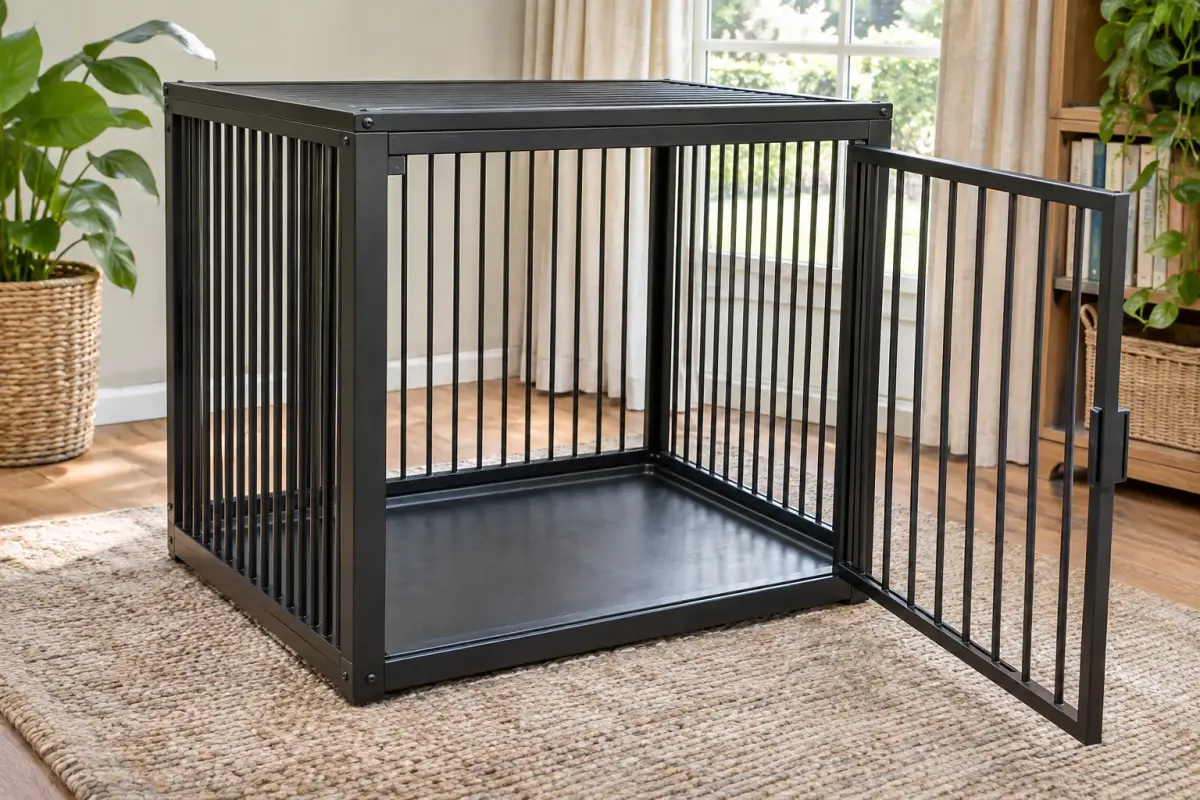
In a heavy-duty dog crate, look for welded joints rather than clipped wire, thick steel bars or tubing, and a solid frame that does not flex when pushed. Doors should close flush, with two or more latches or a latch a dog cannot reach or slide open. Floors should be a removable, sturdy tray the dog cannot chew or pull out.
Check corners and the gap between door and frame, which is where determined dogs pry. The AKC notes metal crates are best for dogs who chew through other materials, and wire crates are among the sturdiest. Casters, like the lockable wheels on this metal crate with double doors and a removable tray, help you move a heavy crate; lock them in use.
The best type for each dog
For a strong chewer that is calm inside, a welded steel crate with a metal tray. For a dog that pushes doors open, a crate with multiple latches. For a large, powerful dog, choose a crate rated for its weight and size. For a dog in training, an ordinary wire dog crate is often enough once it is comfortable inside.
For a dog with true separation anxiety, focus on a treatment plan; a gated room or pen may be safer while you work on it. For car travel, heavy-duty crates are not automatically crash-tested; check certification if travel is the purpose.
Sizing and setup
The AKC advises measuring your dog standing, nose to tail and floor to top of head, and adding 3 to 4 inches to each. A crate just big enough to stand, turn and lie down feels secure. Place it in a quiet but not isolated spot.
Make the crate a good place: meals inside, a chew toy or food puzzle, a durable pad if your dog does not shred it. Never use a crate as punishment, and keep crate time within what your dog can comfortably manage.
Safety and lifespan
Remove collars and tags inside a crate, which can snag on bars. Check for bent bars, loose welds or sharp edges regularly. A heavy-duty steel crate can last many years; if you want a plainer wire style, look through our dog crates.
If your dog injures its mouth or paws trying to escape, stop crating, and see your vet about both the injuries and the anxiety behind them.
This page is general information, not veterinary advice, and it cannot replace an examination by the vet who knows your pet.
Common questions
What is the best crate for a dog with separation anxiety?
Often, not a crate. The ASPCA advises that dogs who panic in a crate may do better in a gated room. Work on gradual training with your vet or a behaviorist first.
Are heavy-duty dog crates escape-proof?
A welded steel crate with secure latches is much harder to escape, but no crate is fully escape-proof, and a panicking dog can injure itself trying. Address the cause too.
What size heavy-duty crate do I need?
Measure your dog standing, from nose to tail and floor to top of head, and add 3 to 4 inches to each, as the AKC recommends. Choose one rated for your dog's size.
Why does my dog keep escaping its crate?
Common reasons include boredom, too little exercise, a crate that is too big or poorly latched, and separation-related distress. If your dog seems panicked, talk to your vet.
Sources we checked
This guide is general information, not veterinary advice. If your pet is unwell or injured, contact your veterinarian.


