Training & behavior
Dog Separation Anxiety Training: How to Help Your Dog Stay Alone
To help a dog with separation anxiety, teach it that being alone is safe in steps so small it never panics: practice departure cues without leaving, then build absences from seconds to minutes to hours, keeping each one shorter than the point where your dog gets upset. Add exercise, a special food puzzle toy at departures and calm homecomings. Avoid leaving your dog alone for longer than it can handle while you train, and involve your vet if the anxiety is severe.
By Matt GarnettUpdated November 14, 20264 min read3 sources
Before you start: set your dog up to succeed
Record your dog when you leave, using a phone or pet camera, so you know how many seconds or minutes pass before it gets upset. That number is your starting point. Training always works below it, because a dog that panics during a session is practicing panic, not calm.
While you train, avoid full-length absences. Use a sitter, daycare, a friend or family member, or take your dog with you where possible. This feels like a lot of effort, but every long, frightening absence can undo days of progress. Ask your vet to rule out medical causes of accidents or restlessness first.
Step 1: Take the sting out of departure cues
Most dogs start worrying at the first sign you are leaving. Pick up your keys, put on your shoes or coat, or lift your bag, then sit back down and carry on with your evening. Repeat these cues many times a day, in random order, until your dog barely looks up.
Pair some of them with something good, such as a treat scattered on the floor when the keys jingle. When the cues stop predicting a long absence, your dog's stress before you go drops, and you start every training session from a calmer place.
Step 2: Build alone time in tiny steps
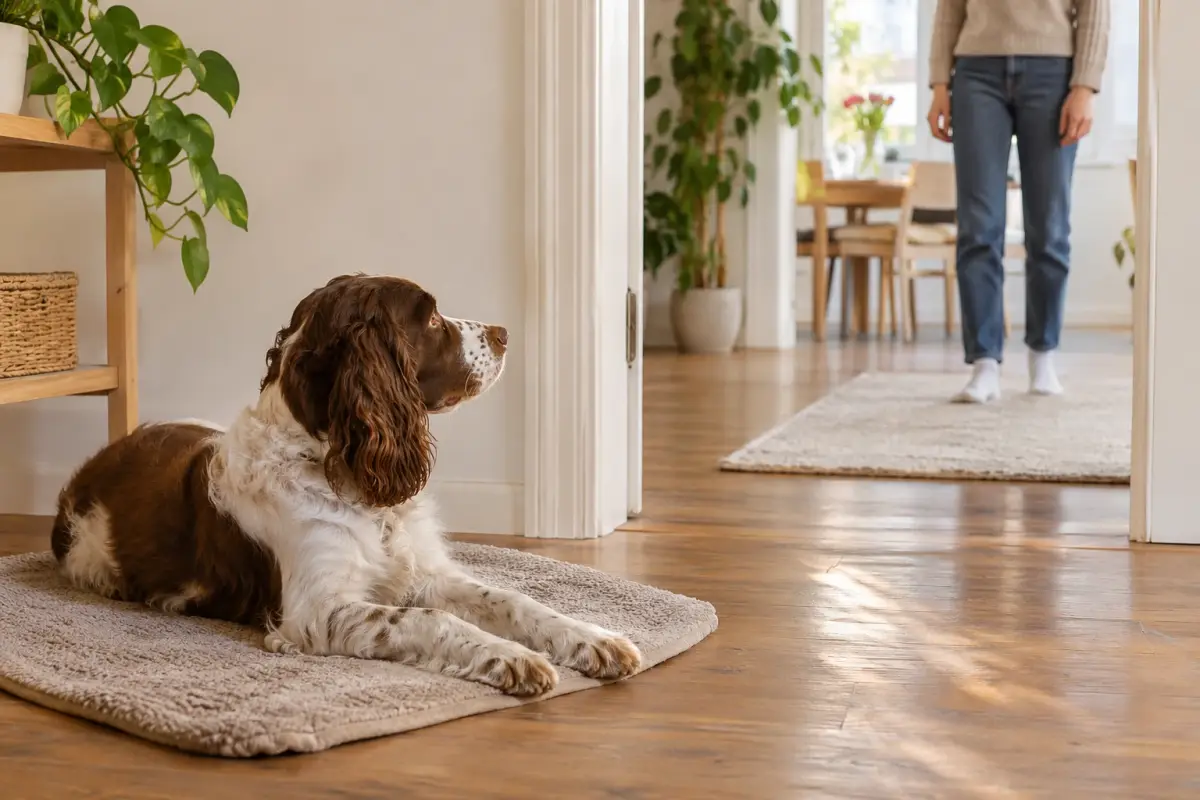
Begin inside the house. Ask your dog to settle on a mat, step behind a baby gate or a closed inside door for a few seconds, then come back before it gets upset. Gradually lengthen these out-of-sight stays, and vary them so some are very short.
Then move to the front door: step out for a few seconds and return calmly. Increase the time slowly and unevenly, for example 10 seconds, 30 seconds, 15 seconds, a minute. Watch for stress signs such as panting, yawning, drooling, trembling or pacing, and shorten the next absence if you see them. Once your dog copes with around 40 minutes, longer stretches usually come more quickly.
Step 3: Keep goodbyes and hellos boring
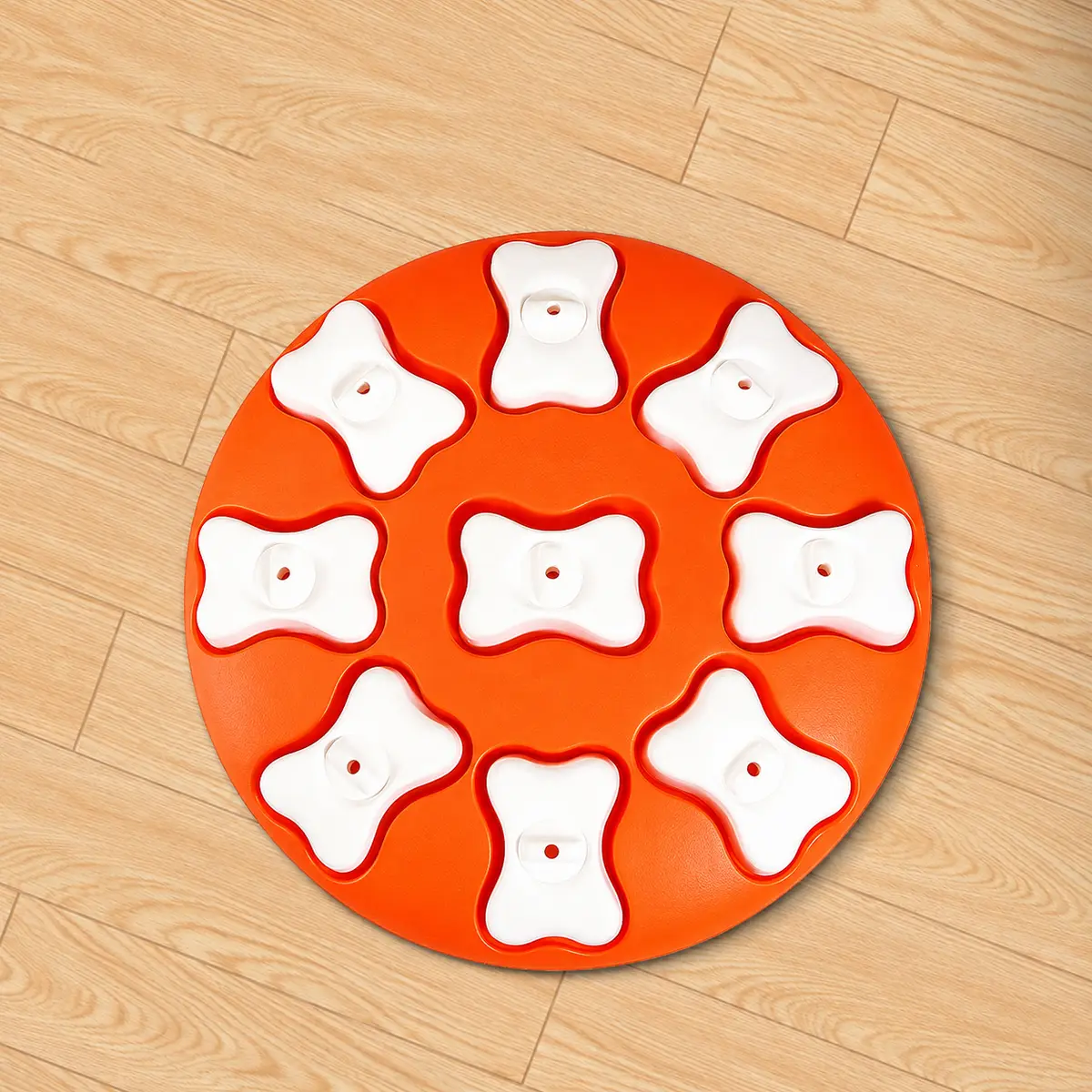
Make leaving low-key. Skip long emotional goodbyes, and in the last few minutes before you go, keep things quiet rather than building up excitement. As you leave, hand over a food puzzle, such as a slide puzzle treat dispenser, a lick mat or a stuffed chew that only appears at departures, and put it away when you get home.
On your return, wait until your dog is calm before greeting it warmly. This is not about being cold; it simply stops your comings and goings from feeling like huge events. A dog too anxious to eat when alone is telling you the absence is too long.
Exercise, enrichment and routine
A tired, mentally busy dog finds it easier to rest. Aim for a good walk or active play before you leave, and add sniffing games on a snuffle mat, dog puzzle toys, hidden kibble to hunt and short training sessions through the day. Predictable routines for meals, walks and rest also help an anxious dog feel safe, and our guide to dog puzzle feeders explains how to pick a puzzle your dog can actually solve alone.
Exercise alone will not cure separation anxiety, but it supports the training. For the wider picture, see how to calm an anxious dog. Teaching your dog to relax in another room while you are home, rather than following you everywhere, builds the independence it needs for real absences.
When to get professional help
Call your vet if your dog injures itself, destroys doors or crates, refuses food, or if you see no progress after several weeks. Your vet can rule out pain and illness and may discuss medication that lowers anxiety enough for training to work; only your vet can decide that. A veterinary behaviorist or certified behavior consultant can design a detailed plan.
Never scold or punish a dog for damage or accidents. Punishment adds fear and makes separation anxiety worse.
This page is general information, not veterinary advice, and it cannot replace an examination by the vet who knows your pet.
Common questions
How long does separation anxiety training take?
It varies widely. Mild cases may improve in a few weeks, while severe separation anxiety can take months of daily short sessions. Going slowly and never pushing past your dog's comfort level is faster in the end.
What can I do for my dog's separation anxiety at home?
Practice departure cues without leaving, build short absences gradually, give a special food toy when you go, keep greetings calm, and add more exercise and enrichment. Ask your vet before trying any supplement or calming product.
Should I ignore my dog when it cries when left alone?
Do not rush back in response to crying, but the real fix is shorter absences. If your dog cries, the session was too long, so make the next one shorter and build up more slowly.
Do calming treats help separation anxiety?
Some owners find they take the edge off mild worry, but evidence is limited and they will not fix separation anxiety alone. Talk to your vet before using any calming product, especially if your dog takes other medicines.
Sources we checked
This guide is general information, not veterinary advice. If your pet is unwell or injured, contact your veterinarian.