Buying guides
Best Puzzle Feeders for Dogs: How to Choose One
The best puzzle feeder matches your dog's skill and chewing style. Beginners do best with simple slow-feeder bowls or easy sliding puzzles; experienced dogs enjoy multi-step puzzles; strong chewers need sturdy dispensing toys rather than plastic puzzles with small parts. The AKC notes puzzles make big gulps impossible, which slows fast eaters and adds mental work to every meal.
By Matt GarnettUpdated November 14, 20263 min read2 sources
Why use a puzzle feeder
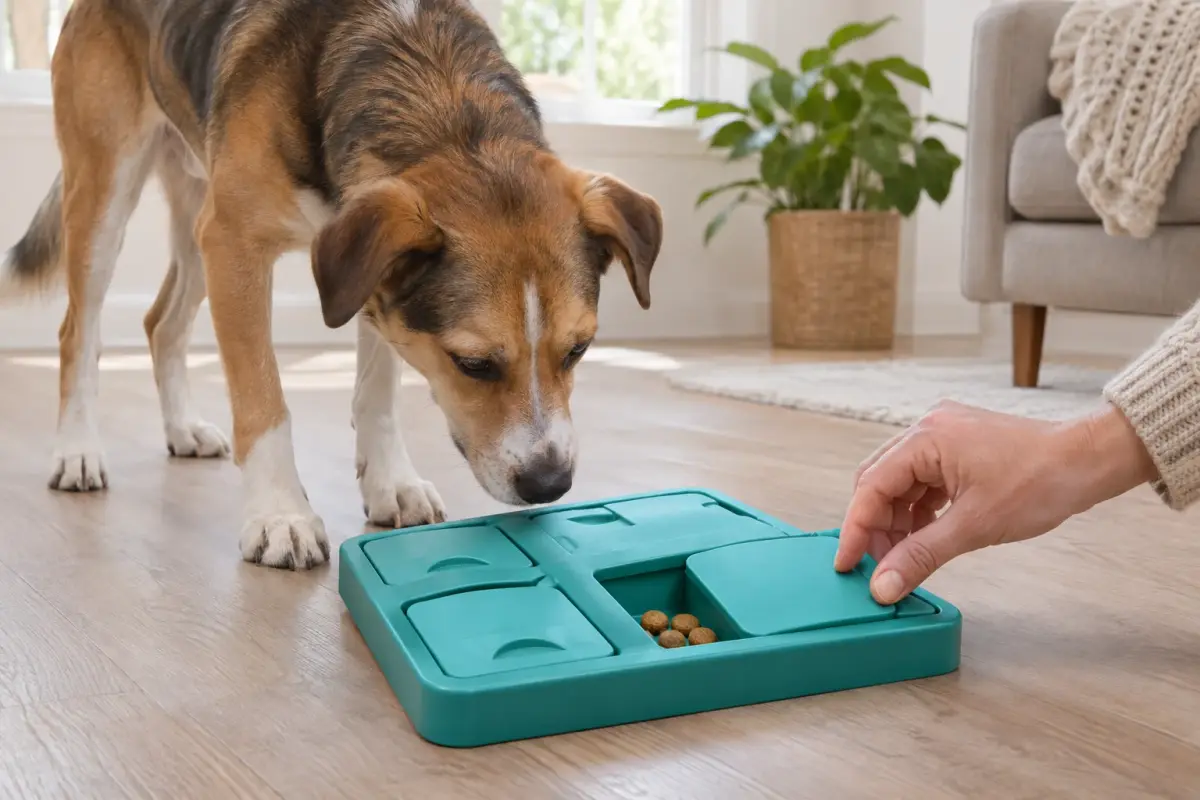
Puzzle feeders turn a meal that lasts seconds into an activity that lasts minutes. The AKC describes food puzzles as having nooks and crannies that make big gulps impossible, from flat puzzles on the floor to toys that dispense food during play.
That matters for health as well as fun. The AKC notes eating too fast can increase the risk of bloat, a life-threatening emergency, because dogs swallow air with their food, and that feeding smaller portions two or three times a day has been shown to reduce the risk.
Types compared
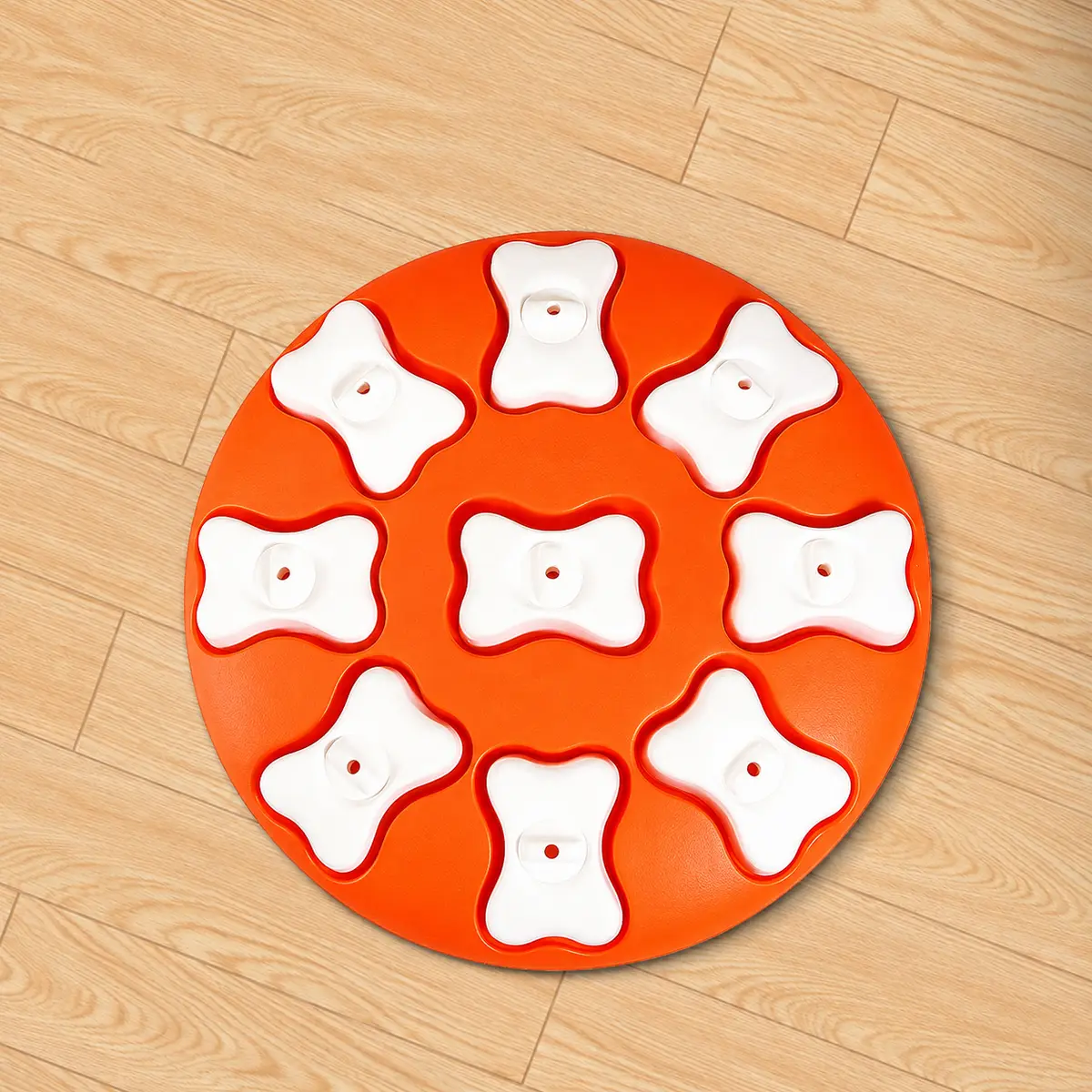
Slow-feeder bowls have ridges or mazes that slow eating; they are the easiest introduction and suit every meal. Flat puzzles have sliders, flaps and lids your dog nudges to reveal food, rated by level. Dispensing toys, such as treat balls or wobblers, release kibble as the dog rolls them.
Snuffle mats hide kibble in fabric strips for nose work. Lick mats suit wet food. Stuffable rubber toys hold soaked or frozen food and suit chewers. Rotating several types keeps a dog interested.
Choosing the right level
Start easy. A dog that fails a hard puzzle may give up or try to chew it apart. Begin with a puzzle slow-feeder bowl or a level-one puzzle, show your dog how it works, and only move up when it solves the current one quickly.
For puppies and seniors, choose simple, low-frustration designs. For clever herding and working breeds, harder multi-step puzzle toys provide useful mental exercise. For flat-faced breeds, choose shallow slow feeders so they can reach the food.
Materials and chewers
Hard plastic puzzles with sliders and pegs are interactive but not chew toys; supervise and put them away after meals. Natural rubber dispensing toys are tougher. For a power chewer, VCA's chew toy rule applies: the toy should be too large to swallow and soft enough to dent with a fingernail.
Check for small removable parts, and choose dishwasher-safe materials where possible. Replace any puzzle that cracks or loses pieces.
Fitting puzzles into meals
Use part or all of your dog's daily kibble in the puzzle rather than adding extra food, so enrichment does not add weight. Measure the portion first, then load it.
If your dog vomits after eating fast, bloats, or has a swollen belly with retching, see a vet immediately; the AKC says a dog that might be bloated should see a vet right away. For ongoing digestive trouble, ask your vet about portion size and meal frequency.
Cleaning and lifespan
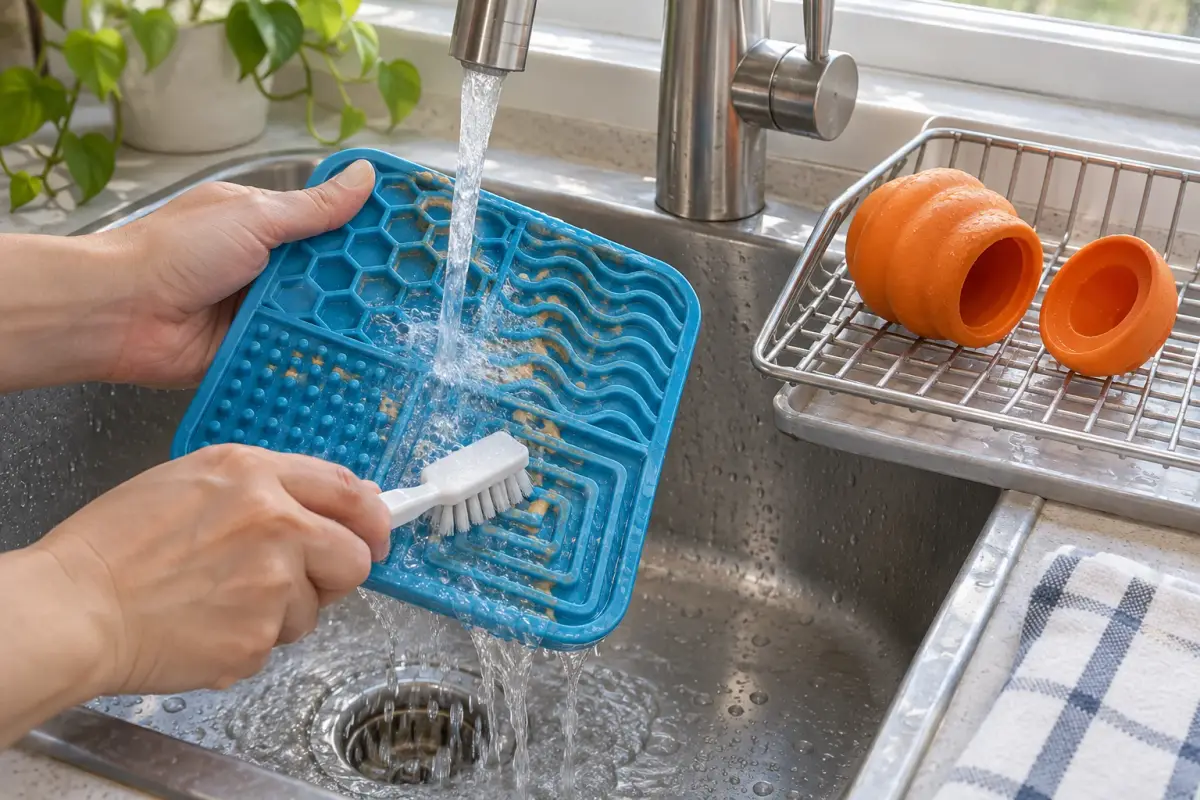
Wash puzzles after each use with hot soapy water or in the dishwasher if allowed, getting into every groove, because old food grows bacteria.
Plastic puzzles last a long time with gentle use. Retire any that crack, splinter or lose small pieces your dog could swallow.
Keep two or three dog puzzle feeders in rotation, which keeps them novel and gives each one time to dry fully after washing.
This page is general information, not veterinary advice, and it cannot replace an examination by the vet who knows your pet.
Puzzle feeder food-access mechanisms
| Format | Food location | What the dog moves |
|---|---|---|
| Ridged bowl | An open bowl with obstacles | Its muzzle around the ridges |
| Flat board | Under lids,flaps or sliders | The covers |
| Ball or wobbler | Inside a moving body | The complete toy |
| Snuffle mat | Within fabric strips | The folds while searching |
| Lick mat | On an open textured surface | Its tongue across the surface |
| Stuffable toy | Inside an open cavity | The toy while reaching its contents |
Common questions
Are puzzle feeders good for dogs?
Yes, for most dogs. They slow eating, which the AKC links to lower bloat risk, and add mental stimulation. Start with an easy level and supervise until you know how your dog uses it.
What is the best puzzle feeder for a beginner dog?
A slow-feeder bowl or a level-one puzzle with simple sliders or flaps. Show your dog how it works with a few pieces of kibble and praise every success.
Can I feed every meal in a puzzle feeder?
Many dogs can, using their measured daily kibble. Keep a plain bowl for days when your dog is unwell or stressed, and make sure every puzzle is easy enough to finish.
Are puzzle feeders safe for heavy chewers?
Plastic puzzles are not chew toys. For heavy chewers, use sturdy rubber dispensing toys sized so they cannot be swallowed, supervise, and remove any damaged toy.
Sources we checked
This guide is general information, not veterinary advice. If your pet is unwell or injured, contact your veterinarian.