Care & how-to
Anxiety in Dogs: How to Calm and Train an Anxious Dog
Anxiety in dogs is a fear response to something the dog sees as a threat, such as noises, strangers, other dogs, new places or being left alone. To calm an anxious dog, move it away from the trigger, give it a quiet place, such as a calming dog bed, and something to chew, and stay calm yourself. Long term, reward-based desensitization and counterconditioning change how your dog feels. Start with your vet, who can rule out pain or illness and help with severe cases.
By Matt GarnettUpdated November 13, 20264 min read3 sources
What causes anxiety in dogs?
Most canine anxiety falls into a few groups. Fear-related anxiety is triggered by loud noises, unfamiliar people or animals, new environments, car rides, vet visits or particular surfaces. Separation anxiety is distress at being left alone. Age-related anxiety can appear in senior dogs as memory and awareness decline.
Genetics, limited socialization as a puppy, a frightening experience and big life changes all play a part. Pain and illness can make a dog more anxious and more reactive, which is why a sudden change in behavior is a reason to see your vet before you assume it is purely emotional.
How to calm an anxious dog in the moment
Step 1: Create distance. Move your dog away from whatever worries it, to a quieter spot. Step 2: Stay calm. Speak softly and move slowly; your tension travels down the leash. Step 3: Offer an easy job. If your dog can still eat, ask for a simple, well-known cue like a hand touch, or scatter a few treats on the ground for it to sniff out.
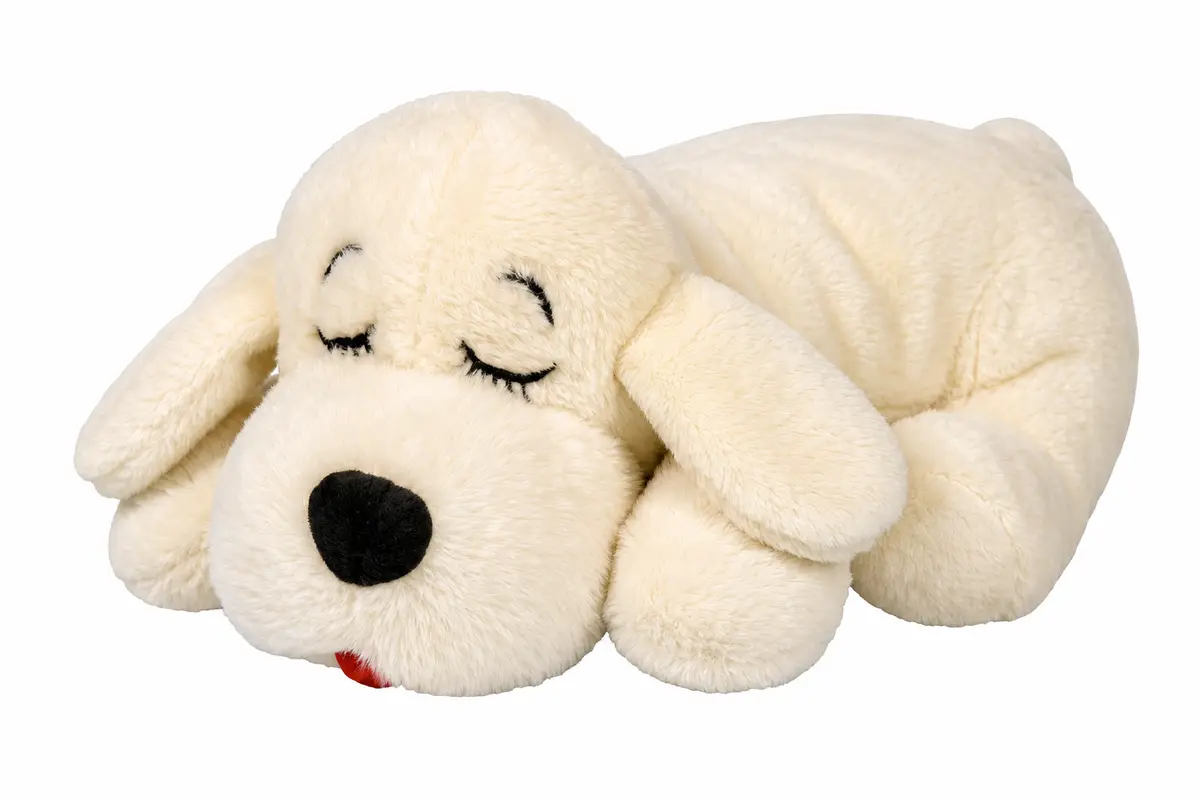
Step 4: Give it somewhere to retreat. A crate covered on three sides, a bed in a quiet room or a spot behind the couch lets a dog regroup; for a young puppy, a heartbeat comfort toy in that spot can add some company. Step 5: Do not force interaction with the person, dog or object it fears, and never punish growling, barking or hiding. Those are warnings, and punishing them can make a dog more likely to bite without warning.
Training an anxious dog: the methods that work
Desensitization means exposing your dog to a trigger at a level so low it stays relaxed, then increasing intensity in very small steps. Counterconditioning pairs that trigger with something your dog loves, such as chicken or a favorite game, so its feelings about it change. Used together, they are the core of anxious dog training.
Work below threshold: if your dog stops taking treats, stares, freezes, pants or tries to leave, you are too close or going too fast. Keep sessions short and frequent, and end on a calm note. Use positive methods only. Aversive tools and harsh corrections increase fear, even when they seem to stop the behavior.
Everyday habits that lower anxiety
Predictable routines for meals, walks and rest help anxious dogs feel safe. Daily exercise matched to your dog's age and fitness, plus mental work such as sniffing games on a snuffle mat, dog puzzle toys and short training sessions, uses up energy that would otherwise feed worry.
Build confidence with easy wins. Teach simple cues for rewards, and let your dog earn things it wants. A trusted, calm dog friend can help some dogs, while others prefer quiet. Learn your dog's early stress signals, such as lip licking, yawning, a tucked tail or turning away, so you can step in before fear builds.
When to get help from your vet or a behaviorist
See your vet if your dog's anxiety is frequent, severe, getting worse, or showing up as aggression, house soiling or self-injury. Your vet can look for pain or illness and may refer you to a veterinary behaviorist or certified behavior consultant for a tailored plan.
For some dogs, your vet may discuss medication to lower anxiety enough for training to work. Only your vet can decide whether that is right. Do not give human medicines or another pet's prescription.
This page is general information, not veterinary advice, and it cannot replace an examination by the vet who knows your pet.
Common questions
Can you comfort an anxious dog without making it worse?
Yes. Calm, quiet comfort and gentle petting for a dog that wants it does not reinforce fear. What helps less is frantic fussing. Combine comfort with distance from the trigger and a safe place to settle.
What is the best way to treat dogs with anxiety?
Usually a combination: a vet check, changes to routine and environment, reward-based desensitization and counterconditioning, and for some dogs medication from your vet. A single calming product rarely solves anxiety on its own.
Do anxious dogs ever get better?
Many improve a great deal with patient training and management. A naturally cautious dog may never be the life of the party, but it can become far more relaxed and able to cope with daily life.
Should I see a dog behaviorist for anxiety?
If anxiety is severe, involves aggression, or is not improving with home training, yes. Look for a veterinary behaviorist, a certified applied animal behaviorist, or a certified trainer experienced with fear who uses positive methods.
Sources we checked
This guide is general information, not veterinary advice. If your pet is unwell or injured, contact your veterinarian.