






Buying guides
Best Dog Bed for Great Danes and Giant Breeds: How to Choose
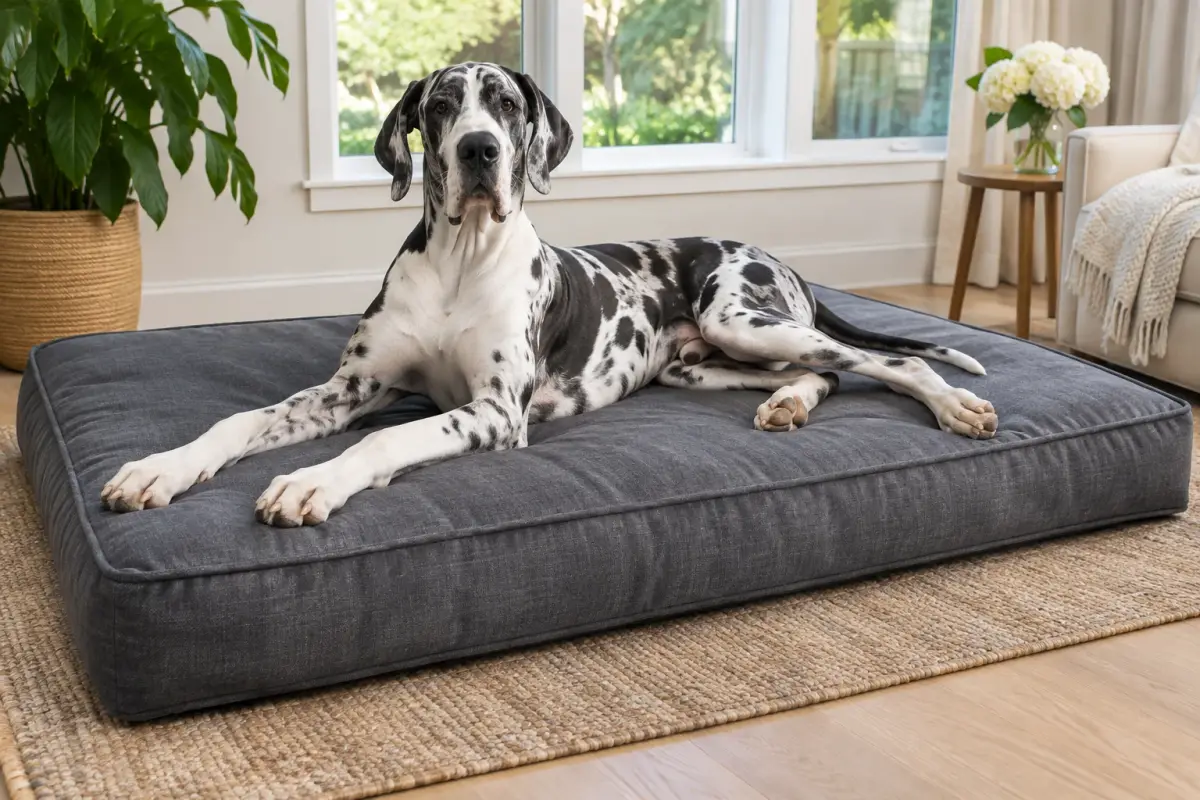
A giant breed such as a Great Dane needs a giant-breed dog bed long enough to stretch out on, at least 4 inches of supportive foam that does not flatten under 150 lb, and a low, easy entry. Padding matters for more than comfort: VCA explains that large and giant dogs lying on hard floors can develop elbow hygromas, and recommends memory foam or egg-crate foam beds as the best padding.
By Matt GarnettUpdated November 10, 20263 min read2 sources
Why giant dogs need a proper bed
A giant dog's weight presses its elbows, hips and hocks hard against the floor. VCA describes hygromas as fluid-filled swellings caused by repeated trauma over a bony point, most often the elbow, in large and giant breeds lying on hard surfaces, and says egg-shell or memory foam beds may provide the best padding.
Joint support also matters as giant breeds age, because arthritis is common in big, heavy dogs. A thick, supportive bed spreads weight evenly and makes getting up easier.
What matters most: size and foam
Measure your dog lying stretched out on its side, nose to tail base, and add 6 to 12 inches. Most Great Danes need a bed around 50 by 40 inches or larger; many owners use XXL or human-size dog beds. If your dog sprawls, choose a flat mattress over a bolster bed of the same outside size.
Foam is the key spec. Look for solid memory foam or high-density orthopedic foam at least 4 inches thick, ideally more, with a firm base layer. Shredded-foam and fiber-filled beds flatten quickly under a giant dog, leaving the elbows on the floor again.
Bed types compared
Orthopedic mattress beds are flat slabs of supportive foam with a removable cover, and suit most giants. Bolster orthopedic beds add raised sides for leaning, useful for dogs that rest their heads, but check the flat sleeping area is still big enough. Elevated cots lift a dog off the floor and are easy to clean, but give less cushioning on their own.
Human-size dog beds and floor mattresses suit dogs that sleep stretched out. Crate pads must be thick enough to protect the elbows if your dog spends time in a crate.
Best type for each dog
For a young, healthy Great Dane, a thick orthopedic mattress with a durable, washable cover. For a senior or arthritic giant, the thickest supportive foam you can find, a low entry height, and a non-slip base so the bed does not slide when the dog gets up.
For a dog with existing elbow calluses or a hygroma, VCA suggests padding plus covering favorite resting spots with interlocking foam floor tiles, and notes protective elbow pads are available. For a chewer, a tough ballistic cover with hidden zippers.
What to avoid
Avoid thin pads, beds sized by weight rather than length, and loose fiber fill that clumps. Avoid slippery beds on hardwood without a non-slip base. Avoid letting a giant dog get overweight; VCA notes extra weight greatly increases the trauma to tissue over bony points.
Swelling over the elbow, limping, stiffness getting up, or sores on pressure points need a vet visit. VCA cautions that draining a hygroma does not solve the problem, so let your vet decide on treatment.
Care and lifespan
Choose a bed with a removable, washable cover and a waterproof liner, since washing a giant foam core is impractical. Vacuum and wash the cover every week or two.
Replace the giant-breed bed when the foam stays dented after your dog gets up, or you can feel the floor through it under the elbows. Good memory foam lasts several years; cheaper foam may need replacing yearly under a giant dog. Choosing between giant breeds? See Cane Corso vs Mastiff.
This page is general information, not veterinary advice, and it cannot replace an examination by the vet who knows your pet.
Large-bed layouts and usable area
| Layout | Sleeping surface | Check separately |
|---|---|---|
| Flat foam mattress | Open slab without raised sides | Usable length,width and foam construction |
| Bolster mattress | Foam surface with raised sides | The flat center remaining inside the rim |
| Elevated cot | Fabric stretched over a raised frame | Clear resting area and frame load rating |
| Floor mattress | A broad low sleeping area | Actual usable dimensions |
| Crate pad | A pad fitted inside a crate | Inside crate floor and pad thickness |
Common questions
What size bed does a Great Dane need?
Usually around 50 by 40 inches or larger. Measure your dog stretched out on its side and add 6 to 12 inches. Many owners use XXL or human-size dog beds.
Do Great Danes need orthopedic beds?
A thick supportive foam bed is strongly recommended. VCA notes large and giant dogs lying on hard surfaces can develop elbow hygromas and recommends memory foam or egg-crate foam.
How thick should a bed be for a giant breed?
At least 4 inches of high-density or memory foam, more for heavy or senior dogs. If your dog's elbows touch the floor through the bed, it is not thick enough.
How do I protect my dog's elbows from hygromas?
Provide thick padded bedding, cover hard floors where your dog rests with foam tiles, and keep your dog lean, as VCA advises. See your vet about any swelling over the elbow.
Sources we checked
This guide is general information, not veterinary advice. If your pet is unwell or injured, contact your veterinarian.


