






Breeds
Doberman vs Cane Corso: Choosing Between Guardians
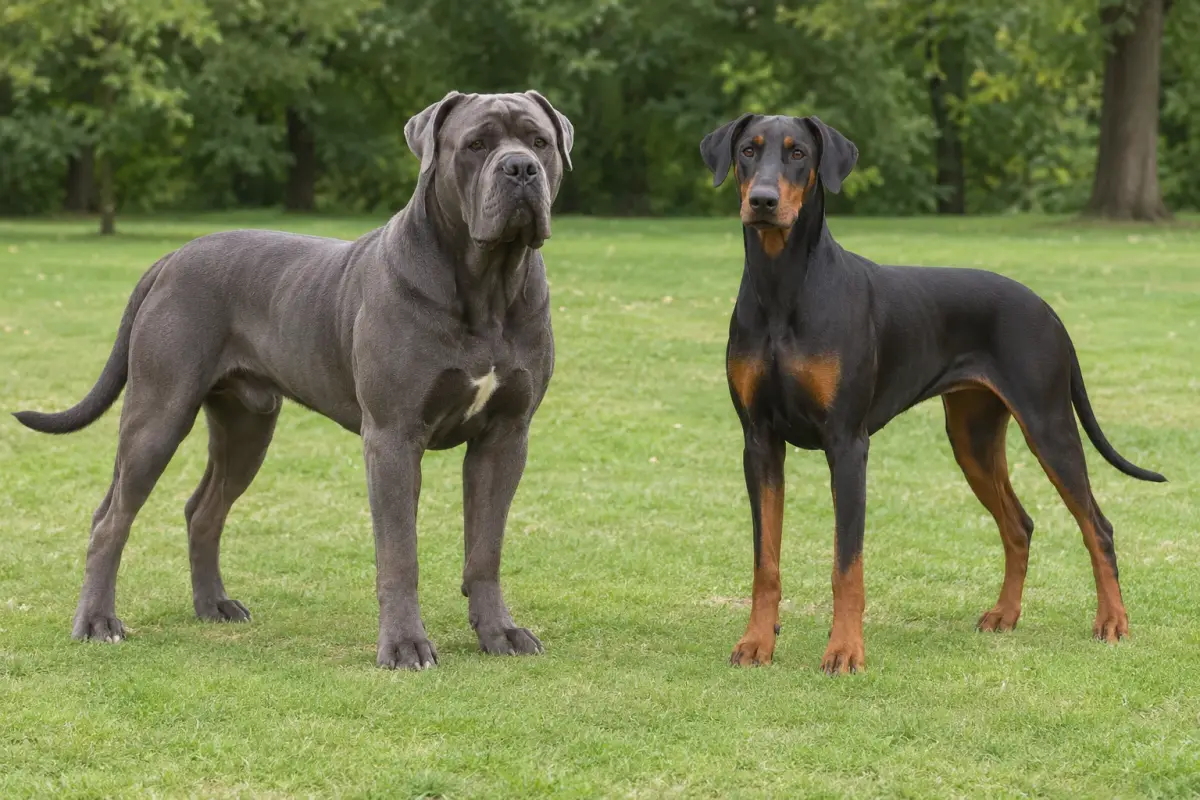
The Doberman is generally the lighter, high-energy option, while the Cane Corso is a heavier guardian with substantial strength and protective instincts. Both need an involved owner, careful socialization, and consistent training. The practical choice depends on your handling experience, activity plans, and ability to manage the individual dog, not which breed looks more imposing.
By Matt GarnettUpdated November 14, 20263 min read4 sources
Compare size, activity, and daily care
VCA lists Dobermans at roughly 60–100 pounds and Cane Corsos at around 100 pounds or more. Its guide gives about 10–12 years for Dobermans and 9–12 for Corsos. These are broad expectations, not guarantees of size or lifespan for an individual dog.
Energy: the Doberman is described as high-energy, and the Corso as moderate to high. Grooming: both have short coats requiring routine brushing. Training: both need structure and engagement. Best fit: someone ready to provide activity and careful handling, with particular attention to the Corso’s heavier build. Our toys for Cane Corsos cover the activity side of that.
Treat protection instincts as a responsibility
The AKC describes both dogs in terms of vigilance and protection. In a household, that means planning for visitors, deliveries, and unfamiliar situations. A protective reputation should prompt questions about social behavior and management rather than being used as a shortcut for choosing a companion.
Ask how the particular dog responds to strangers and other pets. VCA warns that inadequate socialization and training can leave either breed overly protective or reactive. Arrange suitable introductions and professional support early. Do not expect a puppy to work out acceptable responses to every visitor without guidance.
Choose an activity partnership you can maintain
The Doberman’s profile emphasizes substantial daily activity, interactive play, and training. The Corso also needs regular exercise and tasks that engage its mind. Look at your ordinary week, including workdays and periods when weather changes your usual plans, before deciding that either fits your routine. For play and chewing, browse dog toys for aggressive chewers, such as a large chew toy for big dogs or a plush squeaky toy set for medium and large dogs.
A useful question is who will participate in the dog’s care every day. Can the available person handle the adult dog on a leash, transport it, and continue training? If your plan depends on one enthusiastic household member always being present, make a backup arrangement before choosing.
Keep grooming and comfort in the comparison
Short hair makes coat care simpler than it is for some long-coated breeds, but it does not remove routine maintenance. VCA recommends brushing and attention to nails, ears, and dental care. Check whether the dog is comfortable with handling and how you will build cooperation for these tasks.
Climate also matters. VCA notes the Doberman’s sensitivity to cold and the Corso’s sensitivity to extreme heat. Discuss appropriate activity with your veterinarian rather than assuming a powerful dog tolerates every condition. Space, shelter, and transport arrangements should be suitable for the dog you actually bring home. A heavy dog also needs support at rest, so see dog beds for large dogs, and fit matters on walks: harnesses for Cane Corsos and for Dobermans.
Ask about screening and the individual dog’s history
VCA highlights dilated cardiomyopathy as a significant Doberman concern and advises regular cardiac screening. The Corso profile highlights orthopedic concerns associated with size and growth. Ask your veterinarian to review available screening records and explain what follow-up is appropriate for the individual animal.
Choose with those long-term responsibilities in view. New weakness, difficulty breathing, limping, or pain warrants veterinary advice rather than being written off as aging or breed temperament. A comparison can help frame questions, but an examination and the dog’s own history guide its care.
This page is general information, not veterinary advice, and it cannot replace an examination by the vet who knows your pet.
Common questions
Is a Cane Corso usually bigger than a Doberman?
Generally, yes. VCA lists Dobermans at about 60–100 pounds and Cane Corsos at around 100 pounds or more. Meet adult dogs and consider handling and transport, since individuals vary.
Which breed needs more exercise?
VCA describes the Doberman as high-energy and the Corso as moderate to high. Both need regular physical and mental activity. Compare an individual dog’s needs with the routine you can maintain.
Are Dobermans and Cane Corsos easy because they have short coats?
Short coats simplify one part of care, but both dogs still need grooming, training, activity, and veterinary attention. Coat length does not measure the commitment involved in living with a strong guardian.
Sources we checked
This guide is general information, not veterinary advice. If your pet is unwell or injured, contact your veterinarian.


