






Buying guides
Best Rope Dog Leashes: What Actually Matters
The best rope dog leash is thick enough for your dog's size and pull, has a padded or well-shaped handle, and runs four to six feet for everyday walks. Match the rope to the dog first, then check the clip and handle. Browse our rope dog leashes with those checks in mind.
By Matt GarnettUpdated November 13, 20264 min read4 sources
What a rope leash is, and who it suits
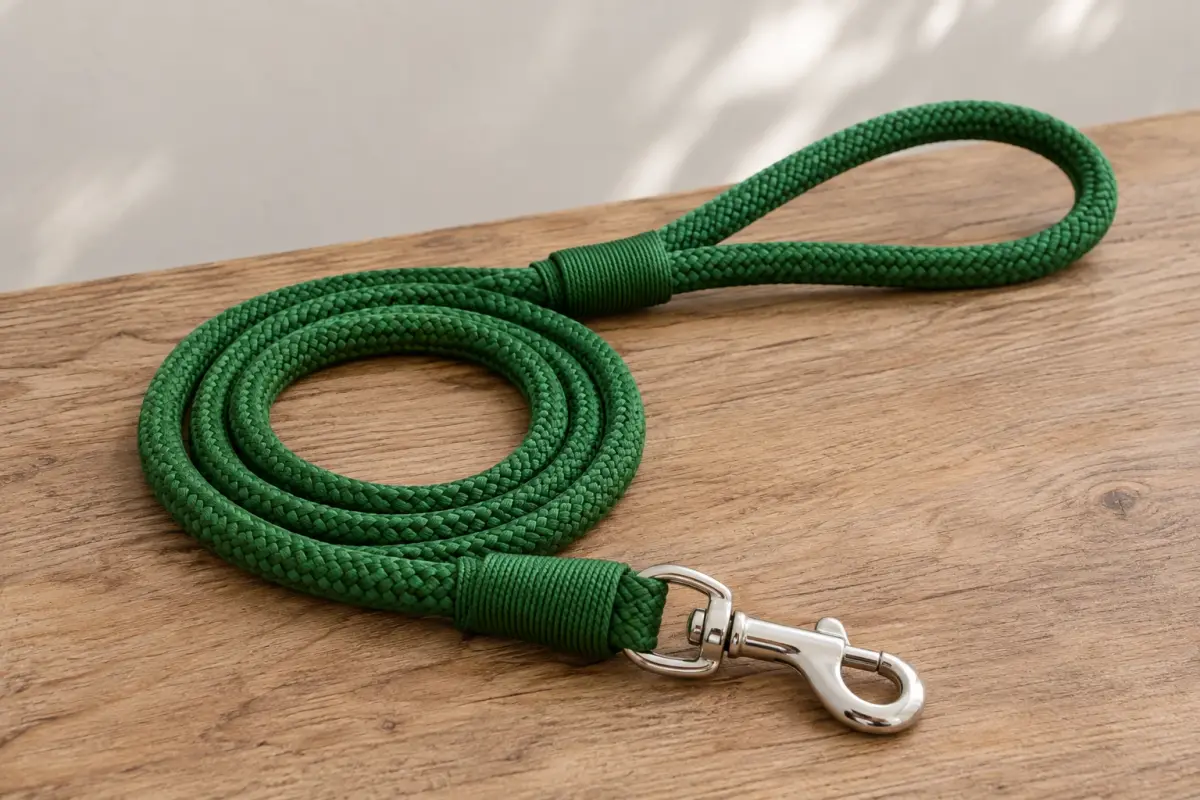
A rope leash is a round, braided or twisted lead, often made with climbing-style cord, instead of the flat nylon webbing most people start with. The American Kennel Club describes the standard flat leash as durable nylon webbing that measures 4 to 6 feet long, and says many trainers recommend that style for learning loose-leash manners. A rope leash is a reasonable alternative for owners who like the feel of a rounder, softer lead.
Rope tends to suit confident walkers who want a leash that sits comfortably in the hand. It is less obviously the right choice for a dog that is still learning to walk politely, where a plain standard leash gives you fewer things to think about. Our dog leashes collection shows the flat styles for comparison.
Thickness: match the rope to your dog
The AKC advises narrow, lightweight leashes for small dogs and toy breeds, and thicker, wider, heavier leashes for large dogs, pullers and dogs learning leash manners. The same logic applies to rope. A thin cord can feel flimsy on a strong dog and can cut into the hand when the dog lunges, while a heavy rope drags on a small dog's collar or harness.
The AKC also warns that thin cords are harder to see at night and can burn, cut or cause worse injuries if they wrap around a dog or a person. That warning is about retractable cords, but it applies equally to any thin line. Choosing a thicker, round rope with a reflective strand reduces the risk.
Handle comfort and your hands
The AKC says a padded handle can improve comfort and help prevent leash burn, and that leather or padded nylon or neoprene grips are often more comfortable to hold. On a rope leash the handle matters more, because a rope can bite into the palm when a dog pulls. Look for a sewn loop with a sleeve or a padded grip rather than a bare loop of rope.
Never grab the leash while your dog is moving, as the AKC cautions, because you could be injured. If your dog pulls hard enough that you want gloves, that is a sign to change equipment or training rather than the rope. Our guide to how to stop a dog pulling on the leash covers positive methods.
Length and what each length is for
For everyday walks, 4 to 6 feet is the standard and gives you control near traffic and other dogs. VCA Animal Hospitals suggests a 10 to 15 foot leash when you start practicing in a fenced area, and says to keep slack in the leash rather than pulling it tight, because dogs feel small movements and handlers often apply pressure without realizing it.
A longer rope line gives more room in open, uncrowded places. See our long line leash guide for that use. Whichever length you choose, VCA says the leash works like a safety belt and should stay on near cars, roads, playgrounds and construction areas, and around livestock.
Styles to compare, and the clip
A handwoven braided rope lead has a traditional look, while a padded-handle round rope lead puts comfort first. For dark winter walks, a reflective rope leash or a reflective nylon round rope leash adds visibility, and the AKC notes reflective materials add visibility at night.
Check the clip before the rope. It should be solid metal, close fully and lock or screw shut, and be sized to the ring on the collar or harness. A big clip on a small dog is heavy, and a small clip on a large dog is the weak point.
Chewers, harnesses and care
The AKC points out that dogs that chew through fabric leashes may do better with a chain leash. A rope is easy for a determined chewer to fray, so inspect it often and replace it at the first fraying near the clip or handle. Rope also holds mud and moisture, so follow the care label: the AKC says nylon can go in a mesh bag in the machine if the maker allows it, otherwise hand-wash in hot water with dog shampoo and air-dry.
For a dog that pulls, the AKC says a harness can put less pressure on the neck than a collar and may reduce the risk of neck strain, and a front clip can help. If your dog coughs, gags or shows neck or back pain, see your vet. Come back to our rope dog leashes and our no-pull leashes when you are ready. This page is general information, not veterinary advice, and it cannot replace an examination by the vet who knows your pet.
Rope leash construction and grip details
| Feature | What changes | Inspection point |
|---|---|---|
| Braided rope | The rope construction and finish | Loose fibers and end connections |
| Padded loop handle | Additional material around the grip | Stitching and the inside of the loop |
| Reflective detail | Trim or stitching added to the rope | Actual location and condition |
| Clip | The connector at the collar or harness | Full closure,fit and any locking mechanism |
Common questions
Are rope leashes better than nylon leashes?
Neither is better for every dog. Flat nylon webbing at 4 to 6 feet is the usual training choice, while rope is a matter of feel. Thickness and handle comfort matter more than the material.
What thickness of rope leash should I choose?
Match your dog's size and strength: narrow and light for small and toy dogs, thicker and heavier for large dogs and pullers. Avoid very thin cord, which is hard to see at night and can cut.
Can a rope leash burn your hands?
A rope can, especially when a strong dog pulls. A padded handle helps prevent leash burn, and you should never grab the leash while your dog is moving, as the AKC warns.
Is a rope leash good for a dog that chews?
Usually not. A determined chewer can fray rope quickly. The AKC suggests a chain leash for dogs that chew through fabric, so inspect any rope often and replace it when it frays.
How long should a rope dog leash be?
Four to six feet suits everyday walks. Longer lines of 10 to 15 feet are for training in fenced or open areas and need more care, because slack and tension both give your dog signals.
Sources we checked
This guide is general information, not veterinary advice. If your pet is unwell or injured, contact your veterinarian.


